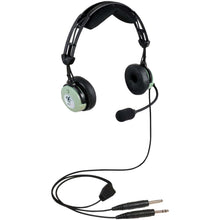




David Clark Headsets: The Complete Lineup Guide for Pilots


Walk down any GA ramp and you will spot the pale green domes. David Clark Company has built aviation headsets in Worcester, Massachusetts since 1975, and the formula has never wavered: FAA TSO approved hardware, a 5-year warranty on the H10, DC PRO and ONE-X families (3 years on the JET line), and a rebuild program that supports each model with replacement parts for decades. Plenty of pilots are still flying the same green dome their first instructor wore. The company still describes itself as an Old Yankee Company, and the product philosophy matches: buy it once, rebuild it for as long as you fly.
The catch is that "a David Clark" is no longer one headset. The current lineup spans four families: the passive H10 series, the rest-on-ear DC PRO models, the turbine-focused JET line, and the over-ear ONE-X hybrid ANR family. This guide walks through every model and which one fits your flying.
Which David Clark should you buy?
- Most piston GA pilots: the H10-13.4, the best-selling passive model. 16.5 oz, NRR 23 dB, nearly indestructible.
- ANR on the classic platform: the H10-13X adds electronic noise cancellation to the H10 shell.
- Turbine and corporate flying: the JET-X at 4.5 oz, or the PRO-X2 rest-on-ear ANR.
- Full over-ear ANR with Bluetooth: the DC ONE-X family.
Read on for the spec-by-spec differences.
Get your green domes
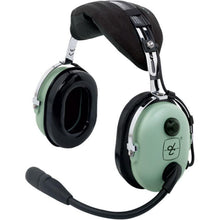
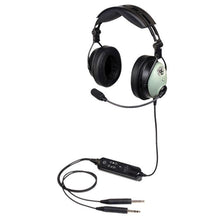
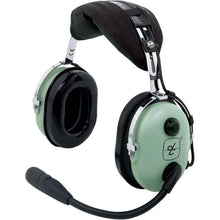
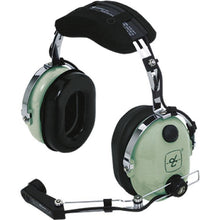
The full David Clark lineup, from the classic H10-13.4 to the JET-X.
Shop David Clark Headsets →The H10 Passive Series Explained
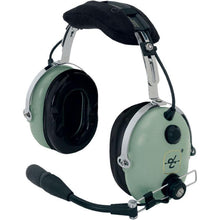
The H10 is the headset most pilots picture when they hear the brand name. No batteries, no electronics to fail, just heavy passive attenuation from undercut Comfort Gel ear seals and a clamp built to survive decades of flight bags. Every model shares the same rebuildable design and replaceable seals, which is why so many H10s outlive the airplanes they trained in.
The H10-13.4 is the most popular model in the passive line and the best balance of weight, features, and price. It weighs 16.5 oz without the cord, rates NRR 23 dB, and pairs an M-7A noise-cancelling mic on a universal flex boom with a low-profile detented volume knob, a double-foam headpad, and a 5-foot straight cord with dual GA plugs. Mono audio. It is the model most often recommended to new pilots, and the cord is molded to high pull and flex standards, which matters when a headset lives in a flight bag. Click for Price.
The H10-13S is the same headset in stereo, with an inline stereo/mono switch on the cord. Pick it if your intercom is stereo or you want music in both ears done right.
The H10-30 is the budget classic and the least expensive way into the line. It actually rates 1 dB higher on paper (NRR 24 dB) but weighs 20 oz and uses the older M-7/DC electret mic on a bare wire boom rather than the 13.4's flex boom and detented knob. Both now include the same undercut Comfort Gel ear seals, so the weight and the boom are the real differences. Click for Price.
The H10-20 splits the difference: 19 oz, NRR 24 dB, and the modern M-7A flex boom and volume knob from the 13.4. The H10-60 rounds out the passive family at 22 oz with dual per-ear volume and a dome jack that accepts three different cord assemblies.
Finally, the H10-13X is the electronic noise cancelling version of the 13.4: 18 oz, ENC layered over the passive seal, powered by one 9V battery for up to 25 hours. No Bluetooth, no frills, just quiet.
| Model | Weight | NRR | Mono / Stereo | Plugs | Standout detail |
|---|---|---|---|---|---|
| H10-13.4 | 16.5 oz | 23 dB | Mono | Dual GA | M-7A flex boom mic, detented volume knob |
| H10-13S | Not published | 23 dB | Stereo w/ mono switch | Dual GA | Stereo version of the 13.4 |
| H10-13X | 18 oz | Passive + ENC | See product page | See product page | One 9V battery, up to 25 hours, no Bluetooth |
| H10-30 | 20 oz | 24 dB | Mono | Dual GA | Lowest price, older M-7/DC mic on wire boom |
| H10-20 | 19 oz | 24 dB | Mono | Dual GA | 13.4 mic and knob at a middle price |
Weighing a 13.4 against a lower-priced import instead? Read our H10-13.4 vs Faro G2 value comparison before deciding.
The DC PRO Series: Rest-on-Ear Comfort
Rest-on-ear headsets sit lightly on the ear instead of clamping around it, which trades some passive seal for far less fatigue on long duty days. That makes the PRO series a quiet-cockpit tool, not a piston-trainer tool.
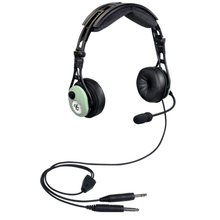
The DC PRO-2 is the passive member: 8 oz, no batteries, no ANR, no Bluetooth. It carries an M-5B electret mic, a rugged alloy headband with swivel-hinge stirrups, dual volume controls, stereo audio, and an Outlast headpad, and it is TSO-C139a certified. David Clark aims it squarely at quieter commercial and corporate jet cockpits, not loud piston GA. Click for Price.
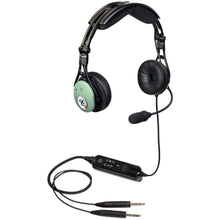
The PRO-X2 adds Hybrid ENC to the rest-on-ear format at just 7.5 oz, running up to 50 hours on two AA batteries with Bluetooth, automatic gain control, and Enhanced Auto Shutoff. The Outlast heat-absorbing headband cuts neck strain and heat buildup across a four-leg day. One honest caveat: in a very loud piston single it can be marginal, so keep rest-on-ear models in the turbine world where they belong. Click for Price.
The JET Line for Turbine Flying
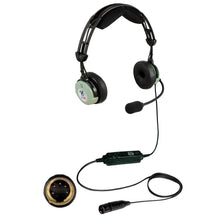
The JET-X is the flagship for jet flight decks: a 4.5 oz rest-on-ear headset with DSP-driven ANR, up to 50 hours on a single AA with auto shutoff and a USB-C power option, an M-5B mic on a 360-degree flex boom, Outlast thermal management, and TSO-C139a certification. One difference worth knowing: the JET line carries a 3-year warranty, not the 5 years that cover the H10, DC PRO and ONE-X families. It is built for business-jet and airline cockpits, not loud piston or turboprop cabins. At 4.5 oz it is roughly a quarter of the weight of an H10-13.4, and on a four-leg day that difference is the whole story.
It comes in two connector versions: dual GA plug and 5-pin XLR for airline panels. Either way, Click for Price. There is also a Jet Passive dual-plug companion model for crews who want the weight savings without electronics.
For the deep dive on this family, read our full JET-X lineup review.
The ONE-X Hybrid ANR Family
The ONE-X family is David Clark's answer to the premium over-ear ANR class. Hybrid ENC uses a feed-forward mic outside the ear cup plus a feed-back mic inside it, attacking noise from both sides of the dome.
The DC ONE-X weighs 12.3 oz, runs up to 50 hours on two AA batteries, and includes Bluetooth. It suits both GA and commercial pilots who want maximum quiet in a full over-ear design. Click for Price.
Two siblings adapt the same 12.3 oz platform to other panels: the ONE-XP with a panel-mount 6-pin connector that draws aircraft power, and the ONE-XH for helicopter pilots. If your aircraft has a dedicated headset power port, the XP version takes battery management off your checklist entirely.
How to Choose Your David Clark
- Piston GA and flight training: loud cabins reward a hard passive seal. The H10-13.4 is the default answer; the H10-30 saves money if you accept the extra weight.
- Piston GA with ANR: the H10-13X keeps the proven shell, while the DC ONE-X adds Bluetooth and a lighter dome.
- Turbine, corporate, and airline: the JET-X or PRO-X2 for ANR, or the PRO-2 if you prefer zero batteries in a quiet cockpit.
- Helicopters: the ONE-XH is the purpose-built pick.
- Match the connector first: dual GA, 5-pin XLR, 6-pin panel mount, and helicopter fittings are not interchangeable. Our aviation headset plug guide sorts them out in two minutes.
One more variable belongs in the decision: warranty math. The H10, DC PRO and ONE-X families carry a 5-year warranty and the JET line carries 3 years, and because David Clark supports its headsets with rebuild parts for decades, a passive H10 bought for primary training can be resealed and handed down instead of retired. Factor that lifespan into any price comparison.
Still comparing brands? Browse the complete aviation headsets collection to see how the green domes line up against the rest of the market.
Frequently Asked Questions
What is the difference between the David Clark H10-13.4 and the H10-30?
The H10-13.4 weighs 16.5 oz versus 20 oz for the H10-30, and it uses the newer M-7A mic on a flexible boom plus a low-profile detented volume knob. The H10-30 rates 1 dB higher on paper (NRR 24 dB versus 23 dB) and sits at the lowest price point in the line. Both are mono, use dual GA plugs, wear the same Comfort Gel ear seals, and carry the same 5-year warranty.
How long is the David Clark headset warranty?
David Clark backs the H10 series, the DC PRO models and the ONE-X family with a 5-year warranty. The JET-X and Jet Passive models carry a 3-year warranty. Across the range the company supports its models with replacement and rebuild parts for decades, so a worn headset can usually be rebuilt rather than replaced.
Are David Clark headsets made in the USA?
Yes. David Clark Company has built its aviation headsets in Worcester, Massachusetts since 1975, and its aviation headsets are FAA TSO approved.
Which David Clark headsets are passive and which are ANR?
The H10 series (H10-13.4, H10-13S, H10-30, H10-20, H10-60), the DC PRO-2, and the Jet Passive are passive models. The H10-13X adds electronic noise cancellation to the H10 platform and the JET-X uses David Clark's ENC with digital signal processing. The DC ONE-X family and the PRO-X2 use Hybrid ENC, which pairs a feed-forward mic outside the ear cup with a feed-back mic inside it.
About the Author