




-
 Vendor:Appareo
Appareo Stratus 4 Portable ADS-B Receiver with Color Touch Screen and Replaceable Battery
For EFB apps: portable ADS-B with weather, traffic and WAAS GPS, featuring a full-color touch screen and the only user-replaceable battery in its category.
Regular price $849.00Sale price $849.00 Regular priceUnit price per -
 NewVendor:Zoleo
ZOLEO Satellite Communicator (ZL1500) | Limestone Edition
Satellite SOS messenger with weather, IP68 waterproof housing and app texting, a flight bag-ready safety tool for GA pilots flying beyond cell coverage.
Regular price $199.00Sale price $199.00 Regular priceUnit price per -

Fresh from The Hangar
The latest from top aviation brands. -
 Vendor:Garmin
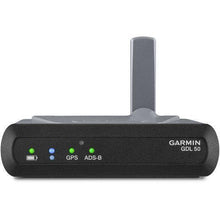
Garmin GDL 50 Portable ADS-B Datalink Receiver 010-01561-00
Portable ADS-B receiver with free FIS-B weather and an 8-hour battery, adding a built-in GPS and backup attitude data to boost situational awareness in the cockpit.
Regular price $850.00Sale price $850.00 Regular priceUnit price per$900.00 -
 NewVendor:uAvionix
uAvionix AV-30-E Experimental 3-Inch Digital Multi-Function Display UAX-90051-01
Experimental 3-inch MFD combining attitude and nav for homebuilts, replacing aging mechanical gauges and vacuum systems with customizable layouts.
Regular price $1,849.00Sale price $1,849.00 Regular priceUnit price per -
 SaleVendor:Garmin
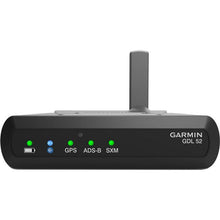
Garmin GDL 52 Portable SiriusXM AHRS ADS-B Receiver: All-in-One Aviation Receiver
Portable ADS-B receiver with SiriusXM weather and built-in AHRS, turning any EFB into a complete cockpit information display for traffic, terrain, and backup attitude.
Regular price $1,360.00Sale price $1,360.00 Regular priceUnit price per$1,425.00 -
 Vendor:Garmin
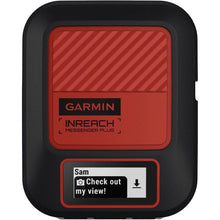
Garmin inReach Messenger Plus: Satellite Communicator with SOS and Tracking 010-02887-00
For off-grid flying, a satellite messenger with two-way texts and weather that links to a 24/7 emergency center and runs up to 600 hours in low-power mode.
Regular price $499.99Sale price $499.99 Regular priceUnit price per -
 NewVendor:Garmin
Garmin inReach Mini 3 Plus Compact SOS Satellite Communicator with Photo & Voice Messaging
A rugged satellite SOS messenger with a 50-hour battery and IP67 sealing, adding photo and voice messaging so pilots stay in touch well beyond cell coverage.
Regular price $499.00Sale price $499.00 Regular priceUnit price per -
 NewVendor:uAvionix
uAvionix AV-30-C Certified 3-Inch Digital Multi-Function Display (MFD)
TSO-certified 3-inch MFD combining attitude and navigation in one screen, replacing vacuum-driven gauges with over 14 selectable functions including AI and CDI/HSI.
Regular price $2,499.00Sale price $2,499.00 Regular priceUnit price per -
 NewVendor:uAvionix
uAvionix skyBeacon ADS-B Out Wingtip LED Nav Light with WAAS GPS UAX-90032-01
ADS-B Out upgrade built into a wingtip LED nav light, pairing a 978MHz UAT transmitter with a WAAS GPS receiver for a minimally invasive compliance path.
Regular price $2,199.00Sale price $2,199.00 Regular priceUnit price per -
Vendor:Garmin
Garmin GDL Series Portable Receivers: ADS-B and SiriusXM Weather & Traffic
Compact with no fixed installation required, this ADS-B receiver series streams FIS-B weather or full SiriusXM data to your iPad, iPhone, or portable navigator.
Regular price From $850.00Sale price From $850.00 Regular priceUnit price per$900.00 -
 NewVendor:uAvionix
uAvionix tailBeaconX TSO ADS-B Out Transponder with WAAS GPS UAX-90059-03
TSO ADS-B Out transponder and tail LED in one certified upgrade, a 1090 MHz solution that moves the transponder off the panel and onto the tail.
Regular price $2,499.00Sale price $2,499.00 Regular priceUnit price per -
 NewVendor:uAvionix
uAvionix tailBeacon TSO ADS-B Out Rear LED Position Light with WAAS GPS UAX-90036-01
ADS-B Out upgrade built into a certified rear position LED light, combining a 978MHz UAT transmitter and TSO-certified WAAS GPS in one streamlined unit.
Regular price $2,199.00Sale price $2,199.00 Regular priceUnit price per -
 NewVendor:uAvionix
uAvionix skySensor TSO-Certified ADS-B In Wingtip Sensor UAX-90098-01
ADS-B In wingtip sensor streaming traffic and weather to your EFB, a TSO-certified unit on the right wingtip that pairs with skyBeacon for full awareness.
Regular price $750.00Sale price $750.00 Regular priceUnit price per -
 NewVendor:uAvionix
uAvionix AV-20-E Experimental Multi-Function Display UAX-90062
Experimental 2-inch display for AoA, G-meter and timers that turns a standard instrument hole into a data hub with attitude and slip/skid indications.
Regular price $895.00Sale price $895.00 Regular priceUnit price per


Frequently Asked Questions
Do ADS-B receivers require a subscription, and is ADS-B weather free?
ADS-B In weather and traffic are subscription-free. A portable ADS-B receiver pulls FIS-B weather and traffic directly off the FAA's nationwide ground-station network, which the FAA broadcasts at no charge. You buy the receiver once and pay nothing recurring, unlike SiriusXM aviation weather, which needs a paid subscription.
Do you need ADS-B Out to receive ADS-B weather and traffic?
No. You do not need ADS-B Out to receive ADS-B In weather and traffic. A portable receiver listens to the FAA broadcast and works on its own. ADS-B Out, which transmits your position, is the separate rule-airspace mandate handled by a certified panel install such as the uAvionix tailBeacon.
What is the difference between ADS-B In and ADS-B Out?
ADS-B In receives data, bringing free traffic and FIS-B weather to your EFB, and it is optional. ADS-B Out transmits your aircraft's GPS position to ATC and other aircraft, and it is the regulatory requirement for flying in most controlled airspace. A portable receiver gives you In; a certified installation provides Out.
Can you get weather on 1090 MHz, or only on 978 MHz?
FIS-B weather is broadcast only on 978 MHz UAT, not on 1090 MHz ES. A dual-band receiver listens on both 978 and 1090, so it gets the free weather and sees all traffic. A 1090-only receiver still shows traffic on that band but misses 978 UAT targets and receives no ADS-B weather.
What is the difference between ADS-B weather and SiriusXM aviation weather?
ADS-B FIS-B weather is free but line-of-sight, so reception can drop at low altitude, on the ground, or near terrain, and a single ground station reaches roughly 200 nautical miles. SiriusXM is satellite-delivered, works at any altitude, and offers higher-resolution radar at greater range, but requires a paid subscription.
What is dual-band ADS-B and why does it matter for seeing all traffic?
Dual-band ADS-B means the receiver listens on both 978 MHz UAT and 1090 MHz ES, the two frequencies U.S. aircraft transmit on. Because traffic is split across both bands, a dual-band receiver shows you every nearby aircraft, while a single-band 1090 unit misses 978 UAT targets and gets no FIS-B weather.
No questions match your search. Try another term or ask our team.
