




-
 Vendor:Icom
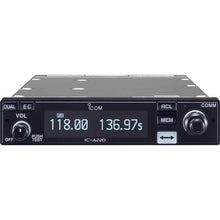
Icom IC-A220 VHF Panel Mount VHF Air Band Transceiver with OLED Display
Panel-mount VHF radio for reliable installed cockpit comms, with a quick channel switch that keeps pilots heads-up and on frequency during busy radio work.
Regular price $1,449.95Sale price $1,449.95 Regular priceUnit price per$2,530.00 -
 Vendor:Icom
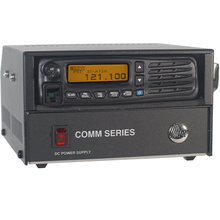
Icom IC-A120B VHF Air Band Transceiver - Base Station
Ground-station VHF radio with Bluetooth for FBO and ramp operations, built as the communication backbone linking dispatch, air traffic control, and maintenance teams.
Regular price $1,449.95Sale price $1,449.95 Regular priceUnit price per$2,099.00 -

Fresh from The Hangar
The latest from top aviation brands. -
 Vendor:Icom
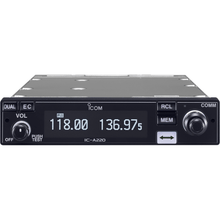
Icom A220T TSO'd Panel Mount VHF Air Band Transceiver with OLED Display (8.33/25 kHz)
For certified panels: TSO'd panel-mount VHF radio with 8-watt output, bringing Part 23 owners the same proven performance experimental and LSA pilots already trust.
Regular price $2,199.00Sale price $2,199.00 Regular priceUnit price per$3,499.00
Frequently Asked Questions
Is the Icom IC-A220 a TSO-certified aviation radio?
No. The standard IC-A220 is the non-TSO version, intended for experimental and light sport aircraft. If you need TSO approval for a certified airplane, choose the IC-A220T, which is approved under TSO-C128a and TSO-C169a as a primary VHF radio in Part 23 general aviation aircraft.
What is the difference between a panel-mount and a handheld aviation radio?
A panel-mount radio is permanently installed in the aircraft and wired to ship power, the antenna, and the intercom as your primary comm. A handheld is a portable, battery-powered transceiver carried as a backup or for ramp use. Most pilots fly a panel mount and keep a handheld for emergencies.
Do you need a TSO-certified radio for IFR flight?
In a type-certificated aircraft, the equipment used for required communication generally must be approved, which is why certified and IFR airplanes use a TSO'd radio such as the IC-A220T. Experimental and light sport aircraft are not held to the same TSO requirement. Confirm your specific install with your avionics technician.
What is 8.33 kHz channel spacing on an aviation radio?
Channel spacing is the frequency gap between adjacent comm channels. The older standard is 25 kHz, but 8.33 kHz packs channels more tightly to relieve crowded airspace and is required in parts of Europe. The IC-A220 and IC-A220T support both 8.33 and 25 kHz so they work in either environment.
Can the Icom IC-A220 replace a Garmin SL40 or Bendix/King KY97A?
The IC-A220 series is designed to fit common existing radio brackets, including those used by the Garmin SL40 and the Bendix/King KY96A and KY97A, which can simplify an upgrade. Bracket and connector fit varies by aircraft, so have a certified avionics technician verify your specific installation before ordering.
What is an aviation base station radio used for?
A base station such as the IC-A120B is a ground-based VHF radio used by FBOs, flight schools, and uncontrolled airports to communicate with aircraft in the pattern or on the ramp. It is not installed in an airplane; it sits at the operations desk to provide ground-to-air advisories and coordination.
No questions match your search. Try another term or ask our team.
