



Best Aviation Headsets for Student Pilots (2026)


The best aviation headset for most student pilots is the David Clark H10-13.4: passive, rated at 23 dB, backed by a five-year warranty, and in David Clark's words one of the best-selling headsets in aviation. To buy once and never upgrade, get the Lightspeed Zulu 4, an active noise reduction (ANR) headset with ear seals designed for glasses and a seven-year limited warranty. On a tight budget, the ASA AirClassics HS-1A carries a lifetime warranty; in between, the Pilot USA Pro Max ANR brings ANR without the flagship price.
Every pick here is in the Pilot Mall aviation headsets collection. Specs come from the manufacturers and product listings as of October 2026; the evaluations are spec-informed judgment, not lab results.
Quick picks:
- Best for most students: David Clark H10-13.4, NRR 23 dB, five-year warranty
- Best budget: ASA AirClassics HS-1A, lifetime warranty
- Best mid-range ANR: Pilot USA Pro Max ANR, dual Bluetooth
- Buy-once ANR: Lightspeed Zulu 4, seven-year warranty
- Comfort pick: Bose A30, 20% less clamping force than the A20
- House-brand value: PilotMall.com Sound Silencer Passive, 25 dB
Hear every call from your first lesson
Passive and ANR headsets from David Clark, Lightspeed, Bose, ASA, Faro, Pilot USA, and PilotMall.com.
Shop Aviation Headsets →What matters in a training headset
Should a student pilot buy a passive or ANR headset?
A passive headset is enough to train, but ANR cuts the low-frequency engine drone that wears you down on long lessons and cross-countries.
The FAA brochure Hearing and Noise in Aviation puts a small single-engine cockpit at 70 to 90 dB and lists distraction, fatigue, and more errors among the effects of loud noise. Passive ear seals block high frequencies far better than low ones: David Clark's data for the H10-13.4 shows 33.0 dB of attenuation at 1,000 Hz but 16.6 dB at 125 Hz, where engine drone lives. The FAA notes that active noise reduction "provides effective protection against low-frequency noise."
Passive is plenty for an hour in the pattern and needs no batteries. ANR earns its keep on cross-countries, including the 150-nautical-mile solo cross-country that 14 CFR 61.109 requires for a private airplane certificate. More in passive vs active noise reduction.
What else to check
- Plug: most single-engine trainers use dual GA plugs (PJ-055 headphone, PJ-068 mic); helicopter trainers commonly use the U-174. See our guide to headset plugs.
- Clamp and weight: passive headsets seal by clamping, and gel ear seals spread the pressure. The H10-13.4 is 16.5 ounces without its cord; the Bose A30 is 14.2 ounces on the head.
- Glasses: David Clark advises avoiding wide-frame eyewear and ball caps because they degrade the ear seal. The Zulu 4's FrameFit seals are designed for glasses.
- Mic and audio: a noise-canceling boom mic set close to your lips keeps your calls readable. Buy mono, or stereo with a stereo/mono switch.
- Warranty: three years (Faro G2 ANR, Sound Silencer Passive), five (H10-13.4, Bose A30), seven (Zulu 4), or lifetime (HS-1A, original owner).
What is the best aviation headset for student pilots?
For most students it is the David Clark H10-13.4, a proven passive headset with a five-year warranty, while the ASA AirClassics HS-1A is the tightest-budget choice.
For a deeper budget comparison, see best budget aviation headsets or browse passive headsets.
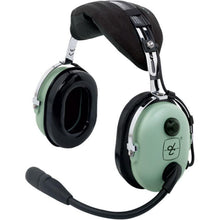
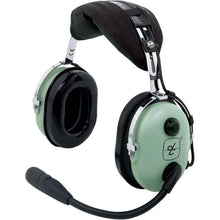
David Clark H10-13.4
The classic student headset: 23 dB NRR, undercut Comfort Gel ear seals, a double-foam head pad, the M-7A noise-canceling mic, FAA TSO approval, and a five-year warranty. Expect a firm clamp; that is how a passive headset seals. The H10-13S adds stereo with an inline stereo/mono switch, and the H10-13H uses a coiled cord and a single U-174 plug for helicopters.
Click for Price: David Clark H10-13.4
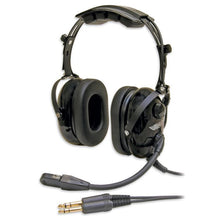
ASA AirClassics HS-1A
ASA guarantees the HS-1A against defects in materials and workmanship for the life of the original owner. It is rated at 23 dB NRR, offers stereo/mono capability and dual volume controls, and uses an electret noise-canceling flex-boom mic. ASA says the headband accommodates eyeglasses and hats.
Click for Price: ASA AirClassics HS-1A
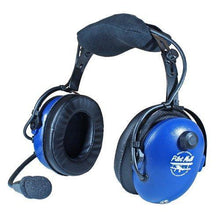
PilotMall.com Sound Silencer Passive
Pilot Mall's house-brand passive headset delivers 25 dB of noise reduction at 15 ounces, with leatherette ear seals, a pillow-top head pad, dual volume controls, mono/stereo capability, a cell phone interface, and a three-year warranty.
Click for Price: PilotMall.com Sound Silencer Passive
Mid-range ANR picks
All three keep a passive seal and add active cancellation; see all ANR headsets.
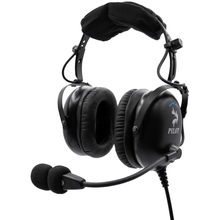
Pilot USA Pro Max ANR
The most adaptable pick. ANR rated at up to 21 dB adds to 24 dB of passive reduction, and detachable cords adapt it to dual GA plugs, helicopters, and LEMO panel power. Dual Bluetooth pairs a phone and tablet at once, a recording output captures cockpit audio for lesson review, and two AA batteries are rated for 25 hours.
Click for Price: Pilot USA Pro Max ANR
Faro G2 ANR
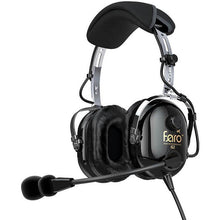
Faro pairs 23 dB of passive reduction with ANR and rates the G2 for up to 30 hours on two AA batteries; it keeps working as a passive headset if the batteries die. Gel ear seals, independent volume controls, and mono and stereo intercom support suit a training fleet; Faro's three-year warranty replaces a failed headset with a new one.
PilotMall.com Sound Silencer ANR
The entry point to ANR at Pilot Mall: 24 dB of passive protection plus 16 to 19 dB of active reduction, 20 to 25 hours on a single 9V battery, dual volume controls, and auxiliary inputs.
Click for Price: PilotMall.com Sound Silencer ANR
Is a premium ANR headset worth it for a student pilot?
Yes, if you will keep flying after the checkride, because the Lightspeed Zulu 4 and Bose A30 are buy-once headsets backed by seven-year and five-year warranties.
Lightspeed Zulu 4
The successor to Lightspeed's Zulu 3 has FrameFit ear seals designed for glasses, sunglasses, and hats, and the Lightspeed app records incoming and outgoing communications for the post-flight debrief. Dual Bluetooth connects a phone and tablet at once, AI processing strips up to 90% of background noise from outgoing Bluetooth calls, and the limited warranty runs seven years. It also comes in helicopter and LEMO versions.
Click for Price: Lightspeed Zulu 4
Bose A30
The comfort-first pick: 14.2 ounces on the head and 20% less clamping force than the A20, per Bose. You get three selectable ANR modes, a double-tap talk-through for conversations outside the intercom, 45-plus hours on two AA batteries (25-plus with Bluetooth), a mic that swaps sides without tools, and a five-year limited warranty. Bose also makes a U-174 helicopter version.
Who should skip a premium ANR headset?
- Not sure you will finish training: rent or borrow the school headset until you commit.
- Short local lessons on a tight budget: a passive H10-13.4 or HS-1A does the job.
- Want ANR without the flagship price: choose the Pilot USA Pro Max ANR or Sound Silencer ANR.
Compare the picks
| Headset | Noise control | Power | Best for |
|---|---|---|---|
| David Clark H10-13.4 | Passive, NRR 23 dB | None needed | Most students |
| ASA AirClassics HS-1A | Passive, NRR 23 dB | None needed | Tightest budget, lifetime warranty |
| Sound Silencer Passive | Passive, 25 dB | None needed | Value with a phone interface |
| Pilot USA Pro Max ANR | 24 dB passive plus up to 21 dB ANR | Two AA, 25 hours | Airplane, helicopter, and panel power |
| Faro G2 ANR | 23 dB passive plus ANR | Two AA, up to 30 hours | ANR that falls back to passive |
| Sound Silencer ANR | 24 dB passive plus 16 to 19 dB ANR | One 9V, 20 to 25 hours | Entry-level ANR |
| Lightspeed Zulu 4 | ANR, FrameFit seals | Two AA or LEMO panel power | Buy once; glasses wearers |
| Bose A30 | ANR, three modes | Two AA, 45-plus hours | Comfort on long flights |
Should you rent the school headset or buy your own?
Rent or borrow for a discovery flight and the first lesson or two, then buy your own once you commit to training.
The FAA minimum for a private certificate in a single-engine airplane is 40 hours of flight time, including 20 hours of instruction and 10 hours solo (14 CFR 61.109). School headsets are shared and their seals wear; your own fits and sounds the same every flight, and it stays with you after the checkride.
Buying a headset for a student pilot as a gift?
Confirm the plug type with their flight school first, then match passive or premium ANR to how far they plan to fly.
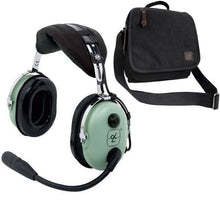
Dual GA plugs suit most airplane trainers; helicopter trainers commonly use U-174. Ask whether they wear glasses, too. The David Clark H10-13.4 and bag combo includes a protective headset bag. More ideas in student pilot gifts.
Frequently asked questions
What is the best aviation headset for a student pilot?
For most students, the David Clark H10-13.4, a passive headset with a 23 dB noise reduction rating, the M-7A noise-canceling mic, and a five-year warranty. To buy once, choose the Lightspeed Zulu 4, which adds active noise reduction, ear seals designed for glasses, an app that records your radio calls, and a seven-year limited warranty.
What plug type does a student pilot headset need?
It must match the aircraft. Most single-engine training airplanes use dual GA plugs, a quarter-inch headphone plug and a smaller mic plug. Helicopter trainers commonly use a single U-174 plug, and some newer airplanes add a 6-pin LEMO jack that powers ANR from the aircraft. Ask your flight school which jacks its fleet uses before you buy.
Do ANR headsets need batteries?
Most do. Dual GA plugs are not built to power ANR, so most ANR headsets on them run on batteries: two AA for the Bose A30 (45-plus hours) and Faro G2 ANR (up to 30 hours), or one 9V for the Sound Silencer ANR. A 6-pin LEMO jack powers ANR from the aircraft instead.
Should a student pilot buy a mono or stereo headset?
Mono is the simple choice, and stereo works if it has a switch. According to David Clark, a stereo headset plugged into a mono aircraft plays in only one ear until you set its stereo/mono switch to mono. The H10-13.4 is mono, the H10-13S is stereo with an inline stereo/mono switch, and the ASA HS-1A offers stereo/mono capability.
Can I wear glasses with an aviation headset?
Yes, but frame style matters. David Clark advises avoiding wide-frame eyeglasses and ball caps because they can degrade the ear seal, so thin temples are the better choice. The Lightspeed Zulu 4 uses FrameFit ear seals designed for glasses, sunglasses, and hats, and ASA says the HS-1A headband accommodates eyeglasses.
Related reading: Bose A30 review and student pilot gear checklist.
About the author: Neil S. Glazer is a commercial pilot with multi-engine and instrument ratings and the founder of PilotMall.com. He has spent more than two decades flying, testing, and selling the gear pilots depend on, and every product recommendation on this site is grounded in that firsthand experience. Read more on his author page.