



Pilot Uniforms Explained: What Pilots Wear and Why


The quick answer: a standard airline pilot uniform is a white shirt with shoulder straps and epaulets, a dark tie, black or navy trousers, a matching blazer with rank braid on the sleeves, and at many airlines a peaked cap with the company badge. Wings are worn on the chest.
Rank shows in two places: the epaulets on the shirt shoulders and the braid rings on the blazer sleeves. At most airlines, four stripes mean captain and three mean first officer.
The blazer and cap follow whatever your operator specifies. The working core of the uniform, the pieces that wear out and get replaced year after year, are the shirt and the epaulets. This guide walks through every component, what the stripes actually mean, where the white shirt tradition came from, and how to put your own kit together. Browse the full shirt lineup in the Professional Pilot Shirts collection.
The Components of a Pilot Uniform
Seven pieces make up the standard airline kit. Here is what each one does.
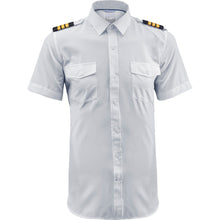
- The shirt: A white professional pilot shirt with a shoulder strap sewn on each shoulder to carry the epaulets. Many professional shirts also come with reinforced eyelets sized to hold wing pins and badges. Modern performance versions, like the Lift Aviation Flextech line, add stretch fabric, moisture wicking, and ventilation points for long duty days.
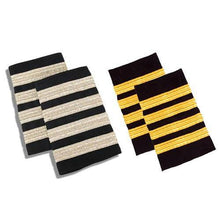
- Epaulets: The modern airline epaulet is a flat cloth tube, often called a shoulder mark or soft shoulder board, that slides over the shirt's shoulder strap with the bars facing forward. Because it slips on and off, you can swap insignia as you upgrade seats without buying new shirts.
- Wings: A wing pin worn on the chest. On eyelet shirts, the reinforced eyelets exist specifically to hold wing pins and badges without chewing up the fabric.
- The tie: Dark, plain, and worn whenever the operator's standard calls for it.
- Trousers: Dark trousers, black or navy, matched to the blazer.
- The hat: A peaked cap carrying the airline badge. How often it actually gets worn varies widely by carrier.
- The blazer: Black or navy, with braid rings on the sleeves that mirror the wearer's epaulet stripe count. Some operators treat it as optional outside of formal settings.
What the Stripes Mean
At most airlines, four stripes mean captain, three mean first officer or senior first officer, two mean second officer or flight engineer, and one marks a pilot in training. There is no worldwide standard; each operator sets its own ladder, and flight academies often repurpose the system to mark training milestones like an instrument rating or a commercial certificate. The braid on the blazer sleeves matches the count on the shoulders, so rank reads the same with the jacket on or off. One more nuance worth knowing: the stripes tell you rank and seat within that operator, not total experience across a career.
Why the White Shirt
Before the 1930s, airline pilots dressed in kit carried over from World War I flying: leather jackets, scarves, khaki trousers, and soft leather helmets. Pan American World Airways changed that in the early 1930s at the start of its flying boat era, dressing crews almost identically to naval officers, down to the white hat, double-breasted black jacket, and gold sleeve braid signifying rank.
The move was deliberate positioning. Pan Am's ocean-crossing captains were framed as sea skippers competing directly with ocean liners, and Juan Trippe named the aircraft Clippers to drive the maritime association home. Every other major carrier eventually adopted its own version of the naval look, and the white shirt with dark blazer and rank stripes remains the industry standard nearly a century later.
The epaulet itself predates aviation by centuries. The word comes from the French epaule, meaning shoulder, so an epaulet is literally a little shoulder piece. It began in late 17th century France as bunches of ribbons that also kept shoulder belts from slipping, hardened into standardized officer rank insignia across European armies through the 18th century, and was formally adopted by the British Royal Navy in 1795 and authorized by the U.S. Navy in 1797. Airlines inherited all of it through Pan Am's naval styling.
Airline Standards vs What Working Pilots Wear
No federal rule tells a pilot what to wear. Dress and grooming standards are entirely employer policy, which leaves a wide range across the industry.
- Airlines: The full traditional uniform described above, worn to company specification.
- Corporate and charter: Business casual is the norm. Dress slacks, dress shoes, and a company polo is standard fare, with some flight departments flying in shirt and tie. Generally more relaxed than the airlines.
- Flight instructors: Similar territory: slacks or khakis with a school polo. Many flight schools, though, put students in the full airline-style uniform of white shirt, black pants, and black tie to build professional habits early.
- Private flying: No uniform at all. Wear whatever is comfortable and safe for the airplane and the season.
The practical takeaway: read your employer's policy before you buy anything. Stripe counts, board colors, and whether eyelet shirts are expected all vary by operator, and a five-minute look at the manual beats guessing.
Building Your Uniform Kit
Start with the shirt. The Lift Aviation Flextech Professional Pilot Shirt line covers the four combinations that matter: short or long sleeve, with or without eyelets. All four are white, run S through 2XL, and use the same four-way stretch, moisture-wicking poly blend, with a shoulder strap for epaulets on each shoulder and a chest pocket with a pen slip, aimed squarely at airline, corporate, and professional aircrew.
| Shirt | Sleeve | Eyelets | Sizes | Best For |
|---|---|---|---|---|
| Flextech Short Sleeve (With Eyelets) | Short | Yes | S to 2XL | Warm climates, crews who pin wings daily |
| Flextech Short Sleeve | Short | No | S to 2XL | Warm climates, no pinned insignia |
| Flextech Long Sleeve (With Eyelets) | Long | Yes | S to 2XL | Year-round wear with wings and badges |
| Flextech Long Sleeve | Long | No | S to 2XL | Cool cockpits, clean no-pin look |
Choosing between the four comes down to two questions. Do you wear pinned wings or badges on duty? If yes, take the eyelet versions; pushing a pin through a plain shirt front leaves permanent holes in the fabric. Then pick sleeve length by climate and company standard: short sleeve for warm ramps and summer schedules, long sleeve where the operator expects it under a blazer or the flight deck runs cold. Plenty of working pilots keep both in rotation, and rotating three or more shirts spreads the wear across all of them.
Two buying notes. First, the eyelets are for wing pins and badges, not for the epaulets. Epaulets ride the shoulder strap sewn into every Flextech shirt, bars facing forward, and they are sold separately; wing pins are not included either. Second, because the boards slide off in seconds, one set moves between shirts. Most pilots buy several shirts and a single pair of boards.
For the boards themselves, the Premium Epaulets: Traditional Shoulder Boards for Aviators come in one through four bar versions and four color combinations, polished gold or silver bars on black or blue fabric, so you can match your operator's ladder and color scheme. Click for Price.
Build your uniform kit
Flextech professional pilot shirts from Lift Aviation, plus traditional shoulder boards for aviators.
Shop Professional Pilot Shirts →Frequently Asked Questions
What does a standard airline pilot uniform consist of?
A standard airline pilot uniform is a white shirt with shoulder straps and epaulets, a dark tie, black or navy trousers, a matching blazer with rank braid on the sleeves, and at many airlines a peaked cap carrying the company badge, with wings worn on the chest. Seven pieces make up the full kit. Rank shows in two places, the epaulets on the shirt shoulders and the braid rings on the blazer sleeves, so it reads the same with the jacket on or off.
What do the stripes on a pilot uniform mean?
At most airlines, four stripes mean captain, three mean first officer or senior first officer, two mean second officer or flight engineer, and one marks a pilot in training. There is no worldwide standard, so each operator sets its own ladder, and flight academies often repurpose the system to mark training milestones such as an instrument rating or a commercial certificate. The stripes tell you rank and seat within that operator, not total experience across a career.
Why do airline pilots wear white shirts?
The tradition dates to the early 1930s, when Pan American World Airways dressed its flying boat crews almost identically to naval officers, down to the white hat, double-breasted black jacket, and gold sleeve braid. The move was deliberate positioning, because Pan Am's ocean-crossing captains were framed as sea skippers competing with ocean liners, and Juan Trippe named the aircraft Clippers to drive the association home. Every other major carrier eventually adopted its own version, and the look remains the industry standard.
What are the eyelets on a pilot shirt for?
The reinforced eyelets on a professional pilot shirt are sized to hold wing pins and badges without chewing up the fabric. They are not for the epaulets. Epaulets slide over the shoulder strap sewn into the shirt with the bars facing forward. If you wear pinned wings or badges on duty, choose an eyelet shirt, because pushing a pin through a plain shirt front leaves permanent holes. If you never pin anything on, the plain versions give a cleaner look.
Do pilots have to wear a uniform?
No federal dress or grooming standard applies to pilots, so what you wear is set entirely by employer policy. Airline pilots follow a company uniform standard. Corporate and charter flying is usually business casual, with dress slacks, dress shoes and a company polo, though some flight departments fly in shirt and tie. Flight instructors are similar, though many flight schools put students in a full airline-style uniform to build professional habits early. Private flying has no uniform at all.
How do pilot epaulets attach to the shirt?
Modern airline epaulets slide on rather than pin on. The epaulet is a flat cloth tube, often called a shoulder mark or soft shoulder board, that slides over the shoulder strap sewn onto each shoulder of the shirt, with the bars facing forward. Because it slips on and off in seconds, one set of boards moves between shirts, and you can swap insignia as you upgrade seats without buying new shirts. Most pilots buy several shirts and a single pair of boards.
What is the difference between the four Lift Aviation Flextech pilot shirts?
The four shirts differ in only two things, sleeve length and eyelets. All four are white, run S through 2XL, and use the same four-way stretch, moisture-wicking poly blend, with a shoulder strap for epaulets on each shoulder and a chest pocket with a pen slip. Choose short sleeve for warm ramps and summer schedules, and long sleeve where the operator expects it under a blazer or the flight deck runs cold. Take the eyelet versions if you pin wings or badges on duty, and the plain versions if you do not.
Where does the word epaulet come from?
The word comes from the French epaule, meaning shoulder, so an epaulet is literally a little shoulder piece. It began in late 17th century France as bunches of ribbons that also kept shoulder belts from slipping, hardened into standardized officer rank insignia across European armies through the 18th century, was formally adopted by the British Royal Navy in 1795, and was authorized by the U.S. Navy in 1797. Airlines inherited all of it through Pan Am's naval styling.