



ASA CX-3 Flight Computer Review: Worth It for Your Checkride?


This is a spec-informed review built on ASA's published specifications and current manufacturer claims, verified as of August 2026.
The short answer: yes, the ASA CX-3 is worth it for most student pilots. It solves every planning problem the knowledge test throws at you faster than a manual slide rule, ASA states it "can be used on all FAA and Canadian pilot, mechanic, and dispatcher knowledge exams," and it keeps working for you after the test with weight and balance, holding pattern entries, and stored aircraft profiles.
Get your flight computer
Manual E6Bs, electronic calculators, and VFR plotters from ASA and Jeppesen.
Shop Flight Computers and Plotters →What the CX-3 Actually Does
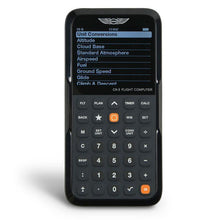
The CX-3 is ASA's menu-driven electronic flight computer, and its function list covers the full private through commercial planning stack. Per ASA, the built-in functions include:
- Planning math: time-speed-distance, heading and wind, and fuel management.
- Altitude work: altitude calculations, including cloud base, plus standard atmosphere values.
- Performance: glide, climb, and descent rates.
- Loading: weight and balance.
- Instrument prep: holding pattern entries.
- Utilities: a standard calculator, clock, timer, and stopwatch.
- Conversions: 12 built-in unit conversions, covering distance, speed, duration, temperature, pressure, volume, rate, weight, rate of climb and descent, angle of climb and descent, torque, and angle.
Two workflow features matter more than the raw list. Favorite-function quick access puts the calculations you run every flight one press away, and aircraft profile storage means you enter your trainer's numbers once instead of rebuilding them for every cross-country.
Knowledge Test Acceptance: What ASA Claims
This is the question that sells the unit, so here is ASA's acceptance claim quoted exactly, as of August 2026: "It can be used on all FAA and Canadian pilot, mechanic, and dispatcher knowledge exams."
One caveat ASA makes explicit: the companion CX-3 app is not allowed for test taking. Practice on your phone if you like, but the handheld is what goes to the testing center. And since testing policies can change, confirm the current rules with your testing provider before exam day.
The checkride is a different story. The oral is not a button-speed contest; the examiner wants to see that you understand where the numbers come from. The CX-3 makes your cross-country planning fast and repeatable, but be ready to explain the wind triangle behind the answer it gives you.
CX-3 vs a Manual E6B
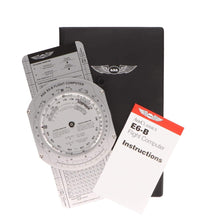
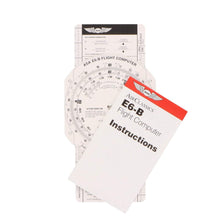
A manual E6B is a mechanical slide rule with a wind side. It never needs batteries, and working problems on it forces you to see the relationships an electronic unit hides behind a menu. That is why many instructors still start students on the manual computer, then let them graduate to a CX-3 for speed. If you are weighing the two formats from scratch, our E6B flight computer guide walks through both in depth.
| Feature | ASA CX-3 | Manual E6B |
|---|---|---|
| How it works | Menu-driven electronic calculator | Mechanical slide rule with a wind side |
| Wind and TSD problems | Direct numeric answers, no interpolation | Solved by hand on the scales and wind face |
| Extras | Weight and balance, holding entries, timers, aircraft profiles | None, and nothing electronic to fail |
| Power | 4 AAA alkaline batteries, included | No batteries, ever |
| Unit conversions | 12 built in | Read from the printed scales |
| Best for | Test-day speed and everyday planning | Learning the underlying math, backup use |
Hardware, Battery, and Warranty
The CX-3 uses an LCD with four backlighting options and three viewing themes, Standard, Night, and Daylight, and the keypad buttons light up in Dusk and Night modes. A protective cover snaps onto the back, and a no-slip strip keeps the CX-3 from sliding around on smooth desk surfaces.
Power comes from 4 AAA alkaline batteries, included in the box. Settings and calculations are retained until the batteries are removed or the memory is reset, so your aircraft profiles survive normal use. ASA covers the unit with a 5-year limited warranty, as of August 2026, which is a long runway for a device most pilots buy as students and keep flying with for years.
Who Should Skip the CX-3
- You have no knowledge exams left: if you are certificated, done testing, and your planning lives in an EFB, the CX-3 duplicates work your tablet already does.
- You want the lowest-cost path to the written: a manual E6B handles the same core planning math, just slower, and there is no battery to think about.
- You were planning to rely on the phone app: ASA states the app is not allowed for test taking, so the app alone does not solve test day.
- You learn better by hand: some pilots genuinely retain the math better after a season of turning the manual wheel. Buy the CX-3 later; it will still be there.
Frequently Asked Questions
Can I use the ASA CX-3 on the FAA knowledge test?
Yes. ASA states that the CX-3 can be used on all FAA and Canadian pilot, mechanic, and dispatcher knowledge exams, as of August 2026. Bring the physical handheld unit rather than the phone app, because ASA states the app is not allowed for test taking. Testing policies can change between now and your exam date, so confirm the current rules with your testing provider before you sit down. The unit keeps earning its place after the written, since the same planning functions carry over into everyday cross-country work.
Is the CX-3 companion app allowed for test taking?
No. ASA states the CX-3 app is not allowed for test taking, so only the handheld unit goes with you to the testing center. The app is still useful before exam day, because you can practice the same menu flow on your phone and get comfortable with where each function lives. Plan on carrying the physical CX-3 to the test, and treat the app purely as a study aid rather than a substitute for the hardware.
What batteries does the ASA CX-3 use?
The CX-3 runs on 4 AAA alkaline batteries, and ASA includes them in the box. Settings and calculations are retained until the batteries are removed or the memory is reset, so the aircraft profiles you build survive normal use and a routine battery change is not something to fear. That retention is the practical difference from a basic calculator, because you enter your trainer's numbers once rather than rebuilding them before every cross-country.
Does the ASA CX-3 do weight and balance?
Yes. Weight and balance is one of the CX-3's built-in functions. It sits alongside time-speed-distance, heading and wind, fuel management, altitude calculations including cloud base, standard atmosphere values, glide, climb and descent rates, and holding pattern entries. The unit also stores aircraft profiles, so once you have entered your trainer's loading data you can run the weight and balance case for that airplane without re-entering the numbers each time.
What warranty does the ASA CX-3 come with?
ASA covers the CX-3 with a 5-year limited warranty, as of August 2026. ASA warrants the computer to the original purchaser for five years from the initial date of purchase against defects in material and workmanship, and states that batteries are not covered by that warranty. That is a long support runway for a device most pilots buy as students and keep using well past the checkride, which is part of why the CX-3 tends to outlast the training it was bought for.
Should I buy the ASA CX-3 or a manual E6B?
Start with the format that matches where you are in training. A manual E6B is a mechanical slide rule with a wind side, it never needs batteries, and working problems by hand forces you to see the relationships an electronic unit hides behind a menu, which is why many instructors start students there. The CX-3 returns direct numeric answers with no interpolation, adds weight and balance, holding pattern entries, timers and stored aircraft profiles, and carries 12 built-in unit conversions. Plenty of pilots end up owning both.
What functions does the ASA CX-3 have?
The CX-3 covers the full private through commercial planning stack. ASA's built-in function list includes time-speed-distance, heading and wind, fuel management, altitude calculations including cloud base, standard atmosphere values, glide, climb and descent rates, weight and balance, and holding pattern entries, plus a standard calculator, clock, timer and stopwatch. It also carries 12 unit conversions covering distance, speed, duration, temperature, pressure, volume, rate, weight, rate of climb and descent, angle of climb and descent, torque and angle.
Who should skip the ASA CX-3?
Skip it if you have no knowledge exams left and your planning already lives in an electronic flight bag, because the CX-3 duplicates work your tablet is doing. Skip it if you want the cheapest path to the written, since a manual E6B handles the same core planning math more slowly with no battery to think about. Skip it if you were counting on the phone app, which ASA states is not allowed for test taking. And skip it for now if you genuinely learn the math better by hand.