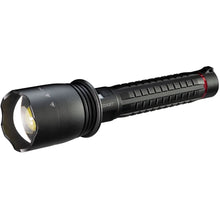




Best Aviation Flashlights for Night Flying


The best aviation flashlight for most pilots is a dual-color handheld that carries both white and red in one body, and the Coast PX20 is the strongest all-around pick in that mold. If you want light that stays on the task while your hands fly the airplane, a finger light like the DEX FingerLight or the FliteLite Pro Red is the answer, and for a fully hands-free walkaround the Powercap Navigator LED hat puts the beam wherever you look.
Every light in this guide lives in the Pilot Mall pilot flashlights collection. Specs come from the manufacturer and product listings as of August 2026; the evaluations here are spec-informed judgment, not lab results.
Quick picks:
- Best overall: Coast PX20, a 315-lumen white beam and a night-vision red in one handheld
- Best for chart work: DEX FingerLight, the light that follows your finger
- Best for dark adaptation: FliteLite Pro Red, dimmable red with brightness memory
- Best hands-free: Powercap Navigator LED hat
- Professional grade: SureFire Aviator, Mil-Spec dual output
Light your night flying right
Dual-color handhelds, finger lights, and hands-free LED caps from Coast, DEX, FliteLite, Panther Vision, and SureFire.
Shop Pilot Flashlights →Why red (and white) light matters at night
Night vision runs on the rods, and the rods are slow. The FAA Airplane Flying Handbook puts numbers on it: the rods sit mainly in the periphery of the retina, an area about 10,000 times more sensitive to light than the fovea, and maximum dark adaptation can take up to 30 minutes. Expose dark-adapted eyes to a bright light source for a second or more and night vision is temporarily impaired, which is why both the handbook and AIM 8-1-6 tell you to close one eye when a bright light has to come on. Protect the adaptation you spent half an hour building.
Red light is the tool for the job because the rods are relatively insensitive to red wavelengths. Dim red lets you read a checklist without resetting the clock, and per AIM 8-1-6 a moderate degree of dark adaptation can be reached in about 20 minutes under dim red cockpit lighting.
Red has one trap: it washes out red print, and charts use plenty of it. A red-only cockpit can hide exactly the lines you care about. The FAA doctrine is simple: bright white for the preflight walkaround, dim red (or heavily dimmed white) for cockpit tasks, with white on call for chart reading. That is why nearly every light in this roundup carries two colors.
What to look for in a pilot flashlight
- Dual color you can select directly: Reaching red should take one deliberate action, not a march through full white at altitude. The Powercap Navigator goes furthest here, with independent red and white LED systems on separate switches and separate battery packs. The Coast PX20 puts the red light one touch away.
- Lockout or auto-off: A flashlight that fires inside the flight bag greets you at the airplane with dead batteries. The SureFire Aviator has a selector ring with a full system-disable position; the FliteLite Pro Red uses a 10-minute auto-off.
- Hands-free options: You fly with both hands busy. A pocket clip is the minimum; a finger strap or brim-mounted LEDs are better for chart and checklist work.
- Battery logistics: The PX20 is rated for 50 hours of battery life, the DEX FingerLight recharges over USB-C, and the FliteLite uses three 389/390 silver-oxide button cells. Any of these can work; the rule is that spares (or the charging cable) live in the flight bag.
- Dimming: Dimmable output with brightness memory, like the FliteLite Pro Red, means the light comes back at the level you trusted last flight, not at full blast.
The best aviation flashlights
Coast PX20 dual-color flashlight
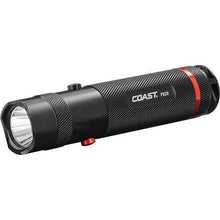
The PX20 is the default answer for most pilots. It pairs a 315-lumen white beam for the walkaround with a gentle red light for the cockpit, and a simple one-touch switch brings the red up when you step inside. Coast rates it for 50 hours of battery life, and the compact body fits a flight bag without adding weight you will notice.
DEX FingerLight
The DEX FingerLight is the new idea in this roundup: a USB-C rechargeable light that straps to your finger on a patented Griptonite ring, so the beam follows your hand across the chart, the kneeboard, or a dark baggage door. It runs three modes, a stealth green for preserving night vision plus dim and bright white, and a mode memory that brings it back in the mode you left it rather than cycling through the others. It throws a beam up to 36 feet and carries an IPX7 waterproof rating. Reach for the green once you are dark adapted and save the bright white for the walkaround. A combo version adds a custom-molded EVA hard case with cut foam, a mesh pocket for the charging cable, and an aluminum carabiner.
Click for Price: DEX FingerLight
FliteLite Pro Red finger light
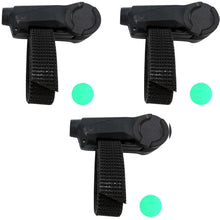
The FliteLite Pro Red is marketed as adapted from F-22 Raptor cockpit lighting technology, and the details back that pedigree up. The red LED is dimmable with brightness memory, so it returns at your last setting, and a 10-minute auto-off plus a low-battery indicator protect the three included 389/390 silver-oxide button cells. The Velcro One-Wrap strap works with or without gloves.
Click for Price: FliteLite Pro Red
Powercap Navigator LED hat
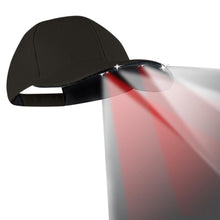
The Powercap Navigator from Panther Vision is the hands-free pick: a cotton ball cap with a six-LED system in the brim, red and white running on genuinely independent switches and separate battery packs. The button-less design sits flat under a headset, runtime reaches 68 hours, and wherever you look the light follows, which makes it a natural for walkarounds, fuel sumping, and oil checks where both hands are working.
Click for Price: Powercap Navigator
SureFire Aviator dual-output flashlight
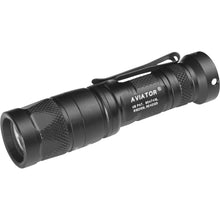
The SureFire Aviator is the professional-grade choice. A 250-lumen primary white LED pairs with a low-intensity secondary red LED (the AVIATOR-RD variant), managed by a self-locking selector ring with a tailcap switch and a system-disable position so it cannot fire in a bag. The Mil-Spec hard-anodized aluminum body is O-ring and gasket sealed, carries a stainless steel pocket clip, and runs on a single 123A lithium battery.
Click for Price: SureFire Aviator
Compare the options
| Model | Form factor | Light colors | Best for |
|---|---|---|---|
| Coast PX20 | Handheld, compact for a flight bag | 315-lumen white plus a night-vision red, one-touch switching | One light that does walkaround and cockpit |
| DEX FingerLight | Finger-worn, rechargeable | Stealth green, dim white, bright white, with mode memory | Chart and kneeboard work that follows your hand |
| FliteLite Pro Red | Finger-worn, button cells | Dimmable red with brightness memory | Staying dark adapted through cockpit tasks |
| Powercap Navigator | LED ball cap | Red and white on independent switches | Hands-free preflight and fuel sumping |
| SureFire Aviator | Handheld, Mil-Spec aluminum, single 123A lithium | 250-lumen white plus low-intensity red | Crews who want one light for a career |
Cockpit lighting strategy: primary plus backup
One flashlight is a plan to be surprised. At night the light in your hand may be the only way to read a panel with failed post lights, so build a small system instead of packing a single hero light:
- Primary: a bright white handheld like the PX20 or the Aviator for the walkaround, where color rendering and reach matter.
- Cockpit light: a dim red source staged where your hand can find it without looking, whether that is the same dual-color handheld or a finger light already strapped on before engine start.
- Hands-free layer: a finger light or the Powercap for chart, kneeboard, and checklist work while you fly.
- Backup on your body: keep one light in a shirt or jacket pocket, not in the flight bag behind the seat. A backup you cannot reach in the dark is decoration.
- Battery discipline: fresh or fully charged before a night flight, spares in the bag, and a quick function check of every light during preflight.
Frequently asked questions
What is the best aviation flashlight for most pilots?
A dual-color handheld that carries both white and red in one body, and the Coast PX20 is the strongest all-around pick in that mold. It pairs a 315-lumen white beam for the preflight walkaround with a gentle red light that protects night vision in the cockpit, and a simple one-touch switch moves you between them. Coast rates it for 50 hours of battery life, and the compact body fits a flight bag without adding weight you will notice.
Why do pilots use red flashlights at night?
Red light preserves dark adaptation. The rods that handle night vision sit mainly in the periphery of the retina, an area the FAA Airplane Flying Handbook describes as about 10,000 times more sensitive to light than the fovea, and maximum dark adaptation can take up to 30 minutes. Expose dark-adapted eyes to a bright light source for a second or more and night vision is temporarily impaired. Because the rods are relatively insensitive to red wavelengths, dim red lets you read a checklist without resetting the clock.
Is red or white light better for the preflight inspection?
White. FAA guidance calls for a bright white light during the walkaround, where you need true color rendering to inspect the airframe and check a fuel sample. Switch to dim red, or heavily dimmed white, once you are in the cockpit and adapting to darkness. This is the main reason a dual-color light beats a red-only one: the same tool covers both jobs without a filter swap.
How long does it take your eyes to adapt to the dark?
Up to 30 minutes for maximum dark adaptation, per the FAA Airplane Flying Handbook, and AIM 8-1-6 puts complete dark adaptation at 30 minutes or more in total darkness. Under dim red cockpit lighting a moderate degree of adaptation can be reached within 20 minutes, also per AIM 8-1-6. That is one more reason to keep cockpit lighting low and red from engine start onward, and to protect the adaptation you spent half an hour building rather than resetting it with one careless flash of white.
Why does red light make some chart markings hard to read?
Red light washes out red print, and aeronautical charts use red and magenta heavily. A red-only cockpit can hide exactly the lines you care about, including airspace boundaries and terrain figures. Keep a white light within reach for chart reading, dimmed as far as it will go, and use red for everything else. That split is why nearly every light built for pilots carries two colors.
Are finger lights better than a handheld for cockpit work?
For chart and checklist work, yes, because the beam follows your hand while both hands stay busy flying. The DEX FingerLight straps to your finger on a patented Griptonite ring and runs a stealth green mode plus dim and bright white, with a mode memory that brings it back where you left it. The FliteLite Pro Red offers dimmable red with brightness memory. Most pilots still carry a handheld as the primary light for the walkaround.
Do I need a backup flashlight for night flying?
Yes. A single flashlight is a single point of failure, and at night a dead light can leave you unable to read the panel if aircraft lighting also fails. Carry at least two independent lights and keep one on your body, in a shirt or jacket pocket, rather than in the flight bag behind the seat. A backup you cannot reach in the dark is decoration. Bring spare batteries or the charging cable for each.
What batteries do pilot flashlights use?
It varies by model, and the rule that matters is that spares or the charging cable live in the flight bag. Coast rates the PX20 for 50 hours of battery life, the DEX FingerLight recharges over USB-C, the FliteLite Pro Red uses three 389/390 silver-oxide button cells, and the SureFire Aviator runs on a single 123A lithium battery. The Airplane Flying Handbook recommends keeping a spare set of batteries readily available. Start every night flight with fresh or fully charged cells and function check each light during preflight.