



Mahogany vs Die-Cast Model Airplanes: How to Choose a Display Model


Buy mahogany when the model is the gift, and die-cast when it has to fit a desk or join a collection. A hand-carved High Flying Models piece usually measures 16 to 20 inches at its longest; die-cast metal holds a fixed scale and sits beside a monitor. The best single gift is the airplane they learned in, so start with the Cessna 172 Skyhawk SP Clear Canopy. For a desk or a collector, the F/A-18F 1/100 die-cast is 7 inches of licensed Boeing metal.
The display models here are in the Pilot Mall aircraft models collection, and the pullback toy is in die-cast planes. Specs come from the manufacturers and product listings as of October 2026; the evaluations are spec-informed judgment, not lab results.
Quick Picks
- Best overall gift: Cessna 172 Skyhawk SP Clear Canopy, a 17.25-inch wingspan in mahogany
- Best warbird: P-51D Mustang Old Crow, in Bud Anderson's markings
- Most detail: F-16 Fighting Falcon Clear Canopy with Full Armament
- Best for a desk: F/A-18F 1/100 die-cast, 7 inches long
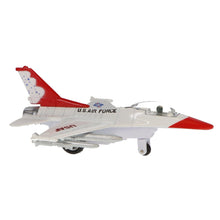
- Best for kids: F-16 Falcon 6-inch pullback, a toy rather than a display model
Find the airplane that tells their story
Hand-carved mahogany from High Flying Models, fixed-scale die-cast, and polished aluminum from Authentic Models.
Shop Aircraft Models
Is a mahogany or die-cast model airplane better?
Mahogany is better as a single centerpiece gift; die-cast is better for a working desk, a tight shelf, or a collection built at one scale.
- Mahogany is a centerpiece. High Flying Models shapes each model by hand from solid mahogany, finishes it in an authentic livery, and sells the line only at Pilot Mall. Choose it when one airplane carries the story: a first solo, a type rating, a retirement.
- Die-cast is a collection. Cast metal at a fixed scale (1/72, 1/100, 1/144, 1/200) keeps a shelf of airplanes in true proportion. The pieces in this guide measure 4.5 to 7 inches.
What scale model airplane should you buy?
With die-cast, pick one scale and stay with it; with mahogany, ignore the scale and compare the listed wingspan and length with the spot you have.
Scale is a ratio: at 1/100, one inch of model stands for 100 inches of airplane. Die-cast holds the ratio fixed, so size follows the aircraft. The Navy lists the Super Hornet at 60.3 feet long, so the 1/100 F/A-18F is 7 inches; the 1/72 S.E.5a, a small WWI biplane, spans 4.5 inches.
Mahogany flips that: the display size stays roughly constant and the scale floats. Textron lists the Skyhawk's wingspan at 36 feet 1 inch, so the 17.25-inch mahogany 172 is about 1/25, while the VC-25 Air Force One, a Boeing 747-200B, is listed at about 1:144 with a 15.5-inch wingspan. The trainer ends up wider than the jumbo jet, by design: every model reads clearly across a room.
- Working desk: 1/72 or 1/100 die-cast, beside the monitor.
- Credenza, mantel, or deep shelf: mahogany. Nearly every large model measures 16 to 20 inches at its longest; displayed nose-out, it needs shelf width for the wingspan and depth for the length.
Detail levels: canopy, armament, livery
- Clear canopy: a transparent canopy over a detailed cockpit, worth it for anyone who flew the type; standard versions are solid.
- Armament: full armament details, as on the F-16 Clear Canopy with Full Armament.
- Livery: the paint carries the story, from Old Crow's markings to the presidential blue and white of the VC-25.
What is the best model airplane gift for a pilot?
The airplane they trained in, fly for a living, or served alongside, and for many pilots that means the mahogany Cessna 172 Skyhawk SP Clear Canopy.
For the pilot who learned in a Skyhawk
Textron calls the Skyhawk the most popular single-engine aircraft ever built. This officially licensed 172 has a 17.25-inch wingspan, a 13.75-inch length, and a clear canopy over the four-seat cockpit.

High Flying Models
For the owner-pilot
The Cirrus SR22 is listed at 1/24 with a 19-inch wingspan and a 13.5-inch length, in a blue fuselage with silver wings under a clear canopy. It belongs with anyone who owns, rents, or instructs in one.

High Flying Models
For the airline pilot
The National Air and Space Museum calls the DC-3 the first airplane in the world that could make money just by hauling passengers, and by 1939 it carried 90 percent of the world's airline traffic. The hand-carved model spans 18 inches, has a clear canopy, and honors the whole profession when you do not know their fleet. For a bigger statement, the Authentic Models Concorde is a 34-inch sculpture in polished aluminum over a wood core.

High Flying Models

Authentic Models
For Air Force crews and presidential history fans
The VC-25A is a specially configured Boeing 747-200B, and with the president aboard any Air Force aircraft the call sign is Air Force One. This officially licensed model is 18 inches long with a 15.5-inch wingspan.

High Flying Models
For the fighter crowd
Officially licensed by Lockheed Martin, this F-16 is 17.5 inches long with a 12-inch wingspan and pairs a clear canopy with full armament details. Give it to the pilot, crew chief, or weapons loader who spent a career around Vipers.

High Flying Models
For helicopter crews
This Black Hawk has a 21-inch body and a 17-inch rotor in tactical matte black, and stands 12 inches tall on a detachable wood stand. The spec sheet lists kiln-dried Philippine mahogany with a hand-painted finish. It suits the Army aviator, crew chief, or veteran who rode in one.

High Flying Models
For a warbird from family history
Bud Anderson flew 116 combat missions with the 357th Fighter Group in four Mustangs, all but one named Old Crow, and became a triple ace with 16.25 aerial victories, per the National Air and Space Museum. This P-51D spans 18 inches and is hand-painted in his markings. For other warbirds, browse the full High Flying Models lineup.

High Flying Models
For the collector with a desk
This is the two-seat Super Hornet in officially licensed Boeing metal, 7 inches long with a 5.5-inch wingspan. It fits a working desk and lines up in true proportion with other 1/100 jets.

High Flying Models
For the WWI buff
Two Allied fighters in solid cast metal at 1/72, the British S.E.5a and the French SPAD S.XIII, each spanning 4.5 inches. The Smithsonian counts 8,472 SPAD XIIIs built by the end of 1918, flown by American squadrons and aces including Eddie Rickenbacker.

High Flying Models

High Flying Models
How do you personalize a model airplane?
Use the custom engraved base: every mahogany model in this guide takes up to 60 characters, entered on the product page.
That fits a name, a tail number, a date, and a line like First Solo. The die-cast models in this guide do not offer engraving.
Who should skip a large mahogany model?
- Short on space: a working desk or shallow shelf suits the 7-inch F/A-18F 1/100 die-cast better than an 18-inch wingspan.
- Building a set: mahogany scales vary by airplane, so collect die-cast at one scale, starting with the 1/72 S.E.5a and SPAD S.XIII.
- Small children: a hand-painted model on a stand is not a toy, so give the F-16 Falcon 6-inch pullback (not for children under 3) or browse aviation toys.
- Anyone set on their exact airplane: paint schemes are set, so choose the closest type and livery and engrave the tail number on the base.

Compare the models
| Model | Build | Size | Scale | Best spot |
|---|---|---|---|---|
| Cessna 172 Skyhawk SP | Mahogany, clear canopy | 17.25 in span, 13.75 in long | About 1/25 | Office or credenza |
| Boeing VC-25 | Mahogany | 18 in long, 15.5 in span | About 1:144 | Credenza or mantel |
| F-16, full armament | Mahogany, clear canopy | 17.5 in long, 12 in span | Sized for display | Desk corner or shelf |
| Armed UH-60 | Mahogany, matte black | 21 in body, 12 in tall | Sized for display | Deep shelf |
| P-51D Old Crow | Mahogany, hand-painted | 18 in span, 13 in tall | Sized for display | Credenza or mantel |
| F/A-18F | Die-cast metal | 7 in long, 5.5 in span | 1/100 | Working desk |
| S.E.5a, SPAD S.XIII | Die-cast metal | 4.5 in span each | 1/72 | Desk or small shelf |
| Concorde | Aluminum over wood | 34 in long | Sculpture | Conference room |
Frequently asked questions
Will a mahogany model airplane fit on a desk?
Only a big desk. Nearly every large High Flying Models mahogany model measures 16 to 20 inches at its longest, so plan on a credenza, a mantel, a desk corner, or a deep shelf. For a working desk beside a monitor, choose 1/72 or 1/100 die-cast, which runs 4.5 to 7 inches in this guide.
What do model airplane scales like 1/72 and 1/144 mean?
The number is how many times larger the real airplane is: at 1/72, one inch of model stands for 72 inches of aircraft, and a 1/144 model is half that size again. Mahogany models are built to a display size instead, so the mahogany 172 works out to about 1/25 and the VC-25 to about 1:144.
Are die-cast model airplanes for adults or kids?
Both, depending on the model. Fixed-scale display pieces like the 1/100 F/A-18F and the 1/72 WWI fighters are collectibles for adults. Pullback planes like the F-16 Falcon 6-inch pullback are toys, with a pullback motor that races across the floor, assorted styles you cannot choose online, and small parts that make them unsuitable for children under 3.
Do mahogany model airplanes come with a stand?
Most do. Many High Flying Models listings include a detachable wooden stand, and the specification sheets for the Old Crow and the Black Hawk add curved metal mounting hardware. On their stands the Old Crow is 13 inches tall and the Black Hawk 12 inches, so check the clearance under any shelf above. Confirm the stand on each product page.
How do I clean a wooden model airplane?
Dust it with a soft, dry cloth and a clean, dry brush for tight corners and the cockpit. Skip household sprays, polishes, and damp wipes, which can streak or soften the finish, and keep it out of direct sun and away from heat vents. Museum care guidance for wooden objects agrees: low light, no direct sunlight, no furniture polish.
About the author: Neil S. Glazer is a commercial pilot with multi-engine and instrument ratings and the founder of PilotMall.com. He has spent more than two decades flying, testing, and selling the gear pilots depend on, and every product recommendation on this site is grounded in that firsthand experience. Read more on his author page.