



Bose A30 vs Lightspeed Delta Zulu: Which Should You Buy in 2026?


Last updated: June 22, 2026, pricing and specs re-verified on this date. By Neil Glazer, Pilot Mall staff pilot.
Pilot Mall is an authorized dealer for both Bose and Lightspeed. We carry the A30 and the Delta Zulu, and we earn the sale either way, so we have no reason to push you toward one or the other. This comparison exists to get the right headset on your head, not the higher-margin one.
Specs below come from Bose and Lightspeed's published documentation and the units we carry. Where pilots disagree, comfort, the CO sensor's real-world behavior, we cite what owners actually report in pilot forums rather than marketing copy. We re-verify this page quarterly.
The Two Headsets at a Glance
Both are flagship premium ANR headsets we carry, and at the time of writing they sit at the same price. You can browse our full range of Bose aviation headsets and Lightspeed headsets, or read on for the quick-glance card for each, with the key specs that actually differ.

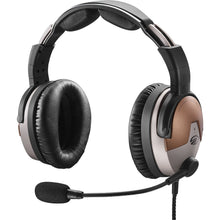
Bose A30 Aviation Headset
- FAA TSO & EASA E/TSO-C139a certified
- 3 selectable ANR modes; ~20% less clamping vs A20
- 2× AA power, ~45 hr; 5-year warranty

Lightspeed Delta Zulu ANR Headset
- Built-in CO sensor + HearingEQity hearing profile
- Rechargeable Li-ion magazine (~30 hr) or AA backup
- 7-year warranty; Kevlar-core cable
The 30-Second Verdict
These are the two flagship premium ANR headsets in general aviation, and they now sit at the same price at Pilot Mall, an authorized Bose and Lightspeed dealer. Almost every comparison still online says the Delta Zulu undercuts the A30, and that is no longer true. Price parity reframes the whole decision around features.
Buy the Bose A30 if you fly professionally under Part 121/135 (it's FAA TSO / EASA E/TSO-C139a certified; the Delta Zulu is not), you prize the lowest clamping force on long flights, you want three selectable ANR modes, or you fly helicopters and want a U174 option from a TSO'd headset.
Buy the Lightspeed Delta Zulu if you fly GA piston aircraft and want built-in CO alerting, you have measurable hearing loss (HearingEQity), you prefer rechargeable lithium power, or you value the longer 7-year warranty.
Shop the Bose A30 → | Shop the Lightspeed Delta Zulu →
We're an authorized dealer for both, we win either way, so this is the honest version.
Quick Spec Comparison
Both are flagship ANR with Bluetooth and weigh about the same. The real differences live in certification, power systems, the CO sensor, and hearing personalization.
| Feature | Bose A30 | Lightspeed Delta Zulu |
|---|---|---|
| Price | Click for Price | Click for Price |
| Weight | 14.2 oz | 14.9 oz |
| ANR type | Active digital ANR, 3 selectable modes (High/Med/Low) | Active digital ANR, single profile |
| Clamping force / headband | Center-hinge design, ~20% less side pressure vs A20; magnesium-alloy headband | Zulu 3 chassis, large ear seals; stainless headband, magnesium cups |
| Bluetooth audio + phone | Yes | Yes |
| Audio priority handling | Tap-to-talk; comm/entertainment mixing | ComPriority auto-ducking |
| Personalized hearing profile (HearingEQity) | No | Yes (12-frequency in-app test) |
| Built-in CO sensor + alerts | No | Yes (sensor life-limited ~5 yrs) |
| Companion app | Basic (Bose Connect support) | Full app: HearingEQity, CO log, audio recording/playback, firmware |
| Battery system | 2× AA, ~45 hr, auto shutoff | Swappable magazines: Li-ion rechargeable ~30 hr, or AA magazine |
| Rechargeable option | No | Yes (in-headset via UAC; USB-A cable included; USB-C/Lightning/3.5mm optional) |
| TSO certification | Yes, FAA TSO & EASA E/TSO-C139a | No, not TSO certified |
| Warranty | 5 years | 7 years |
| Mic | Noise-canceling, side-swappable boom | Dual-aperture mic discs, app mic-gain adjustment |
| Cable | Standard Bose cabling | Kevlar-core cable |
| Plug options at Pilot Mall | Dual GA, LEMO 6-pin, U174, XLR5 | Dual GA (check the product page for LEMO and U174 options) |
See current A30 price · See current Delta Zulu price · Browse all aviation headsets
Price Check
These two used to sit at different price points, and older comparisons still repeat that gap. It has closed, so treat any figure quoted in a 2023 article as out of date. Plug-variant pricing can also differ (LEMO, U174, and XLR5 variants), and the A30 product page lists all variants. Click for the A30 price or click for the Delta Zulu price.
Comfort & Build
The A30 weighs 14.2 oz and uses a center-hinge headband design Bose claims delivers about 20% less clamping side pressure than the A20, on a magnesium-alloy headband, with a side-swappable mic boom. The Delta Zulu weighs 14.9 oz and is built on the proven Zulu 3 chassis with large ear seals (often better for pilots with glasses or larger heads), a stainless-steel headband, magnesium cups, and a Kevlar-core cable, Lightspeed's durability signature.
The honest call: the A30 generally wins clamping force on 4+ hour legs, while the Delta Zulu's bigger seals distribute pressure differently and some pilots prefer them. This is the single most-debated point among owners. If you can, wear both before deciding, our return and exchange policy makes that low-risk. On durability, both are well built; Lightspeed's Kevlar cable and 7-year warranty versus Bose's 5-year warranty matter for fleet and CFI buyers.
ANR & Audio Quality
The A30 offers three user-selectable ANR modes (High/Medium/Low), a real advantage for pilots moving between loud piston and quiet turbine aircraft, and for those who want some ambient awareness. It has a noise-canceling mic, a tap-to-talk feature, and seamless comm/entertainment audio mixing.
The Delta Zulu uses digital ANR with a single profile, excellent raw attenuation, but no mode selection. It uses dual-aperture mic discs with mic gain adjustable via the app (some owners report mic-gain quirks needing adjustment in certain intercoms).
HearingEQity (Delta Zulu only) is an in-app 12-frequency hearing test that builds a personal audio profile, boosting frequencies where the pilot has hearing loss. For pilots over about 45 or with documented hearing loss, this can be the deciding feature, no Bose equivalent exists. In short: A30 for flexibility and the quietest-feeling experience across aircraft; Delta Zulu for pilots who benefit from hearing personalization.
The CO Sensor, The Honest Version
The Delta Zulu has a built-in carbon monoxide sensor with audible in-headset alerts plus app logging, genuinely novel and genuinely safety-relevant for piston GA, where exhaust and heater CO events kill pilots. The tradeoffs owners actually report on Pilots of America:
- The sensor is life-limited, roughly 5 years, after which it requires service. A pilot keeping the headset 10+ years should budget for that.
- False alarms / over-sensitivity reports exist (e.g., during taxi with a door open, ramp idling). Not universal, but documented by owners.
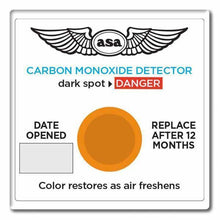
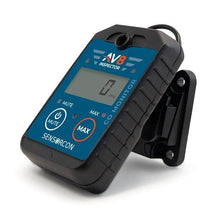
- The standalone-detector alternative: an inexpensive panel-mount or portable CO detector covers everyone in the cabin, not just the pilot wearing the headset. We carry several in our aircraft carbon monoxide detectors collection. The Delta Zulu's sensor is a convenience/redundancy win, not the only way to get CO protection.
If you fly older piston aircraft with aging exhaust systems and cabin heat muffs, integrated CO alerting you can't forget to bring is real value. If you already run a standalone detector, weight this feature lower.
Batteries & Charging: UAC Explained Properly
The A30 runs on 2× AA batteries for about 45 hours with auto-shutoff and no rechargeable option from Bose. The strength is that AAs are available at any FBO on the planet; the weakness is ongoing battery cost and no in-headset charging.
The Delta Zulu uses swappable battery magazines: a Li-ion rechargeable magazine (~30 hours) charges in-headset via the UAC (Universal Accessory Connector) port. A UAC-to-USB-A cable is included; USB-C, Lightning, and 3.5mm UAC cables are optional accessories. An AA battery magazine is also available as backup, so a dead lithium pack never strands you.
Renters and travelers may prefer AAs (A30); owners who fly the same aircraft regularly tend to love the rechargeable magazine (Delta Zulu), and the UAC port doubles as a wired audio/data input.
Certification: The TSO Section Pros Need
The A30 is FAA TSO certified and EASA E/TSO-C139a certified. Many Part 121/135 operators require TSO'd headsets; the A30 qualifies. The Delta Zulu is not TSO certified. For airline, charter, and many corporate operations, that alone decides the comparison. If you fly (or plan to fly) for an operator, check your GOM/ops specs, when a TSO requirement exists, the A30 is the only option of these two.
Bluetooth, Apps & Extras
Both offer Bluetooth audio and phone. The A30 adds tap-to-talk on the ear cup and smooth comm-priority mixing. The Delta Zulu adds ComPriority (auto-ducks aux audio during radio calls) plus the Lightspeed app (flight recording/playback, CO logging, HearingEQity setup, firmware updates). The Delta Zulu's app ecosystem is meaningfully deeper; the A30's controls are simpler and on-headset.
Plug Variants & Panel Power
Pilot Mall carries the A30 in four variants: Dual GA plug, LEMO 6-pin (panel-powered), U174 (helicopter), and XLR5 (airline), all on the A30 product page. Lightspeed offers the Delta Zulu in Dual GA, LEMO, and U174 versions; check the plug options listed on the Delta Zulu product page. For commercial helicopter operations, the U174 plus TSO makes the A30 the default; private piston-helo pilots who want CO alerting may consider a U174 Delta Zulu.
What About the Zulu 4?
Lightspeed now publishes "Zulu 4 vs Bose A30" content, so it's worth positioning the Delta Zulu within the current lineup. The Lightspeed Zulu 4 (which we also carry) is the newer comfort- and clarity-focused flagship, while the Delta Zulu remains the safety/utility flagship with the CO sensor, HearingEQity, and the UAC system. Should you wait? If the CO sensor and HearingEQity are why you're considering Lightspeed, the Delta Zulu remains the only headset that has them.
Considering the newer Zulu 4 instead? It drops the CO sensor and HearingEQity in favor of refreshed comfort and clarity, and it sits below both headsets on price.
Verdict by Pilot Type
| Pilot type | Pick | Why |
|---|---|---|
| Student / renter | Bose A30 | AA batteries work in any rental, 3 ANR modes adapt to whatever you fly, lowest clamping for long lesson blocks. |
| VFR weekend / owner (piston GA) | Lightspeed Delta Zulu | CO alerting in older piston aircraft is real safety value; rechargeable lithium suits flying the same plane; 7-yr warranty. |
| IFR cross-country | Toss-up, lean A30 | Lowest fatigue on 4+ hr legs and ANR mode flexibility; choose Delta Zulu if you have hearing loss (HearingEQity). |
| Professional (121/135, corporate) | Bose A30, only option | FAA TSO / EASA E/TSO-C139a certified; the Delta Zulu is not TSO'd. XLR5 variant for airline. |
| Helicopter | Bose A30 (U174) | TSO plus a U174 plug option; commercial helo ops typically require TSO. Private piston-helo pilots wanting CO alerting may consider the Delta Zulu. |
| Pilots 45+ / any hearing loss | Lightspeed Delta Zulu | HearingEQity is the only personalized-hearing system in an aviation headset. |
At price parity, the Bose A30 is the safer default, TSO certification, class-leading comfort, and AA simplicity make it the headset with no disqualifiers for any pilot. The Delta Zulu is the better buy for owner-pilots flying piston GA who will actually use its unique safety stack (CO sensor + HearingEQity) and rechargeable system, backed by a 7-year warranty. Pilot Mall profits identically either way.
Frequently Asked Questions
Is the Delta Zulu's built-in CO detector worth it, or should I just use a standalone CO detector?
A standalone detector protects everyone in the cabin and costs far less, so it's the better pure-value buy. The Delta Zulu's sensor is protection you can't forget at home, with alerts delivered straight into your ears and logged in the app. Many owners treat it as redundancy alongside a panel or portable detector rather than a replacement. We carry both the headset and standalone aircraft CO detectors.
Does the Delta Zulu CO sensor give false alarms, and is it true the sensor only lasts about 5 years?
Some owners on Pilots of America report occasional false alarms during ground operations, such as taxiing with a door open, though most find the alerts accurate in flight. Yes, the CO sensor is life-limited to roughly 5 years, after which it requires service from Lightspeed. Budget for that if you plan to keep the headset a decade or more.
Which is more comfortable on 4+ hour flights, the Bose A30 or the Delta Zulu?
Most pilots give the edge to the A30, which uses a center-hinge headband with about 20% less side clamping pressure than the A20 it replaced. The Delta Zulu's larger ear seals distribute pressure differently and work better for some head shapes and glasses wearers. If possible, wear both, comfort is the one spec no chart settles.
Now that the two headsets are priced the same, which gives you more for the money?
The price gap that older reviews mention is gone. The A30 gives you TSO certification, three ANR modes, and roughly 45-hour AA battery life; the Delta Zulu answers with a CO sensor, HearingEQity hearing personalization, rechargeable lithium power, and a 7-year warranty. It now comes down to which feature set matches your flying, not price. Click through to either product page for the current figure.
Can I use the Lightspeed Delta Zulu for Part 121 or 135 flying, or do I need the TSO-certified Bose A30?
The Delta Zulu is not TSO certified, and many airline and charter operators require a TSO'd headset in their ops specs. The Bose A30 carries FAA TSO and EASA E/TSO-C139a certification, making it the only one of these two that satisfies those requirements. Check your operator's manual before buying if you fly commercially.
How does the Delta Zulu's UAC charging work, and what's its battery life versus the Bose A30?
The Delta Zulu uses swappable battery magazines: the rechargeable lithium magazine runs about 30 hours and charges in the headset through the UAC port using the included UAC-to-USB-A cable (USB-C, Lightning, and 3.5mm cables are optional). An AA magazine is available as a backup. The A30 runs about 45 hours on two AA batteries but offers no rechargeable option.
Bottom Line
At the same price, pick the Bose A30 for certification and comfort, or the Lightspeed Delta Zulu for the CO sensor, HearingEQity, and rechargeable power. Shop the Bose A30 or shop the Lightspeed Delta Zulu, authorized Bose and Lightspeed dealer, full manufacturer warranty either way.