




ASA Rotating Plotter Precision VFR Flight Navigation
Rotating plotter with a direct course readout, a fast and reliable way for VFR pilots to plot true headings and distances on any sectional chart.
107
Benefits
Benefits
Shipping & Delivery
Shipping & Delivery
Returns
Returns
Effective flight planning for visual conditions often relies on proven, straightforward aviation navigation aids like the renowned ASA Rotating Plotter.
The ASA Rotating Plotter distinguishes itself as essential flight planning equipment with its intuitive rotating azimuth, ensuring easy and precise true-course determination for every journey.
For student pilots embarking on their flight training journey or flight schools seeking dependable pilot navigation tools, the question often arises: how to choose a flight plotter for aviation that truly aids learning? The ASA Rotating Plotter for VFR simplifies this, transforming complex navigation tasks into manageable steps. Its transparent, durable construction allows for clear visibility over aviation charts and aeronautical maps, while the multi-chart scales for sectional, WAC, and Terminal Area (TAC) charts make it incredibly versatile. This isn't just another piece of flight plotting equipment; it's a foundational tool from ASA for mastering the art of flight planning for visual conditions with confidence.
Experienced recreational pilots and meticulous professional pilots alike demand unwavering accuracy from their aviation navigation tools. Wondering what is the most accurate VFR navigation tool for your critical flights? The ASA Rotating Plotter delivers. With its precise rotating azimuth for true-course determination and dual-unit measurements offering both nautical and statute mile graduations for flexible distance plotting, it ensures your calculations are spot-on every time. This commitment to precision navigation, combined with its lightweight yet durable design, makes it an indispensable part of your pilot supplies, ensuring every flight is planned efficiently and flown safely, from short recreational hops to demanding professional assignments.
Unlock precise, reliable VFR flight planning and streamline your navigation with the ASA Rotating Plotter. Get this essential tool today for accurate flights every time!
Frequently Asked Questions
What aeronautical charts does the ASA Rotating Plotter work with?
The ASA Rotating Plotter includes scales for sectional, World Aeronautical Chart (WAC), and Terminal Area Chart (TAC) VFR charts. This multi-chart versatility lets you plan routes across the standard visual flight rules chart types without switching tools, making it well suited to student, recreational, and professional pilots who fly using different chart scales.
Does the ASA Rotating Plotter measure in both nautical and statute miles?
Yes. The plotter provides scales for both nautical and statute mile graduations, giving you flexible distance plotting on a single tool. For VFR aeronautical charts you typically read distance in nautical miles, but having both scales lets you convert and double-check measurements quickly during preflight planning.
What is the ASA Rotating Plotter made of?
It is built from sturdy, transparent plastic with easy-to-read numbers and scales. The clear construction lets you see your course line and the chart features beneath the plotter, while the durable material is designed to hold up to repeated use in flight training and the cockpit over time.
Is the ASA Rotating Plotter accurate and approved for measurement?
Yes. The plotter has been checked and recognized by the Office of Weights and Measures for accuracy. Its precise rotating azimuth supports reliable true-course determination, and the calibrated distance scales help ensure your plotted distances and courses are dependable for VFR flight planning.
Does the ASA Rotating Plotter need batteries?
No. The ASA Rotating Plotter is a fully manual navigation tool and requires no batteries or power. It will not run out of charge or lose a signal, which makes it a dependable primary planning aid and a reliable backup to electronic navigation devices, both during preflight planning and in the air.
How does the rotating azimuth help with flight planning?
The rotating azimuth is the spinning center wheel that simplifies true-course determination. You line your course along the long edge, then rotate the wheel until it aligns with the north and south lines on your chart, and read the true course directly. This speeds up planning and reduces calculation errors compared with reading angles on a fixed plotter.
What is the difference between a rotating plotter and a fixed plotter?
Both types measure courses and distances the same way, but a fixed plotter reads angles off a printed protractor while a rotating plotter uses a spinning center wheel. The rotating azimuth on this ASA model speeds up true-course determination and helps reduce reading errors, which many students and experienced pilots find convenient for cross-country planning.
How do you use the ASA Rotating Plotter to find a true course?
Lay the long edge along your course line between two points, then rotate the center azimuth wheel until its north and south markings align with a meridian or parallel on the chart. Read the true course where the scale meets your course line. Use the matching chart scale to measure the distance in nautical miles.
What is the difference between true course and magnetic course, and how do you convert?
True course is the direction of your route measured against true north, which is what you read off the chart with the plotter. Magnetic course corrects that for local magnetic variation shown by the isogonic lines on the chart. A common memory aid is east is least, west is best: subtract easterly variation and add westerly variation.
How do you measure distance on a sectional chart with this plotter?
Align the straightedge along your course line between two points, then read the distance on the scale that matches your chart type, such as the sectional scale. Measure each leg point to point and add the legs for total route distance. The matching scale removes the need to convert from the chart legend by hand.
Is the ASA Rotating Plotter good for student pilots, and is a plotter still useful for the checkride?
Yes. A plotter remains standard equipment for VFR cross-country planning and is commonly expected for the private pilot checkride, since examiners look for manual dead reckoning skills alongside electronic tools. The intuitive rotating azimuth turns complex navigation tasks into manageable steps, making it a dependable choice throughout flight training and beyond.
Who makes the ASA Rotating Plotter and what is the part number?
The plotter is made by ASA (Aviation Supplies and Academics), a long-established producer of pilot training tools and supplies. This model carries the manufacturer part number CP-R. ASA navigation aids are widely used in flight schools and cockpits for dependable VFR course and distance plotting.
-
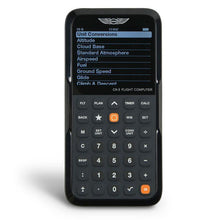 Vendor:ASA
ASA CX-3 Flight Computer: Ultimate Electronic E6-B Calculator
Electronic E6B that runs flight and fuel math, approved for the ACS and the only electronic E6B certified for both FAA and Canadian knowledge exams.
Regular price $127.99Sale price $127.99 Regular priceUnit price per$149.95 -
 NewVendor:Runway Selector
Aviation Runway Selector and Crosswind Component Tool
Slide tool that picks the best runway and reads crosswind component in seconds, a compact aid that cuts cockpit workload during preflight planning.
Regular price $19.95Sale price $19.95 Regular priceUnit price per -
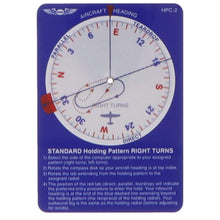 Vendor:ASA
ASA IFR Holding Pattern Visualizer for Pilots
Holding pattern visualizer that shows the correct entry every time, a compact double-sided IFR tool for fast, accurate entry selection under any holding clearance.
Regular price $13.49Sale price $13.49 Regular priceUnit price per$15.95 -
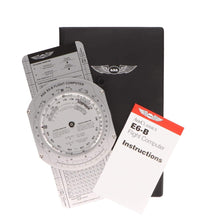 Vendor:ASA
ASA Premium Aluminum E6B Flight Computer
Premium aluminum E6B built to last for manual flight math, sized 9-3/4 x 5 inches to solve wind correction angles, true airspeed, and time and distance.
Regular price $41.99Sale price $41.99 Regular priceUnit price per$49.95 -
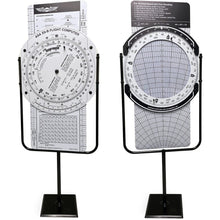 Vendor:ASA
ASA E6B Classroom Trainer: Oversized Flight Computer
Oversized E6B for instructors to demonstrate to a classroom, operating just like a handheld E6B so students learn authentic navigation calculations together.
Regular price $2,495.00Sale price $2,495.00 Regular priceUnit price per$1,995.00 -
 Vendor:ASA
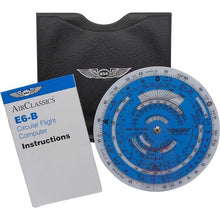
ASA E6B Flight Computer: Precision Manual Calculator
Manual circular E6B for wind, fuel and time-speed-distance math, with dual-sided functionality that keeps flight planning fast and dependable in the cockpit or classroom.
Regular price $28.99Sale price $28.99 Regular priceUnit price per$34.95 -
 Vendor:Jeppesen Sanderson
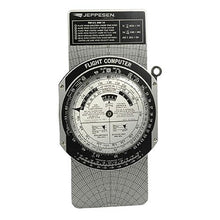
Jeppesen Metal E6-B Flight Computer: Durable Pilot Calculator (CSG)
Durable metal E6B with a wind slide for lasting daily use, trusted by student pilots and cross-country aviators for precise, screen-free navigation.
Regular price $44.95Sale price $44.95 Regular priceUnit price per -
 Vendor:Jeppesen Sanderson
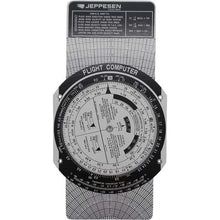
Jeppesen E6B Student Pilot Flight Computer (CSG)
Student E6B with a wind-correction slide for training math, a budget-friendly tool that pairs with official training materials to master flight calculations early.
Regular price $17.49Sale price $17.49 Regular priceUnit price per -
 Vendor:ASA
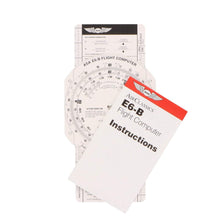
ASA E6B Paper Flight Computer: Reliable Manual Pilot Tool
Low-cost paper E6B for students learning manual calculations, a battery-free backup that keeps working reliably when electronic devices fail during critical phases.
Regular price $13.99Sale price $13.99 Regular priceUnit price per$15.95

