




What Shoes Should Pilots Wear?
Here's a loaded question; What shoes should pilots wear? Throw that one out at your local aero club and see what comes back. There definitely won't be an agreement, and there isn't an easy answer, because no pilot is ever just a pilot. The community is made up of very specific pilots. Just ask us, we will tell you.
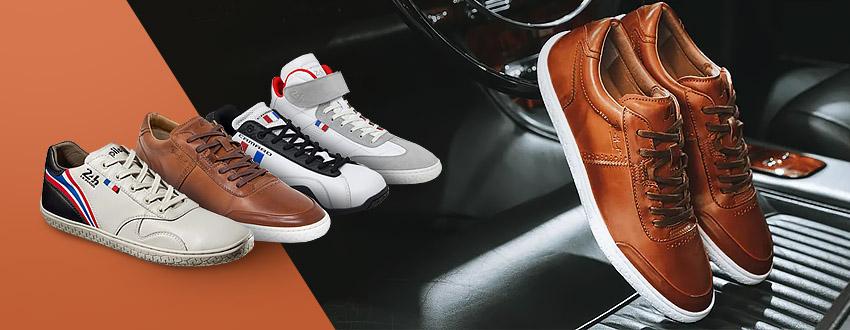


Here is a loaded question: what shoes should pilots wear? Ask fellow pilots at your local aero club and see what comes back. There definitely will not be an agreement, and there is no single easy answer, because no pilot is ever just a pilot. The community is made up of very specific pilots, and we all have opinions. So let us settle it the practical way, by looking at what actually matters when your feet are working the rudder pedals, walking the ramp, and standing through a long crew day.
This guide is for every kind of aviator: airline and charter crews flying under uniform standards, CFIs and GA pilots who live in their shoes, and freight pilots who learned the hard way. We cover the five things that actually matter in a pilot shoe, the leather-versus-sneaker debate, and our current picks from the Aviator Footwear collection.
Key Takeaways
- The best pilot shoes are lightweight, slip-resistant, low-profile enough to feel the rudder pedals, and supportive enough for a full day on your feet.
- Match the shoe to the mission: polishable leather for strict 121 and 135 uniform standards, performance knit sneakers for GA, instruction, freight, and casual operations.
- A genuinely slip-resistant, oil-rated outsole is a safety item the moment you step onto a wet, oily, or freezing ramp, not a luxury.
- When in doubt, buy black: it satisfies most uniform rules while keeping sneaker comfort.
- Our current top pick is the Lift Aviation Air Boss line, a purpose-built pilot shoe that checks every box above.
Why pilots need to think about their shoes at all
Why would we put as much thought and care into something as important as our feet? We use them every day, on the ground and in the air. Unlike a big aviator's chronograph, there is no technological advance on the horizon that is going to make feet obsolete, so we are going to keep using them, which means we need shoes that are suitable to the task. If you fly for a living, you need a shoe that supports that activity.
Here is a true story to make the point. On a freight job, I decided it would be a great idea to break in a new pair of stiff leather work boots on a leg from Detroit to Mexico City. What a disaster. I chose the wrong tool for the job and made two of my most important appendages miserable for three days. I can still feel the hard leather biting into my ankles every time I tried to work the rudder pedals. I suffered in silence that trip, not wanting to embarrass myself in front of my IOE Captain. I had thought about the cargo-handling part of the job and completely forgot about the flying part.
That trip taught me the age-old adage the hard way: if your feet are uncomfortable, your whole body is uncomfortable. Footwear has to be chosen for functionality and comfort first, looks second.
How to Choose Pilot Shoes
Five things actually matter in a pilot shoe. Work through them in order and the right pair picks itself.
How much does pedal feel matter?
The cockpit is a tight, deliberate workspace. A slim-fit, low-profile shoe lets you slide in and out of a cramped flight deck and, more importantly, lets you feel the rudder pedals and brakes. Clunky boots dull that feedback. Do not lock up your brakes after a normal or short-field landing because you could not feel the pedals through half an inch of sole. I have been there, and you can avoid it by using the right tool for the job. Smooth, progressive rudder and brake inputs are far easier in a shoe designed for control feel.
Why is slip resistance non-negotiable?
Ramps are wet, oily, and frequently freezing. A genuinely slip-resistant outsole is not a luxury, it is a safety item the moment you step out of the aircraft onto a contaminated surface or climb a boarding stair in the rain. Look for an oil- and slip-rated sole, not just a sneaker tread.
What makes a pilot shoe comfortable all day?
Crew days are long and a lot of them are spent standing, walking terminals, or doing a thorough preflight walk-around. The best modern pilot shoes use breathable knit uppers and cushioned, fatigue-reducing footbeds engineered to protect the key pressure points so your feet are not done before the day is. This is exactly where purpose-built aviation footwear beats a random pair of dress shoes or fashion sneakers.
Leather or sneaker: which is right for your flying?
This is the debate that never ends, so here is the honest breakdown:
- Leather pilot shoes look sharp, hold a polish, and tend to satisfy stricter uniform standards. They are the safe choice for airline first officers and captains, charter crews, and anyone in a customer-facing role. The trade-off is break-in time and a little more weight.
- Performance knit sneakers (such as the Lift Aviation Air Boss) win on weight, breathability, and out-of-the-box comfort. They are ideal for GA pilots, CFIs, freight and cargo crews, and casual operations where a uniform shoe is not mandated. The trade-off is they read as more casual.
The good news is that aviation-specific footwear has closed the gap. A shoe like the Air Boss gives you sneaker comfort with a clean, professional-enough silhouette that works for a lot of crews.
Will your shoes pass the uniform check?
Before you buy, check your operator's appearance standards. Many 121 and 135 operators specify black, low-profile, closed-toe footwear with a non-marking sole, and some require a polishable leather upper. A black performance shoe is usually the safest all-rounder because it satisfies most uniform rules while still being comfortable. When in doubt, black.
What we recommend, and what we stock
Pilot Mall is run by pilots, so when we go looking for footwear we apply the same "right tool for the right job" test. Our current pick is the Lift Aviation Air Boss line, found in the Aviator Footwear collection. These are purpose-built pilot shoes with a patented comfort system, a breathable Ultraknit upper, a low-profile sole tuned for pedal feel, and a slip-resistant outsole. Color choice usually comes down to your uniform and personal taste.
| Model | Upper | Sole | Best For |
|---|---|---|---|
| Lift Aviation Air Boss Black | Breathable black Ultraknit | Low-profile, slip-resistant | Airline, charter, and uniformed crews |
| Lift Aviation Air Boss Grey | Breathable grey Ultraknit | Low-profile, slip-resistant | GA pilots, CFIs, and casual operations |
| Lift Aviation Air Boss Navy | Breathable navy Ultraknit | Low-profile, slip-resistant | A sharp look that still reads professional |

Lift Aviation Air Boss Black
- Upper breathable black Ultraknit
- Sole low-profile, slip-resistant outsole tuned for pedal feel
- Fit normal width
- Patented comfort system with a fatigue-reducing footbed that protects key pressure points
- Breathable Ultraknit upper keeps feet cool through a full crew day
- Low-profile sole gives you real rudder and brake feedback
- Slip-resistant outsole for wet, oily ramp surfaces
- All-black silhouette satisfies most uniform appearance standards
- sneaker comfort in a shape that passes most 121 and 135 appearance checks, and the black colorway hides scuffs and ramp grime better than any other.
- if your operator's manual specifically requires a polishable leather upper, this knit shoe will not pass; buy for the rule book, not the catalog.
- The knit breathes well but is not the shoe for standing slush.
Perfect for airline, charter, and uniformed crews who want sneaker comfort that still passes the appearance check.
Click for Price →
Lift Aviation Air Boss Grey
- Upper breathable grey Ultraknit
- Sole low-profile, slip-resistant outsole tuned for pedal feel
- Fit normal width
- Same patented comfort system and fatigue-reducing footbed as the rest of the line
- Light grey knit is the coolest-looking option for hot-climate flying
- Low-profile sole slides easily in and out of a cramped flight deck
- Slip-resistant outsole holds on contaminated surfaces
- the most versatile everyday colorway, equally at home in the cockpit, at the hangar, and on a layover walk.
- skip the grey if you fly under a uniform standard; it reads casual, and it shows ramp grime faster than the darker colorways.
Perfect for GA pilots, CFIs, and freight crews who fly casual and want the lightest-looking colorway in the line.
Click for Price →
Lift Aviation Air Boss Navy
- Upper breathable navy Ultraknit
- Sole low-profile, slip-resistant outsole tuned for pedal feel
- Fit normal width
- Patented comfort system built for long days of standing and walking
- Navy knit looks dressier than grey while hiding dirt nearly as well as black
- Low-profile sole preserves brake and rudder feel
- Slip-resistant outsole for the wet end of the apron
- the best-looking middle ground in the line, professional enough for crew rooms and client-facing GA flying.
- if your uniform manual says black, navy is not black, and inspectors notice.
- This is the colorway for pilots who choose their own dress code.
Perfect for pilots who want a sharper look than grey for club flying and crew rooms without committing to uniform black.
Click for Price →Browse all current colors and sizes in the Aviator Footwear collection. Sizes move quickly, so if your size is in stock it is worth grabbing.
Frequently asked questions
- What kind of shoes do airline pilots wear?
- Most airline pilots wear black, low-profile, closed-toe shoes with a non-marking, slip-resistant sole to meet uniform standards. Many choose a polishable leather upper, while a growing number wear purpose-built performance pilot shoes like the black Lift Aviation Air Boss for all-day comfort that still looks professional.
- Are sneakers okay for flying?
- Yes, for general aviation, flight training, and casual operations, lightweight performance sneakers are an excellent choice because they give you good pedal feel and all-day comfort. Aviation-specific sneakers such as the Air Boss add a slip-resistant sole and fatigue-reducing footbed that ordinary fashion sneakers lack. Just confirm your operator's uniform rules before wearing sneakers on the job.
- Why does shoe choice matter in the cockpit?
- A low-profile, flexible shoe lets you feel the rudder pedals and brakes and apply smooth, precise inputs, which matters most during taxi, braking, and crosswind landings. Bulky boots dull that feedback and can cause you to over-brake. Comfort matters too, because uncomfortable feet make for an uncomfortable, distracted pilot.
- What should I look for when buying pilot shoes?
- Prioritize five things: pedal feel and a low profile, a slip-resistant outsole for wet or oily ramps, all-day comfort and support, the right leather-versus-sneaker balance for your role, and compliance with your operator's uniform standards. Black is the safest color for meeting most uniform rules.
- Should pilots wear boots instead of shoes?
- For most cockpit flying, no; a low-profile shoe gives you better pedal feel than a heavy boot. Boots earn their place in bush flying, backcountry strips, helicopter utility work, and winter ramp operations where ankle support and weather protection outweigh pedal finesse. If your flying mixes both, keep a pair of each and change before you strap in. Whatever you choose, make sure the sole is thin and flexible enough that you can feel brake pressure building.
- How should I break in new pilot shoes?
- Break them in on the ground, never on a trip. Wear new shoes around the house and on short errands for at least a week before they fly with you, and bring your old pair as backup for the first few crew days. Stiff leather needs the longest break-in; knit performance shoes are usually comfortable out of the box but still deserve a ground trial. I learned this the hard way breaking in stiff leather boots on a Detroit to Mexico City freight leg, and my feet paid for it for three days.
- What size pilot shoe should I order?
- Start with your everyday sneaker size. Performance pilot shoes with knit uppers, including the Lift Aviation Air Boss, conform to your foot and need little break-in, so your normal size is usually right. If you wear thick socks for winter ramp work or have a wide forefoot, consider going up half a size, since a cramped toe box gets worse during a long day of standing. Sizes in popular colorways sell through quickly, so order when you see yours in stock.
- What shoes should a student pilot wear?
- Wear flat-soled, low-profile sneakers with a thin, flexible sole so you can feel exactly how much rudder and brake you are applying while you build muscle memory. Avoid thick running shoes, sandals, and anything with a heavy lug sole. Comfort matters on long lesson days that mix ground school, preflight, and pattern work, and a slip-resistant sole helps on fuel-stained ramps. You do not need a uniform shoe yet, so prioritize pedal feel over looks.
Finish the look: from the ramp to the crew room
Imagine walking across the ramp, flight bag over your shoulder, favorite sunglasses on, wearing a smart, performance-oriented pair of pilot shoes. The message you send to onlookers is simple: I am here to fly. The right footwear is the foundation of that look, and it is easy to round it out.
For the cold-weather end of the apron, pair your shoes with a proper layer from our flight jackets and aviator outerwear. To complete a coordinated crew-ready outfit, browse aviation apparel and pilot clothing. And while you are gearing up for the flying itself, the pilot supplies collection covers the kneeboards, headsets, and cockpit essentials that ride along with you. Shopping for the aviator who has everything? Our aviation gifts and home accents make a comfortable pair of pilot shoes part of a complete gift.
About the author: Neil S. Glazer is a commercial pilot with multi-engine and instrument ratings and the founder of PilotMall.com. He flew freight before building Pilot Mall into a pilot-run gear shop, and his footwear opinions were earned the hard way, three days at a time, on the rudder pedals between Detroit and Mexico City.


1 comment
Do you not recommend the Piloti sneaker for flying anymore. I click the link and it takes me to Lift Aviation and their shoes. I want a shoe where I can wear while flying and feel the rudder.