




Best Aviation Headsets in 2026: ANR, Passive & Bluetooth Picks for Every Pilot
Not all aviation headsets are created equal. We reviewed and compared the top ANR and passive picks for 2026 across every pilot type and budget, from student starter headsets under $150 to professional turbine picks at the top of the market. Find the right headset for how you fly.


The Top Aviation Headsets Right Now, Ranked by Pilot Type and Budget
We reviewed and compared top aviation headsets in our catalog, using product specs, pilot use cases, comfort features, noise reduction type, connectivity, and overall value. Here are the best picks for 2026.
Finding the right aviation headset is one of the most important gear decisions a pilot makes. A quality headset protects your hearing, keeps ATC communications crystal clear, and can make a four-hour cross-country far more comfortable. A poor one does none of those things.
The market breaks into two main camps: Active Noise Reduction (ANR) headsets, which use electronics to cancel cockpit noise, and Passive Noise Reduction (PNR) headsets, which block sound mechanically. Within each, you will find a wide range of prices, features, and fit options, from budget picks under $200 to top-tier professional headsets above $1,000.
Below you will find our top picks organized by pilot type and use case, a full comparison table, a plain-English buyer's guide, and answers to the most common headset questions we hear from pilots.
Quick Comparison: Best Aviation Headsets 2026
| # | Headset | Type | Best For | Price |
|---|---|---|---|---|
| 1 | Bose A30 Best Overall | ANR | Any pilot wanting the best | Check Price → |
| 2 | Lightspeed Zulu 4 | ANR | Bluetooth comfort seekers | Check Price → |
| 3 | David Clark H10-13.4 | Passive | Student & recreational pilots | Check Price → |
| 4 | David Clark One-X | ANR | David Clark ANR upgrade | Check Price → |
| 5 | Lightspeed Delta Zulu | ANR | Safety-focused pilots | Check Price → |
| 6 | Bose ProFlight Series 2 | ANR | Turbine & airline pilots | Check Price → |
| 7 | Lightspeed Sierra | ANR | Value ANR with Bluetooth | Check Price → |
| 8 | Faro G2 ANR | ANR | Mid-range ANR value | Check Price → |
| 9 | ASA AirClassics HS-1A | Passive | Best budget starter | Check Price → |
| ★ | Pilot USA PA-1181T | Passive | Smaller-fit passive headset | Check Price → |
| ★ | Pilot USA PA-1151 Child | Passive | Young & junior aviators | Check Price → |
ANR vs. Passive Aviation Headsets: What's the Difference?
Before diving into our picks, here is the key distinction every pilot should understand.
Active Noise Reduction (ANR)
ANR headsets use built-in microphones and electronics to sample cockpit noise and produce an opposite signal, canceling much of it before it reaches your ears.
- Dramatically reduces low-frequency engine noise
- Less clamping force required, more comfortable on long flights
- Requires batteries or panel power
- Higher price range ($300 to $1,300+)
- Best for regular flying, IFR, or louder aircraft
Passive Noise Reduction (PNR)
PNR headsets block noise physically with thick ear cups and tight seals. No batteries, no electronics, nothing extra to fail.
- Simple and reliable
- Typically heavier with firmer clamping
- No battery required
- Excellent value at entry-level prices
- Best for student pilots and VFR recreational flying
The Best Aviation Headsets for 2026

Bose A30 Aviation Headset
The Bose A30 is the benchmark for general aviation headsets. Building on the legacy of the A20, Bose reduced clamping force by 20%, added three selectable ANR modes — Low, Medium, and High — and delivered a 45-hour battery life on two AA batteries. The result is the most comfortable aviation headset currently available.
Integrated Bluetooth prioritizes ATC audio automatically, so music or phone calls duck whenever a transmission comes through. The Tap Control talk-through feature and side-swappable microphone boom make it equally at home in the left and right seat. TSO-certified and FAA-approved. Available in Dual GA, LEMO 6-pin, U174 helicopter, and XLR-5 configurations.
- Best-in-class ANR performance
- Three selectable noise modes
- 45-hour battery life
- ATC-priority Bluetooth
- Lowest clamping force available
- TSO-certified
- Premium price point
- Requires batteries or panel power

Lightspeed Zulu 4 ANR Aviation Headset
The Zulu 3 was one of the most beloved headsets in aviation history. The Zulu 4 refines everything pilots loved about it, improving the headband and ear cushion design for longer missions. Lightspeed's ANR performance is competitive with Bose at a lower price, and the Bluetooth implementation is seamless and reliable.
Lightspeed also backs the Zulu 4 with their exceptional customer service and an active trade-in program that makes future upgrades easier. Available in Dual GA, LEMO 6-pin, and U174 helicopter configurations.
- Excellent ANR performance
- Improved comfort over Zulu 3
- Seamless Bluetooth
- Lightspeed trade-in program
- Lower price than Bose A30
- Still a premium investment
- Newer model, less long-term field data

David Clark H10-13.4 Aviation Headset
The H10-13 series has been the gold standard passive aviation headset for decades. Flight schools equip their students with it. Charter operators stock it as backup. The durability and noise attenuation record speak for themselves across millions of flight hours.
With a 23.6 dB noise attenuation rating and the M-7A dynamic microphone, it delivers clear communications in everything from a Cessna 172 to a business turboprop. No batteries, no software, nothing to fail. A stereo version (H10-13S) is also available, and both come with a bag combo option.
- Industry-proven durability
- No batteries required
- 23.6 dB noise attenuation
- Flight school trusted for decades
- Stereo and bag combo options
- No ANR
- Firmer clamping force than ANR headsets
- No Bluetooth

David Clark One-X ANR Aviation Headset
The One-X is David Clark's flagship ANR headset with Bluetooth, and it shows why the brand has been trusted in cockpits for over 75 years. Strong electronic noise cancellation, a precision flex-boom mic, and full Bluetooth connectivity for music and phone calls are all packaged in a noticeably lighter and lower-profile design than the classic H10 series.
For pilots who have spent years on David Clark passive headsets and are ready to move to ANR without switching brands, the One-X is the natural destination.
- David Clark build quality plus ANR
- Full Bluetooth connectivity
- Lighter and lower profile than H10 series
- Precision flex-boom microphone
- Slightly less ANR than Bose A30
- Premium price

Lightspeed Delta Zulu ANR Aviation Headset
The Delta Zulu stands apart because it is the only headset on this list with built-in carbon monoxide detection. Its Kanari smart alert technology measures cabin CO levels and gives audible warnings if levels rise, adding a cockpit safety layer beyond noise reduction and communications.
Beyond the CO sensor, the Delta Zulu includes HearingEQity, a personalized audio profile system that compensates for individual hearing variations for clearer ATC communication, Bluetooth with ComPriority audio management, and a flexible battery system that accepts both rechargeable lithium-ion packs and standard AA batteries. The stainless steel and Kevlar-reinforced cable comes backed by Lightspeed's industry-leading 7-year warranty.
- Only headset with built-in CO detection
- HearingEQity personalized audio profiles
- Dual battery system (Li-ion + AA)
- 7-year Lightspeed warranty
- Bluetooth with ComPriority
- Kevlar-reinforced cable
- Premium price

Bose ProFlight Series 2 ANR Headset
At just 4.5 ounces on-head, the Bose ProFlight Series 2 is dramatically lighter than traditional over-ear aviation headsets. Its in-ear design reduces clamping pressure entirely, making it a strong choice for turbine, corporate, and airline pilots who wear a headset through long multi-leg days where ear fatigue is a real operational concern.
Three ANR modes, TriPort acoustic technology, and a noise-canceling electret microphone deliver professional-grade communications clarity. TSO-certified and approved for commercial operations. Available in Dual GA, LEMO 6-pin, and XLR-5 configurations.
- 4.5 oz on-head weight
- No clamping pressure fatigue
- Three ANR modes
- TSO-certified for commercial ops
- Bluetooth connectivity
- In-ear fit requires adjustment period
- Less isolation in very loud piston aircraft
- Premium price

Lightspeed Sierra ANR Bluetooth Aviation Headset
The Lightspeed Sierra is the entry point into the Lightspeed family, and it brings genuine ANR performance and full Bluetooth connectivity at a noticeably lower price than the Zulu series. For pilots who want a trusted brand name with solid ANR but cannot stretch to the Zulu 4 or Delta Zulu, the Sierra is the right call.
The Sierra is also eligible for the Lightspeed multi-headset discount, saving $30 per headset when two or more are purchased in a single order, which makes it a strong option for flight schools or couples buying together.
- Proven Lightspeed ANR at lower price
- Full Bluetooth
- Multi-headset discount available
- Lightspeed build quality and support
- Less ANR than Zulu 4 or Delta Zulu
- No rechargeable battery

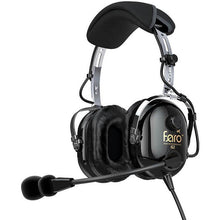
Faro G2 ANR Aviation Headset
The Faro G2 ANR punches well above its price. Gel-foam ear seals deliver a consistently comfortable seal across a wide range of head shapes, which is often a weak point in this price segment. ANR performance is solid for piston GA flying.
For pilots stepping up from a passive headset who want ANR performance without the sticker shock of a premium brand, the Faro G2 offers one of the best dollar-per-decibel values in the catalog. A passive version is also available if you want the same fit and comfort without the electronics.
- Solid ANR at a mid-range price
- Gel-foam ear seals for wide fit range
- Passive version also available
- No Bluetooth
- Less brand recognition than top tier

ASA AirClassics HS-1A Passive Aviation Headset
The ASA AirClassics HS-1A delivers exactly what a student pilot or budget-conscious flyer needs: reliable noise attenuation, clear audio, and durable construction that holds up through a full certificate and beyond. It covers the core specs, dual GA plugs, 23 dB NRR, comfortable ear seals, without any premium overhead.
Also available as a headset and bag combo for a few dollars more, making it a complete out-of-the-box solution. If you need a solid headset without overthinking the purchase, this is the one to grab.
- Excellent value at entry-level price
- 23 dB noise attenuation
- Bag combo available
- Simple and proven for training
- No ANR
- No Bluetooth
- Entry-level build versus premium brands
Specialty Picks
These two headsets address specific needs that fall outside the main buyer's funnel, but are worth knowing about.

Pilot USA PA-1181T Passive Aviation Headset
The Pilot USA PA-1181T is built for pilots who find standard-sized headsets uncomfortable due to head size or clamping pressure. With a 13.4 oz weight, gel silicone ear seals, and a smaller headband and ear cup profile, it provides a secure, comfortable fit for a wider range of pilots than most entry-level options.
It delivers 24 dB NRR passive noise reduction and includes an auxiliary input and cell phone interface, making it more connected than its price would suggest. Available in a distinctive pink colorway.
- Designed for smaller head profiles
- 24 dB NRR passive protection
- Gel silicone ear seals
- Aux and cell phone interface included
- No ANR
- No Bluetooth

Pilot USA PA-1151 Child Size Aviation Headset
The Pilot USA PA-1151 is the definitive child-sized aviation headset. Scaled for young heads without adult-sized clamps that create discomfort, it provides 24 dB of passive noise reduction and the same standard dual GA plug configuration used in virtually all GA aircraft. Lightweight, comfortable, and purpose-built so kids will actually keep it on.
Available in boys and girls versions, it makes an ideal gift for young aviation enthusiasts or any child who comes along for the flight.
- Purpose-built child sizing
- 24 dB passive noise protection
- Standard dual GA plugs
- Boys and girls versions available
- Sized for children only
- No ANR or Bluetooth
What to Look for in an Aviation Headset
With dozens of options across a wide price range, here are the factors that actually matter.
Noise Reduction Rating (NRR)
Measured in decibels. Most passive headsets fall between 22-26 dB. ANR headsets add electronic cancellation on top of passive attenuation, typically achieving the equivalent of 30+ dB total protection against low-frequency noise.
ANR vs Passive
ANR uses electronics to cancel noise and requires batteries or panel power. Passive uses physical ear cups only. ANR is more comfortable on long flights. Passive is simpler and more affordable.
Bluetooth Connectivity
Bluetooth lets you stream music, weather audio, or take phone calls wirelessly. Look for headsets that automatically prioritize ATC transmissions over Bluetooth audio, an important safety feature.
Plug Type
Most GA aircraft use dual GA plugs (PJ connectors). Helicopters use U174 plugs. Jets often use LEMO 6-pin or XLR-5 connectors. Verify your aircraft before ordering.
Weight and Clamping Force
Clamping force causes more long-flight fatigue than raw weight. ANR headsets generally require lower clamping force since the electronics reduce the need for a tight mechanical seal.
Microphone Type
Dynamic microphones are durable and require no power. Electret microphones deliver cleaner, more sensitive audio but require power from the headset. Most premium headsets use electret.
Battery Life
ANR headsets typically last 30-50 hours per battery set. Standard AA batteries are far easier to source on the road than proprietary rechargeable packs, an important consideration for cross-country flying.
TSO Certification
TSO-C139 certification means the headset meets FAA Technical Standard Order requirements. Required by some operators and air carriers. The Bose A30 and ProFlight Series 2 are both TSO-certified.




2 comments
This current (July 2023), is the most comprehensive, useful & helpful reviews of Aviation Headsets that I’ve encountered.
Well done, PilotMall.com.
Some great choices in here! My pick would be the Bose A20s, I’ve worn my pair for 7 years now and done about 3000 hours in them, replaced the ear cup seals once but the electronics and everything is still going strong !