



VFR vs IFR Explained: Differences Between The Flight Rules
If you've ever been curious about the aviation terms used at flight school, the influence of the Federal Aviation Administration (FAA), and the intriguing dance between VFR and IFR, you've found the right guide.
Think of VFR as your ticket to the skies on those picture-perfect, clear days, but if you want to become an IFR pilot, you're diving into the world of controlled airspace and navigating the unpredictable nuances of weather conditions.
Get out your notebook and let's cover the VFR vs. IFR debate together.


Every flight you will ever take operates under one of two sets of rules: Visual Flight Rules (VFR) or Instrument Flight Rules (IFR). VFR is your ticket to the skies on clear days, navigating primarily by what you see out the window. IFR is how pilots fly through clouds, haze, and low visibility: on an ATC clearance, by sole reference to the instruments.
This guide breaks down what each set of flight rules actually means, the weather minimums that draw the legal line between them, the pros and cons of flying each, and what it takes to earn an instrument rating, including the study materials and view-limiting devices that get you there.
Key Takeaways
- VFR means navigating primarily by visual reference outside the cockpit. It requires visual meteorological conditions (VMC) and is how every student pilot learns to fly.
- IFR means flying by sole reference to the instruments under an ATC clearance. It requires an instrument rating, an appropriately equipped aircraft, and an IFR flight plan, and it works in clouds and low visibility.
- The legal dividing line is weather: the VFR minimums in 14 CFR 91.155 (most commonly 3 statute miles visibility and 500/1,000/2,000 cloud clearance) determine whether VFR flight is even an option.
- Neither rule set is "better." VFR offers freedom, simplicity, and the view; IFR offers dispatch reliability, structure, and access to the clouds. Most working pilots use both.
- The instrument rating requires 50 hours of cross-country PIC time and 40 hours of instrument time. A view-limiting device and the right study books are the cheapest part of getting it done.

What Is VFR?
VFR stands for "Visual Flight Rules" and refers to flight conducted primarily by visual references outside the cockpit window. VFR flying does not eliminate the need for instruments, since you still rely on them for heading, airspeed, and altitude readings, but your primary tools for navigation and collision avoidance are your own eyes. It is also what lets you visually pick out the runway while flying the airport traffic pattern.
Pilots flying under Visual Flight Rules carry the personal responsibility to see and avoid other aircraft. That means scanning the sky frequently, especially in busy airspace, and staying mindful of traffic at all times.
Student pilots begin their flight training under visual flight rules, and the private pilot certificate is earned almost entirely in VFR flying.
The Pros of Flying VFR
Flying VFR offers a sense of freedom and connection to the world below that many pilots never stop chasing. Here is what it does well:
- The view: You get to soak in the landscape below and navigate by real-world reference points instead of needles and numbers.
- Simpler training: Visual flying is the natural starting point. It is easier to teach, easier to learn, and builds the stick-and-rudder foundation everything else rests on.
- A more relaxed flight: Without complex instrument procedures to manage, VFR flying leaves room to simply enjoy being airborne. It is why most new private pilots fly VFR by choice.
- Freedom to fly: Away from busy airspace, you can take off and fly without a clearance and, depending on the airspace, without talking to ATC at all.
The Disadvantages of Flying VFR
VFR has real limits that every pilot operating under visual flight rules needs to respect:
- Weather dependence: The big drawback is inflexibility. If conditions do not meet VFR minimums, you wait on the ground, sometimes for days.
- Weather can change to IMC unexpectedly: If conditions deteriorate into Instrument Meteorological Conditions (IMC), such as clouds or low visibility, continuing legally and safely requires an instrument-rated pilot in an IFR-equipped aircraft. VFR into IMC is one of general aviation's deadliest scenarios.
- Traffic is your job: If you are not using VFR flight following, spotting and avoiding other aircraft is entirely on you.

What Is IFR?
IFR stands for "Instrument Flight Rules," the mode of flying where pilots rely on their onboard instruments for navigation and aircraft control rather than outside visual references. When you fly IFR, your entire flight is governed by a detailed framework of FAA rules and procedures.
Those rules exist because inside a cloud or in high-altitude haze, your eyes and inner ear are unreliable. The instruments are not.
IFR is an organized system between the pilot and air traffic control: you file an IFR flight plan, receive an IFR clearance, and fly assigned routes and altitudes while ATC sequences and separates you from other IFR traffic the whole way.

What Training Do You Need to Fly IFR?
To fly under IFR you need an instrument rating added to your pilot certificate. The FAA requirements include:
- Hold at least a private pilot certificate
- Read, speak, write, and understand the English language
- Complete and log ground training with an authorized instructor, or finish a home-study ground school course
- Receive a logbook endorsement from an authorized instructor (IGI or CFII) confirming you are prepared for the knowledge test, then pass the knowledge test
- Log 50 hours of cross-country flight time as pilot in command (PIC)
- Log 40 hours of actual or simulated instrument time, including at least 15 hours of instrument training from a CFII (some time may be logged in a full flight simulator or flight training device)
- Complete 3 hours of instrument training within the two calendar months before the practical test
- Fly a 250 nautical mile IFR cross-country with an instrument approach at each airport and three different kinds of approaches (for example ILS, RNAV, and VOR)
- Receive a logbook endorsement certifying you are ready for the practical test, then pass the check ride
Most of those 40 instrument hours are flown in visual conditions wearing a view-limiting device, with an instructor or safety pilot watching for traffic. We cover the gear for that in the instrument rating section below.
The Pros of Flying IFR
An instrument rating opens up possibilities a VFR-only pilot simply does not have. Instrument-rated pilots can launch with confidence into weather that would ground a VFR flight, cutting through fog, rain, and low ceilings while sticking to a planned route.
Flying IFR also means working closely with air traffic control. That collaboration provides traffic separation, structured routing, and a second set of eyes on your flight from clearance to touchdown.
The instrument flight rules give you a repeatable framework for handling weather, which is why the rating is widely considered the most valuable upgrade a pilot can make, both for capability and for safety.
The Challenges of IFR
IFR flying is rewarding, but it asks more of you:
- Fast radio communications: Moving through controlled airspace in changing weather demands tight coordination with ATC. Copying an IFR clearance means using the CRAFT format (Clearance limit, Route, Altitude, Frequency, Transponder) and staying ready for amendments from your controller.
- Lots to remember and manage: Instrument training is demanding. Approach plates, holds, currency rules, and partial-panel work pile up fast, and actual instrument meteorological conditions add pressure that is hard to simulate.
- IFR traffic flow: ATC provides vectors and separation, but that help comes with instructions you must hear and act on promptly. A quiet, disciplined cockpit matters.
Ask any instrument-rated pilot and they will tell you the same thing: despite the workload, it is worth it. Breaking out of a cloud deck with the runway right where the instruments said it would be never stops being satisfying.
VFR Weather Minimums
The legal boundary between VFR and IFR is weather. To fly VFR, you must stay within visual meteorological conditions for your altitude and airspace; if the weather is below these minimums, the flight happens under IFR or it does not happen at all.
| Altitude | Airspace | Flight Visibility | Cloud Clearance |
|---|---|---|---|
| At or above 10,000 ft MSL | Class E | 5 statute miles | 1,000 ft below, 1,000 ft above, 1 SM horizontal |
| Below 10,000 ft MSL | Class B | 3 statute miles | Clear of clouds |
| Below 10,000 ft MSL | Class C, D, E | 3 statute miles | 500 ft below, 1,000 ft above, 2,000 ft horizontal |
| 1,200 ft AGL or higher (below 10,000 ft MSL) | Class G | Day: 1 statute mile. Night: 3 statute miles | 500 ft below, 1,000 ft above, 2,000 ft horizontal |
| Below 1,200 ft AGL | Class G | Day: 1 statute mile. Night: 3 statute miles | Day: clear of clouds. Night: 500 ft below, 1,000 ft above, 2,000 ft horizontal |
The full rule, including the special cases for night operations in the traffic pattern, lives in 14 CFR 91.155, Basic VFR Weather Minimums.
Marginal VFR
Marginal VFR (MVFR) describes conditions on the cusp: legal for VFR flight, but short of comfortable. Ceilings of 1,000 to 3,000 feet or visibility of 3 to 5 miles technically meet the minimums while leaving you very little margin if things deteriorate. Pilots operating in MVFR need to be cautious, lean harder on their instruments, and have an exit plan ready before the weather makes the decision for them.

Which Is Better, IFR or VFR?
The long-running VFR vs IFR debate usually comes down to your mission and your preferences. Visual flight rules give you sunny, scenic flying where you and your passengers can enjoy everything below and around you. Instrument flight rules equip you to handle challenging weather and to fly more efficiently in the ATC system.
Most experienced pilots blend both: fly VFR when the skies are clear and file an IFR flight plan when Mother Nature tosses in a curveball. It is about finding the balance that suits your flying.
Why Do Pilots Prefer IFR?
Pilots, from airline crews to private pilots, often choose IFR even in good weather, and the reasons are practical. A filed IFR flight plan keeps you on a defined route through controlled airspace with ATC separation the entire way, which reduces the chance of an unexpected encounter with other traffic.
You are also far less hostage to the forecast. When a VFR flight would be scrubbed by a cloud layer, an IFR flight climbs through it and continues on schedule. That dispatch reliability, plus the structure and second set of eyes ATC provides, is exactly what many pilots appreciate most about flying IFR.

Gearing Up for Your Instrument Rating
If reading this has you eyeing the clouds, the instrument rating is the logical next step after your private certificate. The gear list is short and inexpensive compared to flight time: the right books for the knowledge test and oral, and a view-limiting device for logging simulated instrument time. These are the picks we recommend most often, all in stock at PilotMall.com.

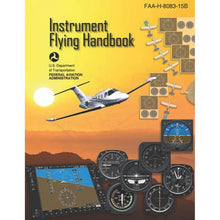
FAA Instrument Flying Handbook (FAA-H-8083-15B)
- Publisher Skyhorse Publishing
- Format softcover, illustrated
- The FAA's own source text for instrument flying: attitude instrument flying, navigation systems, the IFR system, and emergency procedures
- The reference your knowledge test questions and checkride oral are drawn from
- Belongs on the shelf before your first IFR lesson
Perfect for: every instrument student's first purchase, and the authority to settle any IFR argument.
Click for Price →
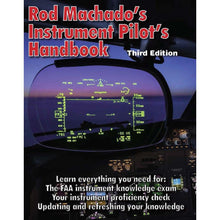
Rod Machado's Instrument Pilot's Handbook (3rd Edition)
- Author Rod Machado
- Format softcover, illustrated
- Plain-language explanations of the entire instrument curriculum, delivered with Machado's trademark humor
- Turns dry subjects like holding entries and approach plate symbology into material that actually sticks
- The book to reach for when the FAA handbook's phrasing leaves you cold
Perfect for: pilots who learn better from a storyteller than from a regulation.
Click for Price →
Gleim 2026 Instrument Pilot FAA Knowledge Test Prep
- Publisher Gleim
- Edition 2026
- Authentic FAA-style questions organized by topic, with detailed explanations for right and wrong answers
- Study-unit format isolates weak areas so you stop re-reading what you already know
- Updated for the current testing cycle
Perfect for: knocking out the instrument written before flight training ramps up.
Click for Price →
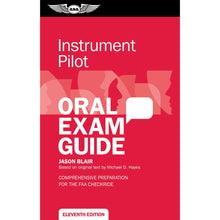
ASA Instrument Pilot Oral Exam Guide (11th Edition)
- Publisher ASA
- Format softcover, question-and-answer
- The exact question-and-answer format examiners use in the instrument oral
- Covers regulations, weather, systems, and approach procedures with FAA-source references for every answer
- Small enough to live in your flight bag for pre-lesson review
Perfect for: the final weeks before the checkride, when the oral is what stands between you and the rating.
Click for Price →
Foggles IFR Training Glasses
- Brand Foggles
- Type frosted view-limiting training glasses
- Frosted upper lens blocks the windscreen while leaving the full instrument panel in clear view
- Lightweight one-piece design fits comfortably under a headset for long training flights
- The default answer when a CFII says "bring a view-limiting device"
Perfect for: logging your 40 hours of simulated instrument time the way most instrument pilots before you did.
Click for Price →
BLOCKALLS IFR View Limiting Device
- Brand MJ Modica Products Co.
- Type view-limiting glasses, multiple frame and lens options
- Redesigned from real-world pilot feedback for a more complete outside-view block than traditional foggles
- Multiple frame colors with clear or tinted lenses to suit your cockpit and your sunglasses habit
- Comfortable under a headset and quick to flip on and off during approach transitions
Perfect for: students who find standard foggles let in too much peripheral cheating.
Click for Price →Want to compare more hoods and training glasses? Browse the full view-limiting devices collection.
Frequently Asked Questions
- Is IFR harder than VFR?
- Yes, IFR flying is harder than VFR for most pilots. Instrument flying demands precise aircraft control using only the instruments, rapid radio work with ATC, and constant procedural discipline from clearance to approach. The training reflects that: you retrain your senses to trust the gauges over your inner ear, learn approach plates and holding procedures, and fly to tighter tolerances than the private checkride required. The payoff is that the instrument rating makes you a sharper, safer pilot even on clear days, which is why many instructors call it the most valuable rating in aviation.
- Can I fly VFR at night?
- Yes, you can fly VFR at night in the United States as long as you meet the night VFR weather minimums for your airspace and your aircraft carries the required night equipment, including position lights and an anticollision light. Night VFR demands extra respect: terrain and clouds are far harder to see, and inadvertent flight into IMC is a leading cause of night accidents. Many pilots set personal minimums well above the legal ones at night, and some countries prohibit night VFR entirely, so check the rules before flying abroad.
- Do I need an instrument rating to fly through clouds?
- Yes. Flying through clouds means flying in Instrument Meteorological Conditions, and to do that legally you must hold an instrument rating, be current, fly an appropriately equipped aircraft, and be on an IFR flight plan with an ATC clearance. There is no VFR exception for a quick climb through a thin layer. Even brushing a cloud violates the cloud-clearance requirements of 14 CFR 91.155. If a cloud deck stands between you and your destination, your options are to fly under it, around it, over it with legal clearance, or land. The instrument rating is what removes that ceiling from your flying.
- What happens if a VFR pilot accidentally flies into IMC?
- VFR into IMC is an emergency, and the response is immediate: transition to the instruments, keep the wings level, and resist every sensation your inner ear reports. Most pilots without instrument training lose control within minutes in actual IMC, which is why this scenario remains one of general aviation's deadliest. Execute a standard-rate 180-degree turn back toward the visual conditions you just left, climb if terrain is a factor, and tell ATC what is happening. Controllers can give you vectors to VFR conditions and will clear traffic out of your way. Declaring an emergency costs you nothing; continuing into the clouds can cost everything.
- Can a private pilot file an IFR flight plan without an instrument rating?
- No. Filing and flying under IFR requires an instrument rating on your pilot certificate, and you must also meet recency-of-experience requirements, including six instrument approaches plus holding and intercepting-and-tracking tasks within the preceding six months. A private pilot without the rating may not accept an IFR clearance, even in clear weather. The one teaching exception: a student or rated pilot may fly simulated instrument time under the hood in VFR conditions with an appropriately rated safety pilot or instructor on board, which is exactly how most instrument students build their 40 hours.
- What are the basic VFR weather minimums?
- The most commonly quoted minimum is 3 statute miles of visibility with cloud clearances of 500 feet below, 1,000 feet above, and 2,000 feet horizontal, which applies in Class C, D, and E airspace below 10,000 feet MSL. Class B requires only 3 miles and clear of clouds. At or above 10,000 feet MSL, the requirement increases to 5 miles and 1,000 feet below, 1,000 feet above, and 1 mile horizontal. Class G is the most permissive, allowing as little as 1 mile and clear of clouds during the day below 1,200 feet AGL. The full breakdown lives in 14 CFR 91.155 and in the table earlier in this guide.
- How many hours do you need for an instrument rating?
- The FAA requires 50 hours of cross-country time as pilot in command and 40 hours of actual or simulated instrument time, of which at least 15 hours must be instrument training from a CFII. You also need 3 hours of instrument training within the two calendar months before the practical test, plus one 250 nautical mile IFR cross-country with an instrument approach at each airport and three different kinds of approaches. Part 141 programs can reduce some totals. Most pilots take more hours than the minimums, and quality of practice matters more than the raw number.
- What is a view-limiting device and do I really need one?
- A view-limiting device is a hood or pair of frosted training glasses that blocks your view outside the cockpit so you can log simulated instrument time in visual conditions. Every instrument student needs one: of the 40 instrument hours the FAA requires, most are flown under a device like Foggles with a safety pilot or instructor watching for traffic. Fit matters more than style. Pick a device that works with your headset and your prescription glasses if you wear them, blocks the windscreen completely without blocking the panel, and goes on and off quickly for transitions on the approach.
About the Author
Neil S. Glazer is a commercial pilot with multi-engine and instrument ratings and the founder of PilotMall.com. He has spent decades flying general aviation aircraft and helping fellow pilots find gear that works as hard as they do, and he writes these guides the way he flight plans: thoroughly, and with zero patience for fluff.