




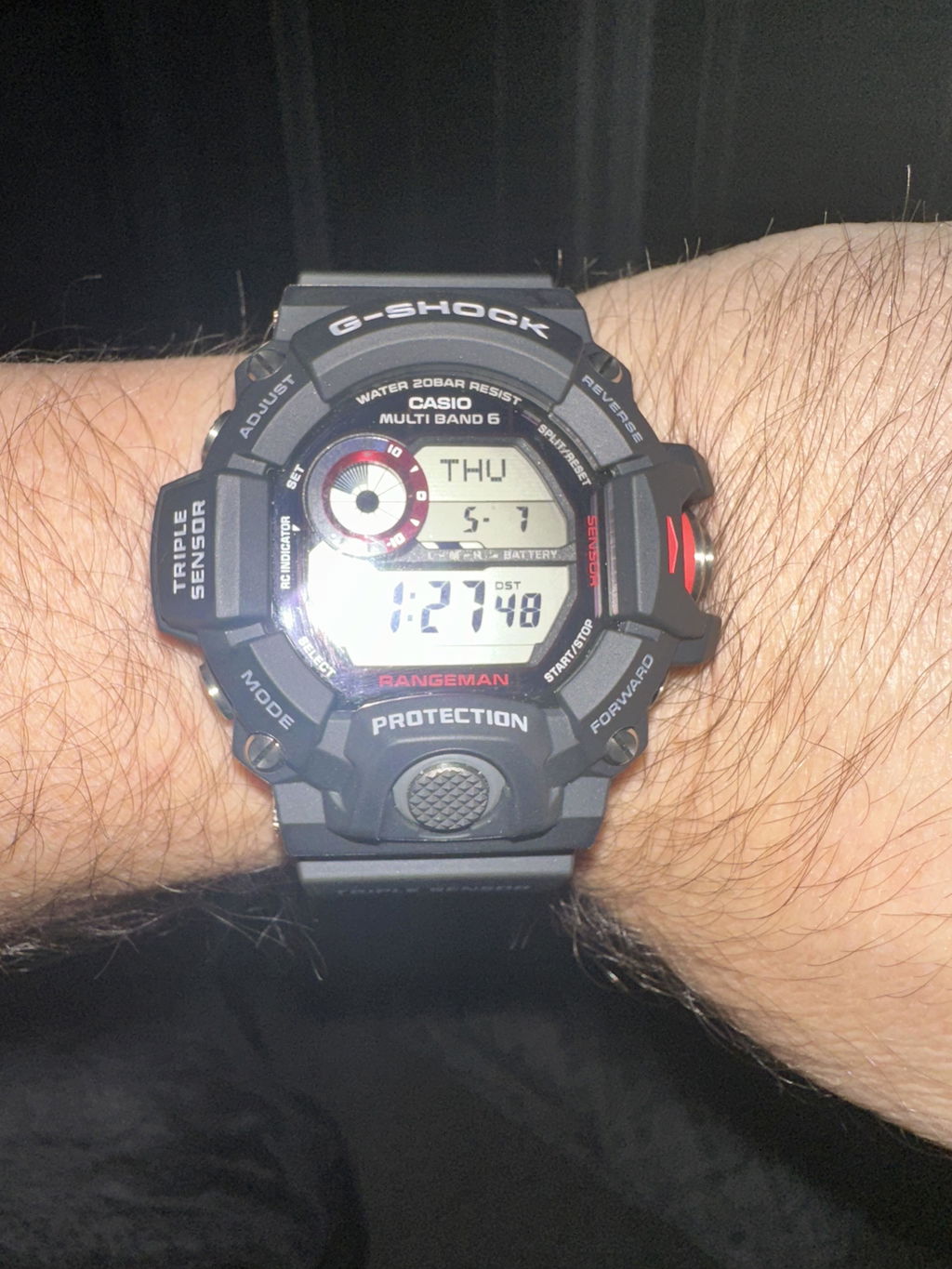
Casio Rangeman G-Shock Black Solar Atomic Watch GW9400-1
Solar atomic survival watch with altimeter, compass and barometer, delivering essential flight data with solar power so battery failure never leaves you without it.
40746
Benefits
Benefits
Shipping & Delivery
Shipping & Delivery
Returns
Returns
Professional pilots and aviation enthusiasts need a reliable pilot watch with altimeter that provides essential flight data without the worry of battery failure or equipment breakdown.
The Casio G-Shock Rangeman is the ultimate solar-powered aviation watch, combining three integrated environmental sensors with G-Shock's legendary shock-resistant durability.
Reliable Backup Instrumentation
This pilot watch with altimeter becomes your trusted backup instrument in challenging flight conditions. It provides real-time altitude readings, barometric pressure monitoring, and precise directional guidance through its advanced compass system. The unlimited solar power technology ensures continuous operation, even during extended flights or in low-light conditions. This eliminates the anxiety of dead batteries when you need critical data most. What's the best watch with altimeter for pilots who demand reliability? The Rangeman's atomic timekeeping receives global radio wave signals for precision accuracy across time zones, while its shock-resistant aviation watch construction withstands the vibrations, impacts, and extreme conditions common in flight environments.
Durability and Comfort in Flight
Whether you're a commercial pilot needing dependable instrumentation backup, a recreational aviator seeking authentic aviation functionality, or a tactical professional operating in demanding conditions, this multi-sensor pilot timepiece delivers the environmental data you need in a single, rugged instrument. The mineral glass display remains clearly readable in varying cockpit lighting, while the lightweight resin construction ensures comfort during long flights. With waterproof capabilities to 660 feet (200 meters) and G-Shock's proven durability engineering, this aviation timepiece with multiple sensors performs reliably from sea level to altitude, through weather changes and challenging operational environments.
Command your flight with the Casio G-Shock Rangeman, the ultimate solar-powered aviation watch delivering critical triple sensor data and G-Shock's legendary toughness. Get mission-ready now!
Frequently Asked Questions
Is the Casio Rangeman GW9400-1 solar powered, and will it ever need a battery replacement?
Yes. The Rangeman runs on solar power, charging a rechargeable cell from light, including ordinary indoor lighting. Because it recharges continuously during normal wear, you avoid routine battery replacement and the worry of a dead battery mid flight. That is a core appeal as a backup aviation instrument, since it stays powered without scheduled service intervals.
What does the Triple Sensor measure, and how does it help in the cockpit?
The Rangeman carries three integrated environmental sensors that read altitude, barometric pressure, direction through a digital compass, and temperature. Together they give real time situational awareness in the cockpit. These sensors serve as reliable backup instrumentation that supports your panel, not a replacement for certified primary flight instruments, so use the readings as supplemental data.
How accurate is the altimeter, and do I need to calibrate it?
The watch provides real time altitude readings as part of its sensor suite. Because these sensors serve as backup instrumentation rather than certified equipment, treat the altitude figure as supplemental situational awareness. For precise altitude in flight, rely on your calibrated cockpit instruments, and use the watch reading as a convenient secondary reference.
How does the atomic timekeeping work and keep precise time?
The Rangeman uses atomic timekeeping, receiving radio wave signals to keep highly precise time and adjust automatically where coverage is available. That accuracy is useful when you travel across time zones. This radio wave reception delivers precise timekeeping, making the Rangeman a dependable timekeeping companion in the cockpit and on the ground.
Which regions can the atomic radio reception use to set the time automatically?
The GW9400 uses Multi-Band 6 reception, picking up time calibration signals from six transmitter stations covering the United States, United Kingdom, Germany, Japan, and China. Inside these zones it can sync automatically, typically overnight, and correct itself without manual setting. Outside coverage areas you can set the time by hand and still rely on its quartz accuracy.
How long does the battery last on a full charge, and does it have a power saving mode?
On a full charge the Rangeman keeps running for roughly seven months with no further light exposure, and far longer with its power saving function active. Power saving dims the display and suspends some functions when the watch sits in darkness, then wakes when moved. In practice, normal wear keeps it charged indefinitely without thought.
Does it show multiple time zones for travel and cross country flying?
Yes. The Rangeman includes a World Time function covering dozens of cities across the major global time zones, so you can track home time and a destination at once. That is handy for cross country flights and trips that span regions. You can swap your main display and World Time setting quickly when you change locations.
What timer, alarm, and stopwatch functions does the Rangeman include?
The GW9400 offers practical timekeeping tools beyond the sensors. It includes multiple daily alarms, an hourly time signal, a countdown timer, and a stopwatch with high resolution measurement. These help with timed tasks, reminders, and elapsed time tracking. Combined with its automatic calendar, the watch covers everyday scheduling needs alongside its rugged environmental instruments.
Can I get the GW9400-1 wet, and how water resistant is it?
The Rangeman is waterproof to 660 feet, which is 200 meters, so it easily handles rain, washing, and water exposure during everyday flying and outdoor use. Combined with its shock resistant G-Shock construction, it is built to keep performing through weather changes and demanding operational environments, from sea level to altitude.
How tough and how large is this watch on the wrist?
It uses G-Shock shock resistant engineering in a lightweight resin case with a clear mineral glass display, built to shrug off vibration, impacts, and extreme conditions. The case measures about 55.2 by 53.5 by 18.2 millimeters and weighs roughly 93 grams, so it wears as a rugged, substantial instrument while staying light enough for long flights.
Is the display readable in low light and varying cockpit conditions?
Yes. The Rangeman has a full auto LED backlight that switches on at the press of a button for clear reading in dim cabins or at night. The mineral glass display stays legible across varying cockpit lighting, and the high contrast digital layout keeps altitude, pressure, direction, and time easy to scan at a glance.
Why does the caseback say GW-9400 instead of GW9400-1?
That is correct and expected. GW-9400 is Casio's model number for this watch. The -1 on the end is only the code for the black color, and Casio uses it in its catalog and on the box rather than on the watch itself. Casio's own manual for this model is titled Master of G RANGEMAN, GW-9400, Module No. 3410.
Why can the caseback not show the color code?
Because Casio uses the same physical back cover on more than one color. Genuine Casio part 10458950 is the back cover for the GW9400-1, the GW9400-1B and the GW9400-3 alike. One part serves all three, so the engraving stops at GW-9400. That also means the back cannot tell you which color you have.
How do I confirm I received the black GW9400-1?
Check the front rather than the back. The GW9400-1 has red accents, a display with dark digits on a light background, and a band printed TRIPLE SENSOR. A reversed display with orange accents is the GW9400-1B, and khaki green is the GW9400-3. A band printed CARBON FIBER is the Japan market GW-9400J, whose caseback reads GW-9400J rather than GW-9400.
-
 Vendor:Citizen Watch
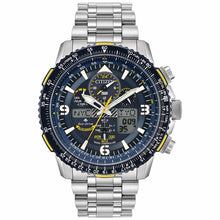
Citizen Promaster Skyhawk A-T Blue Dial Stainless Steel Bracelet Watch (External E6B) JY8078-52L
Solar atomic pilot watch with an external E6B slide-rule bezel, powered by any light source so it never needs a battery change during critical flight operations.
Regular price $475.00Sale price $475.00 Regular priceUnit price per$775.00 -
 NewVendor:Garmin
Garmin D2 Mach 2 Pro Aviator Smartwatch - Carbon Gray DLC Titanium with Chestnut Leather Band
Top-tier aviator smartwatch with aviation database and moving-map nav, built with a 51mm titanium bezel and leather band for cockpit and everyday wear.
Regular price $1,549.99Sale price $1,549.99 Regular priceUnit price per$1,549.99 -
 NewVendor:Citizen Watch
Citizen Promaster Skyhawk U830 Eco-Drive Stainless Steel Watch JV2000-51L
A 43 mm stainless steel case with a sapphire crystal and countdown timer pairs analog and digital displays, rugged style secured on a triple-link bracelet.
Regular price $499.00Sale price $499.00 Regular priceUnit price per$795.00 -
 Vendor:Citizen Watch
Citizen Promaster Skyhawk A-T Blue Dial Stainless Steel Bracelet Watch (Internal E6B) JY8125-54L
Solar atomic pilot watch with an internal E6B slide-rule bezel, combining atomic-accurate timekeeping with flight calculations pilots can trust on every leg.
Regular price $649.00Sale price $649.00 Regular priceUnit price per$895.00 -
 Vendor:Citizen Watch
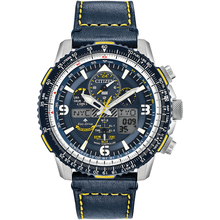
Citizen Eco Drive Promaster Skyhawk A-T Blue Angels Leather Watch JY8078-01L
Blue Angels solar pilot watch with E6B slide rule, leather strap, syncing radio-controlled atomic time across 43 cities worldwide for accurate global scheduling.
Regular price $449.99Sale price $449.99 Regular priceUnit price per$695.00 -
 Vendor:Citizen Watch
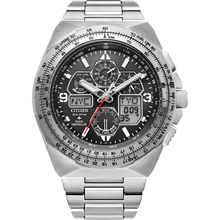
Citizen Eco-Drive Promaster Skyhawk Stainless Steel Bracelet Black Dial Watch JY8120-58E
Solar atomic pilot watch with slide rule and a steel bracelet, powered by light so battery anxiety never interrupts your preflight routine again.
Regular price $715.50Sale price $715.50 Regular priceUnit price per$795.00 -
 NewVendor:Garmin
Garmin D2 Mach 2 Aviator Smartwatch: Carbon Gray DLC Titanium with Vented Titanium Bracelet (51 mm)
A rugged 51 mm DLC titanium case and sapphire lens protect a bright AMOLED display loaded with aviation databases and moving maps for pilots who accept zero compromise.
Regular price $1,499.99Sale price $1,499.99 Regular priceUnit price per$1,499.99 -
 Vendor:Citizen Watch
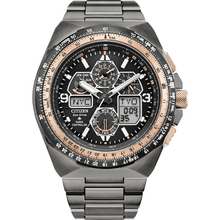
Citizen Eco-Drive Promaster Skyhawk A-T Black Dial Stainless Steel Bracelet Watch JY8146-54E
Solar atomic pilot watch with world time and an E6B slide rule, powered entirely by light so it keeps accurate time on the line without ever needing a battery.
Regular price $649.99Sale price $649.99 Regular priceUnit price per$995.00 -
 NewVendor:Garmin
Garmin D2 Air X15 Aviator Smartwatch: Slate with Black Silicone Band
A 1.4 inch AMOLED touchscreen puts critical flight data on your wrist, with direct-to airport navigation and a durable silicone band built for daily wear in the cockpit.
Regular price $649.99Sale price $649.99 Regular priceUnit price per$649.99 -
 Vendor:Bulova
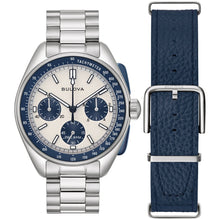
Bulova Lunar Pilot High-Precision Space Chronograph Watch 98K112
Space-heritage chronograph with a high-precision quartz movement in a rugged 43.5mm stainless steel case and sapphire crystal, tough enough for demanding aviation conditions.
Regular price $675.00Sale price $675.00 Regular priceUnit price per$895.00


