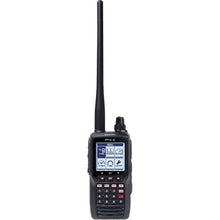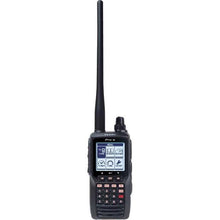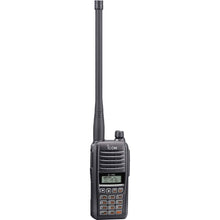




Why Every Pilot Needs a Portable Aviation Radio
A handheld aviation radio belongs in every pilot's flight bag. This guide covers the real-world scenarios where a portable transceiver proves its value, from panel radio failure to training and preflight ATIS checks.


A Handheld Aviation Radio Belongs in Every Flight Bag
Your panel-mounted comm radio is reliable, right up until it is not. A portable aviation transceiver is the one piece of backup gear that costs relatively little, weighs almost nothing, and could be the most important tool you carry on any given flight.
Every pilot who has ever had a comm radio fail on short final knows exactly why a handheld aviation radio belongs in the flight bag. For everyone else, it is an easy piece of gear to skip until the moment you need it.
This article walks through the real-world scenarios where a portable VHF transceiver proves its value, what to look for when you are shopping for one, and the full range of handheld aviation radios available at PilotMall from Icom and Yaesu. If you are ready to compare specific models side by side, the Best Aviation Handheld Radios 2026 guide has detailed picks by use case.
Six Reasons Every Pilot Should Carry a Portable Radio
1. Panel Radio Failure
Your primary comm fails at the worst possible time. A handheld radio lets you maintain two-way communication with ATC, declare an emergency if needed, and get the aircraft on the ground safely. This is not a hypothetical. Radios fail, and the FAA expects you to have a plan.
2. Electrical System Issues
An alternator failure, a dead battery, or an electrical fire that requires shutting down avionics can leave you with no panel comm at all. A handheld radio on its own battery is completely independent of the aircraft electrical system. That independence is the point.
3. Student Pilot Training
Instructors regularly use handheld radios during training so students can focus on flying while the CFI monitors a second frequency. For solo students, a handheld provides an additional layer of communication confidence during those early, higher-stress flights.
4. Preflight ATIS and AWOS Checks
A handheld lets you pull up ATIS, AWOS, or ASOS before you even start the engine. No need to burn avionics power or start the aircraft just to get weather, runway, and field information. It is a small convenience that pilots who do it once rarely stop doing.
5. Fly-Ins, Air Shows, and Ramp Operations
At fly-ins and crowded events, a handheld radio lets you monitor unicom and ground traffic while walking the flight line, inspecting the aircraft, or talking to other pilots. You stay in the loop without being plugged into the panel.
6. Rented or Borrowed Aircraft
Flying a club aircraft, a rental, or someone else's plane sometimes means dealing with unfamiliar avionics or a comm radio that has seen better days. Bringing your own handheld reduces that risk and gives you an independent communication option no matter what you are flying.
A Real-World Example: When a Handheld Radio Changes the Day
One of the strongest arguments for carrying a handheld radio happens on the ground. At a busy uncontrolled airport, a disabled aircraft can turn a normal runway into an unsafe landing environment in seconds. If you are away from the panel, a handheld radio gives you a way to warn inbound traffic, contact approach, and coordinate help while the situation is still unfolding.
The same principle applies in the air. A comm failure on an IFR approach, an alternator dropping offline on a long cross-country, or a transponder squawking on final are all scenarios where having an independent radio on its own battery means the difference between a manageable problem and a serious one. That is the kind of scenario most pilots never plan for until they see it happen.
A portable aviation radio is not just backup for lost comms in flight. It is a practical ramp tool, a training aid, an emergency coordination resource, and a preflight convenience. The pilots who carry one consistently are the pilots who have used one when it mattered.
COM Only vs NAV/COM vs NAV/COM with GPS
The single biggest decision when choosing a handheld aviation radio is whether you need navigation capability or communication only. Here is how the three categories break down.
| Type | What It Does | Best For |
|---|---|---|
| COM Only | Transmits and receives on aviation VHF frequencies. Clear, reliable two-way communication with ATC, unicom, and other aircraft. | Backup comms, student training, ramp use, preflight checks |
| NAV/COM | Adds VOR and ILS navigation capability on top of full COM. Lets you tune and track VOR radials and ILS localizers directly from the handheld. | Backup navigation, instrument students, cross-country backup |
| NAV/COM + GPS | Full COM and NAV capability plus WAAS GPS with moving map, flight plan capability, and often Bluetooth for wireless headset connection. | IFR environments, primary backup, cross-country, training, remote operations |
Battery Type: AA vs Li-ion
Beyond COM vs NAV/COM, battery type is the other significant choice. Both have real advantages depending on how you fly.
AA battery models are popular for emergency use because replacement batteries are widely available and easy to store in a flight bag. If you are flying internationally, doing remote bush flying, or want maximum flexibility away from charging sources, an AA-capable handheld is the smarter choice. Several models run on both a rechargeable pack and an AA tray, giving you both options.
Li-ion models generally offer longer continuous run time, lighter weight, and a more convenient charging setup for everyday use. If you fly domestically and keep the radio charged between flights, Li-ion is perfectly practical.
COM Only Handhelds
The full PilotMall handheld radio range spans COM-only through full NAV/COM GPS across Icom and Yaesu. Below are all current models by category. For side-by-side specs and detailed recommendations by pilot type, see the Best Aviation Handheld Radios 2026 guide.
COM-only transceivers cover the most common use case: reliable two-way VHF communication as a backup or training tool. These are the lightest, most focused handheld radios in the lineup.

Yaesu FTA-250L
A compact, waterproof COM-only transceiver with Li-ion battery, 5-watt output, and a clean single-purpose design. The FTA-250L is the straightforward choice for pilots who want reliable backup comms without the complexity of navigation features. Rugged enough for real cockpit use, light enough that you will not notice it in the bag.
Check Price →
Yaesu FTA-450L
Steps up from the FTA-250L with a larger display, easy-access frequency controls, and solid 5-watt output. A popular choice for student pilots and CFIs who want a dependable, no-fuss handheld that handles everyday preflight checks, training flights, and backup duty without requiring a manual to operate.
Check Price →
Icom IC-A16B
Compact, waterproof, and Bluetooth-enabled, the IC-A16B lets you connect a Bluetooth headset and operate the radio wirelessly. At 6 watts, it delivers strong transmit power for clear communication even in noisy environments. The IP67 waterproof rating makes it one of the more rugged COM-only options available. A strong pick for student pilots and pilots who want wireless headset operation.
Check Price →
Icom IC-A25C
Icom's flagship COM-only handheld with 6-watt output, a bright color display, and a wide operating temperature range built for demanding cockpit environments. The A25 series is one of the most trusted platforms in general aviation handheld radios, combining durability with straightforward operation. The IC-A25C is the COM-only variant for pilots who do not need navigation capability but want maximum transmit power and build quality.
Check Price →
Icom IC-A25C-S Sport
The Sport variant of the IC-A25C ships with an AA battery tray, making it the ideal dedicated emergency backup. When the aircraft is on the ground somewhere, you can run it on standard AA batteries available at any general store or airport FBO. All the same 6-watt output and build quality as the standard A25C, with the battery flexibility that makes it the go-to choice for emergency preparedness.
Check Price →NAV/COM Handhelds
NAV/COM transceivers add VOR and ILS reception to full communication capability. For instrument students, cross-country pilots, and anyone who wants genuine navigation backup in a handheld package, these are the step up from COM-only.

Yaesu FTA-550AA
Full VOR and ILS navigation plus NOAA weather reception, all powered by AA batteries. The FTA-550AA combines navigation capability with the battery independence that makes it a strong emergency backup choice. The ability to run on AA batteries makes replacement power easier to source away from your home airport. A solid option for cross-country pilots who want genuine nav backup without depending on a charger.
Check Price →
Yaesu FTA-550L
The Li-ion version of the FTA-550 offers the same VOR and ILS navigation capability with the convenience of a rechargeable battery for pilots who keep the radio charged between flights. Crystal-clear display, reliable airband reception, and NOAA weather monitoring make the FTA-550L a well-rounded NAV/COM choice for everyday and backup use.
Check Price →NAV/COM with GPS
The most capable category of handheld aviation radios adds WAAS GPS, moving map capability, and often Bluetooth to the full NAV/COM foundation. These are the radios pilots reach for when they want the most capable handheld backup for communication, navigation, GPS awareness, and training support.

Icom IC-A25N
The IC-A25N is the top of Icom's handheld aviation lineup. It combines 6-watt COM power with VOR navigation, GPS positioning, and Bluetooth headset connectivity in a compact package built to Icom's aviation-grade standards. The color display and intuitive interface make it one of the most user-friendly full-featured handhelds available. A strong choice for IFR pilots, instrument students, and anyone who wants genuine situational awareness from a handheld.
Check Price →
Yaesu FTA-850AA
The FTA-850AA brings Yaesu's most advanced handheld feature set to pilots who need AA battery operation. Full-color display, WAAS GPS, Bluetooth connectivity, 6-watt output, and complete NAV/COM capability, all powered by standard AA batteries. For remote flying, international operations, or pilots who want maximum flexibility from a premium handheld, this is the top-of-range choice that does not compromise on power source.
Check Price →
Yaesu FTA-850L
The most fully equipped handheld aviation radio in the Yaesu lineup. The FTA-850L combines a vibrant full-color display, WAAS GPS with moving map, complete NAV/COM capability, Bluetooth headset connectivity, and a rugged build designed for demanding operational environments. Cross-country pilots, IFR students, and aviators who want a capable backup for communication and navigation will appreciate the FTA-850L.
Check Price →Full Handheld Radio Range at a Glance
All handheld aviation transceivers available at PilotMall from Icom and Yaesu:
| Model | Brand | Type | Battery | Bluetooth | |
|---|---|---|---|---|---|
| Yaesu FTA-250L | Yaesu | COM Only | Li-ion | No | Check Price → |
| Yaesu FTA-450L | Yaesu | COM Only | Li-ion | No | Check Price → |
| Icom IC-A16B | Icom | COM Only | Li-ion | Yes | Check Price → |
| Icom IC-A25C | Icom | COM Only | Li-ion | No | Check Price → |
| Icom IC-A25C-S Sport | Icom | COM Only | AA | No | Check Price → |
| Yaesu FTA-550AA | Yaesu | NAV/COM | AA | No | Check Price → |
| Yaesu FTA-550L | Yaesu | NAV/COM | Li-ion | No | Check Price → |
| Icom IC-A25N | Icom | NAV/COM + GPS | Li-ion | Yes | Check Price → |
| Yaesu FTA-850AA | Yaesu | NAV/COM + GPS | AA | Yes | Check Price → |
| Yaesu FTA-850L | Yaesu | NAV/COM + GPS | Li-ion | Yes | Check Price → |