




The Complete Guide to Aircraft Instruments [More Than Just the 6-Pack]
![The Complete Guide to Aircraft Instruments [More Than Just the 6-Pack]](http://www.pilotmall.com/cdn/shop/articles/08f0425d85b8a961916f014247764898.jpg?v=1715242975&width=1100)


When you hear "aircraft instruments," what do you think of? What probably comes to mind are the flight instruments you see front and center during each flight. The 6-pack is certainly important, but it is just one part of a bigger system.
This guide walks you through all three categories of aircraft instrumentation, explains how every gauge in the cockpit actually works, and links out to our detailed deep dives on each key instrument. By the time you are done reading, you will know all the most important pilot gauges and screens, whether your panel is round dials or glass.
We will start at the macro level with instrument categories.
Key Takeaways
- Every cockpit gauge belongs to one of three categories: flight instruments, engine instruments, or navigation instruments.
- The 6-pack is the core set of flight instruments: airspeed indicator, altimeter, attitude indicator, heading indicator, turn coordinator, and vertical speed indicator. Three run on the pitot-static system and three are gyroscopic.
- Engine instruments measure four things, whether you fly behind a piston or a turbine: fluid quantity, pressure, temperature, and engine speed.
- Navigation instruments range from the magnetic compass and clock to VOR, ILS, and GPS, with ADS-B now mandatory in most controlled airspace.
- Glass cockpits display the same six values as steam gauges, so the instrument scan you learn on round dials transfers directly to a primary flight display.
What Are the 3 Categories of Aircraft Instruments?
Airplane instruments provide real-time data that pilots use to monitor their plane's status and to safely complete their flights.
Aircraft instruments are grouped into these three categories:
- Flight Instruments
- Engine Instruments
- Navigation Instruments
Flight instruments tell you what the airplane is doing in the air. Engine instruments report the health and output of the powerplant. Navigation instruments tell you where you are and how to get where you are going. We will take them in that order.

Flight Instruments: The 6-Pack
We will start with the category of instruments that most of us think of when someone mentions aircraft instruments. The six basic flight instruments are often simply called the "6-pack." Half of the flight instruments use the pitot-static system and the others are gyroscopic.
Note: Our flight instrument gauge descriptions reflect traditional steam gauges. To see how the same data is displayed in a glass cockpit, watch a Garmin G1000 basics overview, then read our steam vs glass section below.
Pro Tip: Familiarize yourself with the six-pack in a fun setting by building out your home flight simulator setup. The gear section below includes our favorite sim panel hardware for drilling your instrument scan on the ground.
What Are the 6 Pack Instruments?
The 6 pack flight instruments are the first set of instruments student pilots are trained to familiarize themselves with. They include these aircraft instruments:
- Airspeed Indicator (ASI)
- Altimeter
- Attitude Indicator (AI)
- Heading Indicator (HI)
- Turn Coordinator (TC)
- Vertical Speed Indicator (VSI)
Pitot-Static Flight Instruments
Pitot-static system instruments get their data through relative air pressure readings that are then used to extrapolate metrics like altitude and speed.
The three pitot-static flight instruments are:
- Altimeter
- Airspeed Indicator
- Vertical Speed Indicator
Gyroscopic Flight Instruments
These instruments use spinning gyros and gimbals to register changes to aircraft headings and attitude. Gyroscopic flight instruments help pilots maintain their orientation to their surroundings.
The three gyroscopic flight instruments in the cockpit are:
- Attitude Indicator
- Heading Indicator
- Turn Coordinator

Altimeter
Pressure altimeters, or barometric altimeters, give pilots a reading of their altitude above sea level. These altimeters use relative air pressure values and correlate that data to altitudes. Altimeters are manually calibrated to local barometric pressure or, when flying in the flight levels, to the standard pressure setting of 29.92 inHg.
To learn how to read an altimeter, remember that on the gauge of a three pointer altimeter, each of the three hands indicates a different pressure altitude increment. Putting all three together provides your final reading.
The long, skinny hand reads 10,000-foot increments, the shortest hand reads 1,000-foot increments and the medium length hand registers the most precise 100-foot increments.
Many altimeters also include a window just below the center of the dial that displays diagonal stripes (also called a crosshatch flag). The pattern is used to indicate altitudes below 10,000 feet. Stripes are fully visible at and below 10,000 feet, then are slowly covered up at increasing altitudes.
Give it a try: If you were flying at a pressure altitude of 12,400 feet, what number would each hand point to? The long hand would read 1, the short hand would read 2, and the medium hand would read 4.
If you dropped down to 2,400 feet, what would change on the gauge? Diagonal stripes would be fully visible in the window below the center of the dial.

Airspeed Indicator (ASI)
The airspeed indicator works by collecting both static air at ambient atmospheric pressure and pressurized ram air. The difference in pressure is known as the dynamic pressure.
Dynamic pressure is used to extrapolate a craft's speed through the air. That value is then displayed on the airspeed indicator gauge in the cockpit. The readings from the airspeed indicator are used to calculate other types of airspeed.

Vertical Speed Indicator (VSI)
The vertical speed indicator (VSI) helps pilots monitor their rate of climb or descent. It is also used to confirm you are maintaining level flight and aren't unintentionally pitching up or down.
As part of the pitot static system, the vertical speed indicator works by collecting and comparing pressure readings. The VSI uses a calibrated air leak diaphragm system to monitor changing static air pressure levels and extrapolate rate of climb or descent.
Pro Tip: Remember that there is some lag time between your control inputs and the VSI gauge's reading. Make your input and hold for a few seconds until the gauge catches up so you aren't chasing the needle.

Attitude Indicator (Artificial Horizon)
Attitude indicators (or artificial horizon indicators, as they are sometimes called) provide pilots a way to monitor the aircraft's attitude. A gyro wheel spinning on the vertical axis is housed inside the casing of the attitude indicator (AI). Its gimbal mount is built so the wheel can pivot on two axes and give pilots both pitch and roll measurements.
The AI gauge face displays an artificial sky and artificial earth separated by the artificial horizon. Hash marks and arrows around the top edge of the face measure left and right bank angles up to 60-degrees. Pitch is indicated using numbered horizontal lines above and below the center of the gauge, indicating pitch up and pitch down respectively.
Pro Tip: IFR pilots are trained to rely on instruments like attitude indicators, whereas VFR pilots are often more used to looking outside for attitude confirmation.
Even if you are a VFR pilot, practice your proficiency flying with an attitude indicator. Incorrect sensory perceptions, especially night flying illusions can quickly lead to disorientation.
If you are too used to relying on your senses alone rather than at least cross-referencing what you think you see and feel with what your gauges are telling you, you could be at higher risk. Many pilots have died after inadvertently flying their plane into a nearly unrecoverable attitude like the ominous graveyard spiral.
The key is to cross reference and trust your instruments not just your senses. Yes, instruments can be wrong, but you can too. We cover this gauge in much more depth in our guide, Watch Your Attitude: A Complete Guide to Aircraft Attitude Indicators, and the FAA Instrument Flying Handbook teaches the full attitude instrument flying method.

Heading Indicator
Pilots use heading indicators to monitor the direction the aircraft's nose is pointing. Heading indicators (HI) can also be called direction indicators (DI) or directional gyros.
The gyro wheel in a heading indicator spins only on the horizontal axis. Its pivot is matched to the aircraft centerline, and the gimbal allows movement on the vertical-axis-only. This lets the instrument register rotation around the vertical axis and display it as a heading change.
Heading indicators are somewhat similar to compasses, but unlike magnetic compasses, gyroscopic heading indicators are not subject to magnetic errors. Historical aircraft relied solely on magnetic compasses, but modern planes use heading indicators in addition to magnetic compasses for better accuracy.
For more specifics on the heading indicator check out our article: Heading Indicator: What it Is, How it Works, and What to Do if it Fails.

Turn Coordinator
The turn coordinator gives pilots an instrument view of their wing attitude showing if they are in straight and level flight configuration or if they are rolling left or right.
A coordinated turn means the tail of the plane is following the flight path rather than skidding to the outside or slipping to the inside of the turn. During a banking turn, the turn coordinator provides feedback to inform the pilot's control inputs.
Student pilots learn to keep the floating ball of the coordinator in between the two vertical lines on the gauge. If the ball drifts outside these markers, the turn is uncoordinated, and the pilot needs to "step on the ball," meaning increase rudder pressure on the side of the gauge the ball has drifted toward.
A miniature aircraft mounted above the ball rolls left or right during a turn. Its wingtips can be lined up with hash marks at the 3 o'clock and 9 o'clock positions of the gauge to hold straight and level flight. A second set of hash marks are placed below the first set.
If a pilot needs to make a 180-degree turn to go back in their direction of travel, they can place the plane into a turn until the miniature aircraft's lower wingtip lines up with the lower hash mark on that side. This is a standard rate turn of 3-degrees per second. Hold the turn for one minute to reverse course. Holding for two minutes would produce a 360-degree turn.
Get the full picture, including how to use this gauge to stay out of trouble, in our Turn Coordinator Guide.

Engine Instruments
Engine instruments are perhaps the easiest category for new pilots to understand since many overlap with ground-based vehicles. Think of engine instruments as being divided up into four sub-categories based on what they measure.
The specific engine instruments depend on whether your plane is powered by a reciprocating engine or a turbine. Either way, your engine instruments measure the same overall parameters of fluid quantities, pressure, temperature, and speed.
Quantity Measuring
- Fuel
- Oil
Pressure Sensing
- Fuel
- Oil
- Manifold (reciprocating)
- Engine pressure ratio [EPR] (turbine)
Temperature Indicating
- Oil
- Cylinder head (reciprocating)
- Carburetor (reciprocating)
- Exhaust gas [EGT] (turbine)
- Turbine inlet [TIT] or turbine gas [TGT] (turbine)
Engine Speed Registering
- Tachometer
- N1 and N2 compressor (turbine)
Note: Turbine engines have a fuel flow meter to monitor the rate at which fuel is flowing into the engine. Turboprop and turboshaft planes have a torquemeter to gauge the amount of mechanical power the engine is producing and transferring to the shaft.

Navigation Instruments
Navigation instruments have evolved over time. Some older systems are still in use today while others have been phased out. We are only covering nav instruments that are still being used.
Magnetic Compass and Clock
The most traditional methods of navigation use magnetic compasses and clocks paired with the wind and airspeed information. We have more advanced navigational innovations now thanks to modern technology, but many planes still have clocks and compasses. Even if they're flying a glass cockpit, pilots should know how to use a compass and clock as a backup to automated systems.
Automatic Direction Finder (ADF)
An ADF device uses ground-based radio signals to provide aircraft with their relative bearing. A non-directional radio beacon (NDB) on the ground transmits a signal on the MF or LF bandwidth.
The signal is picked up by the plane's ADF and pilots can then home in on the beacon or use the relative bearing and heading information to plot a position.
Distance Measuring Equipment (DME)
With DME, pilots monitor their distance from a ground-based beacon based on the radio signal return delay. DME systems are often coupled with VOR beacons.
VHF Omnidirectional Radio Range (VOR)
A ground based VOR station broadcasts a signal on VHF radio. The composite signal includes the station's Morse Code identifier plus data that allows the receiving aircraft to determine the radial, or magnetic bearing from the VOR station to the aircraft.
Instrument Landing Systems (ILS)
When instrument pilots make a precision approach to landing, they fly that approach using feedback from the two sets of dual radio beams of the ILS. The sets of beams are known as the localizer and glideslope.
The localizer beams help pilots line up horizontally on the runway centerline while the glideslope beams help pilots target the proper vertical descent path.
GPS or GNSS
Of course, the most advanced form of navigational instruments are global navigation satellite systems (GNSS), more often called global positioning systems (GPS) in the United States. This navigation technology works by using a network of orbiting satellites for geo radio positioning.
GPS helps support the modern collision avoidance system known as ADS-B, which stands for automatic dependent surveillance broadcast. Planes can be equipped with devices that receive (ADS-B In) or transmit (ADS-B Out) position location.
Pro Tip: ADS-B Out has been mandatory in most controlled airspace since 2020. For more information, refer to our guides on what you need to do to get ADS-B compliant and which transponders support ADS-B.
Steam Gauges vs Glass Cockpits: What Changes?
Everything in this guide so far describes round mechanical dials, the "steam gauges" that still fill most of the training fleet. Glass cockpits like the Garmin G1000 and G3X present the exact same six values on a single primary flight display: airspeed and altitude on vertical tapes, attitude across the full width of the screen, heading on an HSI, with vertical speed and turn rate alongside.
What changes is the machinery behind the display. An air data computer replaces the pitot-static dials, and a solid-state AHRS (attitude and heading reference system) replaces the spinning gyros, so there are no vacuum pumps to fail and no gyro precession to chase. What does not change is the information itself or the instrument scan you use to read it.
That is why instructors still insist you master the traditional six pack. Glass panels carry standby instruments for a reason, and a pilot who understands what each gauge measures and which system feeds it can fly either panel, diagnose a failure in flight, and back up the screens when one goes dark.
Gear Up: Tools for Mastering Your Instruments
Understanding the gauges is step one. Actually flying by them takes deliberate study and practice. These are the tools we recommend to pilots who want to take their instrument knowledge from this page into the cockpit. No prices listed here; click through for current pricing.

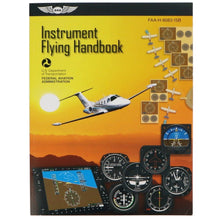
ASA Instrument Flying Handbook (FAA-H-8083-15B)
The FAA's own textbook on every instrument in this guide.
- Official FAA handbook
- Covers flight instruments, instrument scans, and attitude instrument flying
- Full-color illustrations
- Softcover reprint by ASA
- The definitive source for how each gauge works and how to fly by it
- Required reading for the instrument rating knowledge test and checkride
- Covers both analog six-pack panels and glass cockpit displays
Perfect for: every pilot who wants the authoritative explanation of aircraft instruments straight from the FAA.
Click for Price →
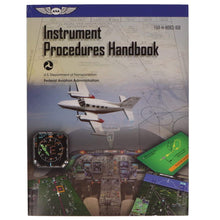
ASA Instrument Procedures Handbook (FAA-H-8083-16B)
Where the instruments meet the IFR system.
- Official FAA handbook
- Departure, en route, arrival, and approach procedures
- Companion volume to the Instrument Flying Handbook
- Shows how VOR, ILS, DME, and GPS are actually used in the National Airspace System
- The reference for flying precision and non-precision approaches
- Pairs with the Instrument Flying Handbook for complete instrument rating coverage
Perfect for: instrument students and rated pilots who want to master the navigation side of the panel.
Click for Price →
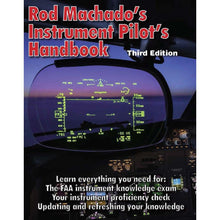
Rod Machado's Instrument Pilot's Handbook (3rd Edition)
The deep dive that is actually fun to read.
- Comprehensive instrument rating textbook
- Humor-driven teaching style
- Hundreds of illustrations that make gyros and pressure systems click
- Explains the why behind every instrument, not just the what
- Machado's illustrations make abstract systems like the pitot-static plumbing intuitive
- An excellent complement to the drier official FAA texts
Perfect for: pilots who learn best from a teacher with personality and want instrument theory explained in plain language.
Click for Price →
Foggles IFR Training Glasses
The classic view-limiting device for real instrument practice.
- Frosted upper lens restricts vision to the panel
- Lightweight and headset-compatible
- The standard for hood work with a safety pilot or CFII
- Forces your eyes onto the gauges so you actually build an instrument scan
- Required equipment for logging simulated instrument time
- Inexpensive insurance against the disorientation we covered in the attitude indicator section
Perfect for: any pilot logging simulated instrument time, from instrument students to VFR pilots staying sharp. See more options in our view limiting devices collection.
Click for Price →
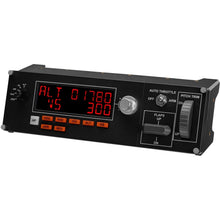
Logitech G Saitek Pro Flight Multi Panel
Drill your instrument flying at home, on real switches.
- Hardware autopilot panel for PC flight simulators
- Altitude, heading, vertical speed, and airspeed modes
- LED readouts plus auto throttle and flap controls
- Practice holding altitudes, headings, and standard rate turns without burning avgas
- Real tactile controls build muscle memory a mouse never will
- Works with the major PC flight simulators for instrument procedure practice
Perfect for: sim pilots and instrument students who want cockpit-style hardware for practicing instrument flying at home.
Click for Price →Browse the full lineup in our IFR Training Products collection and our Aviation Training and Flight Simulation collection.
Related Reading
Now that you know the whole panel, go deeper on the systems and skills behind it:
Frequently Asked Questions
- What are the six pack instruments in an airplane?
- The six pack is the set of six basic flight instruments: airspeed indicator, altimeter, attitude indicator, heading indicator, turn coordinator, and vertical speed indicator. Three of them (the altimeter, airspeed indicator, and VSI) work off the pitot-static system, while the other three (the attitude indicator, heading indicator, and turn coordinator) are traditionally gyroscopic. Student pilots learn the six pack first because it supplies everything needed for basic attitude flying: pitch, bank, speed, altitude, heading, and trend information. Glass cockpits display the same six values on a primary flight display.
- What are the three categories of aircraft instruments?
- Aircraft instruments fall into three categories: flight instruments, engine instruments, and navigation instruments. Flight instruments such as the altimeter and attitude indicator tell you what the airplane is doing in the air. Engine instruments such as the tachometer, oil pressure gauge, and fuel gauges report the health and output of the powerplant. Navigation instruments, from the magnetic compass to VOR, ILS, and GPS receivers, tell you where you are and how to get where you are going. Every gauge or screen in the cockpit belongs to one of these three groups.
- Which instruments use the pitot-static system?
- Three flight instruments run on the pitot-static system: the altimeter, the airspeed indicator, and the vertical speed indicator. The altimeter and VSI need only static pressure, sampled at the static port. The airspeed indicator is the only instrument that uses the pitot tube, comparing ram air pressure against static pressure to display indicated airspeed. Because all three share the same plumbing, a blocked static port degrades all of them at once, which is why many aircraft carry an alternate static source.
- Which flight instruments are gyroscopic?
- The attitude indicator, heading indicator, and turn coordinator are the three gyroscopic flight instruments. Each contains a spinning gyro that resists changes to its plane of rotation, a property called rigidity in space. In most training aircraft the attitude and heading indicators are driven by the vacuum system while the turn coordinator is electric, a deliberate split so a single system failure never takes out all three gyros at once. Modern glass panels replace mechanical gyros with solid-state AHRS sensors that do the same job with no moving parts.
- What happens if the pitot tube ices over?
- A blocked pitot tube takes out the airspeed indicator, and the failure mode is sneaky. If the ram air inlet clogs while the drain hole stays open, indicated airspeed drops toward zero. If both clog, the trapped pressure makes the instrument behave like an altimeter, showing increasing airspeed in a climb and decreasing airspeed in a descent, which can tempt a pilot into exactly the wrong pitch input. That is why pitot heat exists and why checking it is part of any preflight before flying near visible moisture. The altimeter and VSI are unaffected because they read the static line.
- Why do airplanes have both a heading indicator and a magnetic compass?
- Because each instrument covers the other's weaknesses. The magnetic compass needs no power, but it suffers from dip errors during turns and acceleration, and it swings constantly in turbulence. The gyroscopic heading indicator reads steadily through turns and bumps, but it has no idea where north is and it precesses over time. So pilots set the heading indicator from the compass before takeoff, fly the heading indicator in the air, and re-check it against the compass roughly every fifteen minutes in straight and level flight.
- Do glass cockpit aircraft still have a six pack?
- Yes, just in a different format. A primary flight display like the Garmin G1000 presents the same six values: airspeed and altitude on vertical tapes, attitude across the full screen, heading on an HSI, plus vertical speed and turn rate. The data comes from an air data computer and AHRS sensors instead of pitot-static dials and spinning gyros, but the information and the instrument scan transfer directly. Most glass aircraft also carry standby instruments, so steam gauge skills still matter when the screens go dark.
- What is a standard rate turn?
- A standard rate turn is a turn at three degrees per second, which completes a full circle in two minutes and a course reversal in one minute. The turn coordinator marks it for you: roll until the miniature aircraft's wingtip rests on the lower hash mark and hold it there. Standard rate is the default for instrument flying because it keeps bank angles moderate and makes timed turns predictable. As a rule of thumb, the bank angle required is roughly your true airspeed divided by ten, plus half that result.
About the Author
Neil S. Glazer is a commercial pilot with multi-engine and instrument ratings and the founder of PilotMall.com. He has spent decades flying behind both steam gauges and glass, teaching pilots to trust and cross-check their instruments, and he built Pilot Mall to put trustworthy gear and honest advice in the hands of working pilots and the next generation training behind them.


1 comment
Wow! There’s a lot to learn to become a pilot. Thank you for sharing this!