



The Pre-Flight Briefing - Pilot Shop Blog

Standard Terminal Arrival Routes (STAR): A Pilot’s Guide
If you've ever wondered how air traffic stays so organized, STARs and SIDs are where it all begins. These routes might seem invisible from your seat on an airplane, but they're the reason flights smoothly transition between the ground and cruising altitudes, or from cruising to landing.
If you're just curious or gearing up for your next flight, understanding SIDs and STARs gives you a peek behind the curtain of air traffic control's balancing act.

Contact Approach: What It Is, Requirements & How To Fly It
The term "Contact Approach" might sound pretty straightforward—simply contact approach control on the designated frequency.
Unfortunately, that'd be the wrong assumption, this phrase refers to a specific type of approach request that IFR pilots must become familiar with in case they need it during landing at their destination airport.
In this article, we will get into all the details and clear up any confusion surrounding contact approaches.

IFR Clearance: How To Request & File (Examples / Requirements)
Has the grey sky put a damper on your love of flying? Acing your IFR rating not only makes you an even more skillful pilot, but it also grants you priceless freedom. Of course, there's one area that many IFR learners have trouble with—decoding all those confusing IFR clearances and readbacks!
No problem though, we're here to help!

Runway Visual Range (RVR in METAR): What it is, How it Works
If you've ever studied how to read METARs, then you may have noticed an "R" symbol followed by a runway number. That's an RVR and only appears in a METAR when visibility is low. What does this tell us as pilots, why is it important?
In this article, we will discuss what RVR information means for pilots and why it is essential to comprehend them.
Let's get to it!

How VOR Works: VHF Omnidirectional Range

Visual vs Contact Approach: Key Insights for Pilots
In aviation, if you can understand the differences between a visual approach and a contact approach, then you know how it can affect how your landings in different weather conditions.
If you're flying in IFR (Instrument Flight Rules) or transitioning to VFR (Visual Flight Rules), you'll need to know about these approaches. In this guide we'll walk you through this process.

Lost Comms on IFR Flight (What to do & Procedures to Follow)
Picture this, you have your IFR rating and you're on an IFR flight plan down to Florida for some sun and relaxation on the beach. You're not too far from your final destination, and you decide to get in touch with ATC, but you notice that something isn't quite right—you've lost comms. In this article, we’ll cover what to do if communication is lost during an IFR flight plan. We will discuss lost comm procedures and more!

Horizontal Situation Indicator (HSI) - Explained In Detail
If you're migrating from analog gauges or refining your instrument flying, learning how the HSI improves on traditional systems will make things easier and less stressful for you.
Let’s break down how it works and why it’s a valuable addition to modern cockpits.

Pop-up IFR Clearance: 7 Tips On How To Properly Request One
As you're peacefully navigating on your flight path, you notice unexpected clouds forming below. Thankfully, you have an IFR rating and the necessary equipment for instrument flying. Unfortunately, you realize that you didn't file an IFR plan with flight service. But don't panic! The FAA has a solution for situations like this: a pop-up IFR clearance.
In this guide, we'll cover 7 of the important details you need to know about requesting this type of clearance.

VFR vs IFR Explained: Differences Between The Flight Rules
If you've ever been curious about the aviation terms used at flight school, the influence of the Federal Aviation Administration (FAA), and the intriguing dance between VFR and IFR, you've found the right guide.
Think of VFR as your ticket to the skies on those picture-perfect, clear days, but if you want to become an IFR pilot, you're diving into the world of controlled airspace and navigating the unpredictable nuances of weather conditions.
Get out your notebook and let's cover the VFR vs. IFR debate together.

Pre-Departure Clearance Guide (PDC): What it is & How it Works
Unless you're a commercial pilot for an airline, the term "Pre-Departure Clearance" may be unfamiliar to you. But what exactly is it and how does it affect private pilots? Although it has some similarities to an IFR clearance, there are also significant differences.
In this guide, we'll cover everything you need to know about a pre-departure clearance, from what they are to how to request them.

6 Aircraft Anti-Icing and De-Icing Systems: Your Guide to Staying Safe in Winter Skies
You're planning a night trip up north and then it happens—ice begins to form on your aircraft.
Are you prepared? Do you know that to do? Freezing conditions and ice are a serious hazard that can challenge your entire flight.
Let's get into learning about these winter flight weather protection systems.

7 Types of Fog That Could Complicate Your Next Flight
While fog may seem harmless on the ground, its different forms can reduce visibility in very different ways. This guide explains the seven main types of fog that affect pilots and how to recognize when they could complicate your next flight.

Weather Fronts: Essential Insights for Every Pilot
As a pilot, keeping an eye on the weather is just part of the job, especially when it comes to changing weather fronts. Cold, warm, stationary, and occluded fronts can each bring their own set of challenges for turbulence, icing, visibility, and flight planning.

Turn Coordinator Guide: What It Is and How to Use it to Avoid Slips and Skids

ILS Approach: Instrument Landing Systems Explained
You've made the switch to becoming an instrument-rated pilot, and now it's time to explore one of the most important tools for making a safe landing—the ILS (instrument landing system). For over half a century, this has been the cornerstone of flight safety for IFR pilots.
We want you to feel fully equipped to take on this challenging new journey, let us give you the full lowdown on the ILS! Ready to get started? Let's go!
Best Sellers
The most popular gear for pilots and aviation lovers.
-
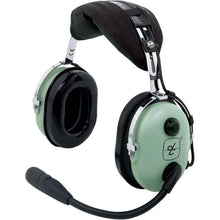 SaleVendor:David Clark
David Clark H10-13S Stereo Aviation Headset: Unmatched Comfort & Superior Clarity for Pilots 40422G-01
Regular price $379.95Sale price $379.95 Regular priceUnit price per$422.80 -
 Vendor:Bose
Bose A30 ANR Aviation Headset LEMO 6 Pin Aircraft Power with Bluetooth 857641-3140
Regular price $1,299.00Sale price $1,299.00 Regular priceUnit price per -
 SaleVendor:Logitech G
Logitech G Saitek Basic Flight Simulation Bundle w/Microsoft Flight Simulator Standard Digital Download (PC)
Regular price $389.99Sale price $389.99 Regular priceUnit price per$519.97 -
 Vendor:Bose
Bose A30 ANR Aviation Headset U174 Helicopter Battery Power with Bluetooth 857641-3130
Regular price $1,299.00Sale price $1,299.00 Regular priceUnit price per -
 SaleVendor:The Claw
The Claw High-Strength Aircraft Tie Down Anchors
Regular price $134.99Sale price $134.99 Regular priceUnit price per$169.99 -
 Vendor:Lightspeed
Lightspeed Zulu 3 Premium ANR Bluetooth Aviation Headset
Regular price $949.00Sale price $949.00 Regular priceUnit price per


