




Changing Times - Why polarized frames now work in the cockpit
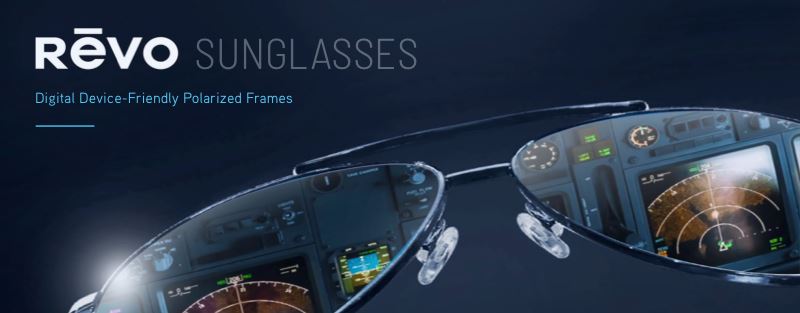
Featured Pilot Gear


In all your years of flying, has anyone ever given you the green light to wear polarized sunglasses in the cockpit?
Probably not. It is far more likely that you have been told the opposite: leave the polarized shades on the ground.
That advice is not a myth, and it is not out of date. It comes down to how a polarizing filter interacts with the screens you now depend on, and modern glass cockpits have more of those screens than ever. The good news is that the rule is simple once you understand the physics, and choosing the right pair is just as simple once you know what to look for.
This guide explains what polarized lenses actually do, why they fight with cockpit displays, and the one clear verdict on when polarization helps and when it hurts. Then we point you to the in-stock aviators that pilots reach for, every one of them verified live in our aviator sunglasses for pilots collection.
Key Takeaways
- In a glass cockpit, go non-polarized. Polarized lenses can dim, black out, or rainbow your LCD primary flight display and your EFB tablet at the wrong head angle.
- Polarization shines on the water and the road, not on your instrument panel. It is great for everyday wear and terrible for reading screens.
- Full UV protection matters more than the tint. Choose 100% UVA/UVB coverage. Radiation climbs with altitude.
- Fit beats fashion. Pick a lightweight, headset-friendly frame that will not slip or pinch under your ear cups.
- Ready to choose? Jump to the helps vs hurts verdict and our cockpit-ready picks below.
How to Choose Sunglasses for the Cockpit
Everything you need to decide comes down to four questions: what polarization actually does, what it does to your screens, how much UV protection you need at altitude, and whether the frame works under a headset. Settle those four and the right pair picks itself.
What are polarized sunglasses?
When light hits a flat horizontal surface like water, snow, a wet runway, or a ramp baking in the sun, it reflects back more intensely and travels in mostly one direction. Light retransmitted in mainly one direction is said to be polarized.
The lenses of polarized sunglasses carry a laminated filter that blocks most of that powerful horizontal reflection and lets the vertical light through. The result is less blur, haze, and glare. Objects look crisp and clean, which is exactly why polarized lenses are so popular for driving, fishing, and time on the water.
There are varying degrees of lens polarization. The more vertically oriented the filter, the less horizontal light gets through, and the stronger the glare-killing effect.
How are non-polarized sunglasses different?
Non-polarized lenses work by simply reducing the intensity of the light passing through them. They act as dimmers and make everything less bright across the board.
They do not include a directional filter, so they will not knock out the mirror-like glare bouncing off flat surfaces the way polarized lenses do. That sounds like a downside, but in the cockpit it is the whole point: a non-polarized lens treats every screen the same no matter how you tilt your head, so nothing goes dark on you at the wrong moment.
What is the problem with polarized sunglasses in the cockpit?
Polarized lenses cause trouble in the cockpit because their filter fights with the screens you fly by, and this is the part that has actually gotten more important over time, not less.
Most modern glass-cockpit displays, EFIS primary flight displays, multifunction displays, and the LCD panels in your radios and transponders, already contain their own polarizing layer. So does the iPad or tablet running your electronic flight bag. When the polarizing axis in your sunglasses crosses the polarizing axis in the screen, you get one of three failures:
- Blackout. Tilt your head, or rotate a tablet from portrait to landscape, and the display can fade to black.
- Dimming. The screen looks washed out and harder to read in exactly the bright conditions where you need it most.
- Rainbow artifacts. Stress patterns in laminated windscreens and canopies can show up as colored bands through a polarized lens.
I learned this the annoying way. A polarized pair I loved for driving turned my iPad into a black mirror the first time I rotated it to landscape on a kneeboard. The panel survived the flight; my checklist flow did not.
None of that is a deal-breaker on the golf course. In the flight levels, with a checklist on a tablet and an approach loaded on the PFD, it is a safety issue. That is why the standard guidance, from us and from most flight schools, has not changed: for cockpit use, choose non-polarized lenses.
When does polarization help and when does it hurt?
Here is the short, honest answer pilots actually want.
| Situation | Polarized? | Why |
|---|---|---|
| Glass cockpit with LCD displays and an EFB tablet | No | Polarized lenses can black out or dim the very screens you fly by. |
| Steam-gauge or analog panel, no glass | Either, lean No | Fewer screens to fight, but a tablet on your kneeboard reintroduces the problem. |
| Driving to the airport, on the water, everyday wear | Yes | This is where polarization wins: maximum glare control off flat surfaces. |
| One pair to do everything, ground and air | No | A quality non-polarized aviator is the only lens safe to wear in the cockpit, so it is the better single pair. |
The bottom line: keep a polarized pair for the lake house and the highway, and fly in a non-polarized aviator. If you only want to own one pair, make it non-polarized so it is always cockpit legal.
How much UV protection do pilots need?
Whatever lens you choose, the non-negotiable spec is UV protection. The effects of UV radiation are bad enough on the ground, and they only get worse with altitude. As a rule of thumb, UV exposure rises meaningfully for every thousand feet you climb, so by the time you level off in the flight levels your unprotected eyes are taking far more radiation than they were on the ramp.
That is why every pair we recommend blocks 100% of UVA and UVB. Protecting your vision is the entire job of a flying sunglass, and it is the one area where you should never compromise to save a few dollars.
Will the frame fit under your headset?
The best lens in the world is useless if the frame digs into your skull an hour into a cross-country. Look for a lightweight frame with thin, straight bayonet temples, the military design made specifically to slide under a helmet or headset ear seal without breaking the seal or pinching. Thick, curved skull temples are the ones that hurt by hour two and let noise leak past your ear cups.
The Cockpit-Ready Aviators Pilots Actually Buy
Because non-polarized is the cockpit-safe choice, here are the in-stock aviators we recommend. Each pair below is non-polarized, blocks 100% UVA/UVB, and is built to sit comfortably under a headset. Every link is live and in stock today.
| Model | Lens / Frame | Best For |
|---|---|---|
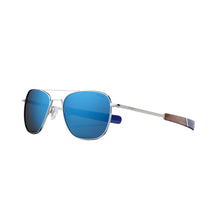
| Randolph Aviator (Military Special Edition) | Non-polarized American Gray SkyTec glass; bayonet temples | Best overall: the military benchmark for glass cockpits |
| Lift Aviation Titanium AVX Aviator | Non-polarized, full UV protection; lightweight titanium frame | Best value: long legs under a headset |
| Randolph Aviator Deluxe Care Kit | Factory-authorized cleaning and care set | Protecting a pair you already own |

Randolph Aviator (Military Special Edition)
Randolph aviators have been the benchmark for U.S. military pilots for over four decades, and they are non-polarized by design, which makes them ideal for glass cockpits. The American Gray glass lens gives true, neutral color so your displays and your charts read exactly as intended. I fly in the Matte Black with American Gray glass, and the test that sold me was tilting my head a full 90 degrees next to a glass panel: nothing dimmed, nothing rainbowed.
Lens: non-polarized American Gray SkyTec glass, 100% UVA/UVB (the Gunmetal option runs a non-polarized Atlantic Blue SkyForce nylon lens).
Frame: military-spec build with thin bayonet temples that slide under a headset.
Choose your finish:
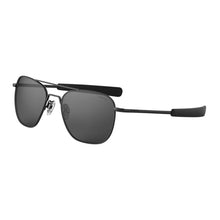
- Randolph Aviator Matte Black, non-polarized American Gray glass
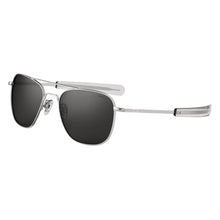
- Randolph Aviator Matte Chrome, non-polarized American Gray glass
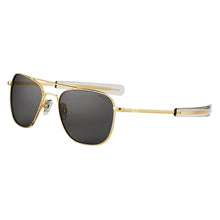
- Randolph Aviator 23K Gold, non-polarized American Gray glass
- Randolph Aviator Gunmetal, non-polarized Atlantic Blue
- True neutral color rendition, so the PFD, the MFD, and paper charts all read exactly as intended
- Four decades as the U.S. military issue aviator, built to be serviced rather than thrown away
- Bayonet temples disappear under headset ear cups on long legs
- Mineral glass weighs more than nylon or polycarbonate; if you are sensitive to nose-bridge pressure, that is worth knowing before you commit
- This is premium glass at a premium price; the Lift below ticks the same cockpit-safety boxes for less
Perfect for the pilot who wants one cockpit-legal pair good enough to hand down.
Click for Price →
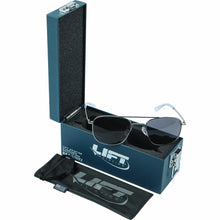
Lift Aviation Titanium AVX Aviator
If you want a serious flying sunglass without the premium-glass price, the Lift Aviation Titanium Aviator is the easy pick. The lightweight titanium frame is comfortable under a headset for long legs, the lenses are non-polarized and fully UV protective, and it comes in silver or gold.
Lens: non-polarized, 100% UV protection.
Frame: lightweight titanium, silver or gold finish.
- Titanium frame keeps the weight off your nose and ears on multi-hour legs
- Non-polarized lens treats every screen the same at any head angle
- Full UV protection without stepping up to premium glass
- Two finishes, silver or gold, so it works with any flight-deck wardrobe
- Lens and finish options are limited next to the Randolph lineup; if you want true mineral-glass optics or a specific lens tint, this is not that pair
Perfect for student pilots and renters who want cockpit-safe eyes at a working-pilot price.
Click for Price →
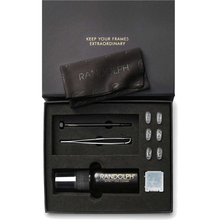
Randolph Aviator Deluxe Care Kit
A good pair of aviators should last for years. The factory-authorized Randolph Engineering Aviator Care Kit keeps the lenses clean and scratch-free and makes a thoughtful add-on, or a standalone gift for the pilot who already owns a pair.
Type: factory-authorized Randolph Engineering care kit.
Job: lens cleaning and scratch prevention between flights.
- Factory-authorized, so it is matched to Randolph lenses and coatings
- Keeps glass lenses clean and scratch-free through flight-bag life
- Works as an add-on at checkout or as a standalone gift
- It is a care kit, not eyewear; skip it until there is a quality pair in your flight bag worth protecting
Perfect for the pilot whose aviators ride in a flight bag with cables, charts, and fuel testers.
Click for Price →Polarized Sunglasses FAQ
- Can pilots wear polarized sunglasses in the cockpit?
- Generally no. Polarized lenses can black out, dim, or distort the LCD primary flight displays and EFB tablets in modern glass cockpits, because those screens already contain their own polarizing layer. For cockpit use, non-polarized lenses are the safe, standard recommendation. Save polarized sunglasses for driving and time on the water.
- Why do polarized lenses make cockpit screens go dark?
- LCD instrument displays and tablets emit light through a built-in polarizing filter. When the polarizing axis in your sunglasses crosses the axis in the screen, the two filters cancel out and the display can dim or black out, especially when you tilt your head or rotate a tablet from portrait to landscape.
- Are polarized sunglasses banned by the FAA?
- No. The FAA does not prohibit polarized sunglasses, but its pilot vision guidance recommends against them for flying. Beyond interfering with LCD instrument displays and EFB tablets, polarized lenses can reduce or eliminate the glint of sunlight off the windshields and wings of other aircraft, a visual cue that helps you spot traffic. The choice is legal either way, but the safety recommendation from the FAA, from most flight schools, and from us is the same: fly non-polarized.
- Can I wear polarized sunglasses with an analog six-pack panel?
- You have more latitude with a pure analog panel, but most pilots should still fly non-polarized. Even steam-gauge cockpits usually carry LCD screens in the radios, transponder, and GPS, and the tablet on your kneeboard reintroduces the blackout problem the moment you tilt your head or rotate it. Polarized lenses can also reveal rainbow-like stress patterns in laminated windscreens. If your panel and kneeboard are truly screen-free, polarization will not hurt you, but a non-polarized lens keeps you safe in any aircraft you climb into.
- When is it OK to wear polarized sunglasses?
- Polarized lenses are excellent for everyday wear away from the panel: driving, fishing, boating, and any setting with strong glare off flat surfaces like water, snow, or wet pavement. The directional filter that causes problems with cockpit screens is exactly what makes polarized lenses great on the ground.
- What sunglasses should I buy if I want one pair for the ground and the air?
- Choose a quality non-polarized aviator that blocks 100% of UVA and UVB. Because non-polarized is the only lens safe to wear in the cockpit, it is the better single pair. Randolph Aviator Military Special Edition models with non-polarized American Gray glass are a popular choice, and lightweight titanium frames are a strong lower-cost alternative if premium glass stretches the budget.
- Does altitude really increase UV exposure for pilots?
- Yes. UV radiation exposure increases as you climb, so by the time you reach the flight levels your unprotected eyes are taking on significantly more radiation than at ground level. Always choose sunglasses that block 100% of UVA and UVB, whether or not the lens is polarized.
About the author: Neil S. Glazer is a commercial pilot holding multi-engine and instrument ratings and the founder of PilotMall.com, where he tests and writes about the gear pilots actually fly with, from headsets and kneeboards to the sunglasses in this guide.

1 comment
Just ordered a pair of Revo’s similar to the ones in the picture because of this article. Hope the author is right, because it was between a regular non polarized pair or these.