



Aviation Handheld Radios: The Complete Buyer's Guide
Not sure which aviation handheld radio is right for your flying? This guide breaks down every feature that matters, compares Icom and Yaesu across the full range, and helps you match the right radio to your actual use case.


Aviation Handheld Radios: How to Choose the Right One
COM only or NAV/COM? Icom or Yaesu? Li-ion or AA batteries? Six watts or five? This guide answers every feature question so you can match a handheld radio to your actual flying, your aircraft, and your budget.
Shopping for an aviation handheld radio is more nuanced than it looks. The feature list on any modern transceiver can feel overwhelming, and the difference between a COM-only radio and a full NAV/COM GPS unit is not just a spec line, it determines what you can actually do with the radio in the air and on the ground.
This guide is specifically about how to choose. If you already know you want one and want to see model-by-model recommendations with detailed use-case analysis, the Best Aviation Handheld Radios 2026 guide covers the full PilotMall lineup by pilot type. If you are newer to the topic and want to understand why every pilot should carry one in the first place, start with Why Every Pilot Needs a Portable Aviation Radio.
In This Guide
- COM only vs NAV/COM vs NAV/COM+GPS explained
- Wattage: does output power actually matter?
- Battery type: Li-ion vs AA
- Bluetooth and headset connectivity
- Waterproofing and build quality
- Icom vs Yaesu: brand comparison
- Radios available at PilotMall
- Which radio is right for you?
- Frequently asked questions
COM Only vs NAV/COM vs NAV/COM+GPS
The single most important feature decision you will make is the radio type. These three categories describe what the radio can do beyond basic voice communication, and the difference in capability is significant.
COM Only
Transmits and receives on VHF aviation frequencies (118.000 to 136.975 MHz). Full voice communication with ATC, CTAF, ATIS, ground, tower, and approach. No navigation capability. The simplest, most portable option. Ideal as an emergency backup or for pilots who do not need standalone navigation.
NAV/COM
Everything a COM-only radio does, plus VOR and ILS reception. Allows you to tune a VOR ground station and get bearing information, and in some units receive ILS localizer and glideslope signals. Useful for situational awareness and as a navigation backup, though the display and usability vary significantly between models.
NAV/COM with GPS
Full COM and NAV capability with an integrated GPS receiver. Provides position data, direct-to navigation, and moving-map capability depending on the model. The most capable category, and the most complex. Most useful for pilots who want a genuinely capable backup navigation tool independent of panel avionics.
Which Type Do Most Pilots Need?
For the majority of VFR pilots who want a backup radio for emergencies, loss of electrical power, or use as a student on the ramp, a COM-only radio is the right answer. It is lighter, simpler, has longer battery life, and costs less. The primary purpose of a portable aviation radio for most general aviation pilots is to maintain communications if the panel radio fails. COM-only covers that entirely.
A NAV/COM makes sense if you fly IFR or want to receive VOR bearings for situational awareness independent of your panel. Bear in mind that using a handheld for IFR approaches is a very different situation from using it as a backup reference, and you should understand those limitations before relying on one in IMC.
A NAV/COM with GPS is for pilots who want maximum capability from a single handheld device, or who frequently fly unfamiliar routes and want GPS-based navigation available even when panel avionics fail. It is the most expensive and most complex option.
Wattage: Does Output Power Actually Matter?
Aviation handhelds typically transmit at 5 or 6 watts of output power. That single watt difference matters less than pilots often think, but there are real-world implications worth understanding.
5W Transmit Power
Adequate for normal GA operations, taxi and ground communications, and line-of-sight transmissions at altitude. Most situations where you need a handheld radio are line-of-sight, so 5W is often perfectly functional.
6W Transmit Power
Approximately 20% more transmit power. Meaningfully better for long-range transmissions at altitude, border-line coverage areas, and situations where you need maximum range from a portable antenna. The real-world difference in most normal flight operations is modest, but it is the better choice if you fly in areas with limited ground station coverage.
Both power levels meet the needs of typical emergency backup use. If you are choosing between two otherwise equivalent radios, prefer the 6W unit. If the 6W option costs significantly more or adds features you do not need, the 5W radio is not a meaningful compromise for most pilots.
Antenna quality matters as much as transmit power. The stock flexible antennas on most handhelds are adequate but not optimal. If you plan to use a handheld as a primary communication tool in a specific scenario, an aftermarket aviation antenna can improve performance more than a 1-watt increase in transmit power.
Battery Type: Li-ion vs AA
Every aviation handheld uses one of two battery approaches, and the choice has real implications for how useful the radio is in practice.
Lithium-Ion (Li-ion)
Rechargeable battery pack built into or included with the radio. Higher capacity means longer operating time per charge, often 10 to 15 hours depending on use. Lighter weight, full transmit power throughout the charge. Requires USB or proprietary charger to recharge, which means if the battery is depleted and you have no charger, the radio is non-functional.
AA Alkaline Backup
Some radios include an AA battery tray as an alternative to the Li-ion pack. AA batteries are widely available at hardware stores, convenience stores, FBOs, and pilot shops, making them easy to carry as emergency spares. If the Li-ion pack dies on a trip and you have no charger, dropping in AA batteries and continuing is a genuine advantage. Typically provides lower transmit power on AA (often 1.5W vs full power on Li-ion).
The Practical Recommendation
For most pilots, a Li-ion radio that is kept charged and in the flight bag is the better choice. The longer operating time and full power output make it more useful in any scenario where you need it. The AA backup capability is genuinely valuable if you travel internationally, fly to remote locations, or want maximum redundancy in an emergency kit.
The worst situation is carrying a handheld radio with a dead battery. Whichever type you choose, build a habit of checking the charge level during preflight the same way you check everything else. A handheld radio that you know is charged is infinitely more valuable than one you think might be charged.
Bluetooth and Headset Connectivity
Several current aviation handhelds include Bluetooth connectivity, which allows you to pair the radio with a Bluetooth-enabled aviation headset. This is more useful than it might initially appear.
Without Bluetooth, using a handheld radio in a noisy cockpit requires either a wired connection to your headset, holding the radio to your ear (impractical in flight), or using the built-in speaker at full volume (inaudible over engine noise in most aircraft). With Bluetooth, the audio routes directly to your headset exactly as it would from the panel radio, which means you hear transmissions clearly and transmit by pressing the mic button on your headset.
If you fly with a Bluetooth-capable headset such as the Bose A30, Lightspeed Zulu series, or Lightspeed Delta Zulu, a Bluetooth-enabled handheld radio such as the Icom IC-A16B makes the backup radio significantly more usable in an actual in-flight emergency. The radio can sit in a pocket or bag and still deliver clear audio.
Waterproofing and Build Quality
Aviation handhelds live in flight bags, get set on wet runways, and sometimes get used in rain during preflight or ground operations. Build quality and environmental protection matter.
IP67 Rated
Dust-tight and rated for immersion in water up to 1 meter for 30 minutes. The highest common waterproofing standard in aviation handhelds. Handles rain, condensation, brief submersion, and the general abuse of flight bag life without issue.
IPX4 / Splash Resistant
Rated for water splashing from any direction. Adequate for most general aviation use including rain during preflight and ground operations, but not submersion. Acceptable for pilots who primarily use the radio in normal conditions.
MIL-SPEC
Some radios are built to MIL-STD-810 specifications for shock, vibration, temperature, and humidity resistance. More relevant for rugged outdoor or military use than typical GA flying, but indicates a high standard of overall construction quality.
Icom vs Yaesu: Brand Comparison
The two dominant brands in aviation handheld radios are Icom and Yaesu. Both are Japanese electronics manufacturers with long histories in amateur and professional radio, and both make well-regarded aviation transceivers. The choice between them is genuinely close, and pilots who use either brand tend to be loyal to it. Here is where they actually differ.
| Feature | Icom | Yaesu |
|---|---|---|
| Build quality reputation | Excellent, industry standard | Excellent, comparable to Icom |
| Transmit power | 6W (IC-A25 series), 6W (IC-A16B) | 5W (FTA-250L, 450L), 6W (FTA-850 series) |
| Bluetooth models | IC-A16B | FTA-850L |
| IP waterproofing | IP67 on IC-A16B; IP57 on IC-A25N | IPX5 water protection on current models |
| AA battery tray option | Available on IC-A25C-S Sport | Available on FTA-550AA, FTA-850AA |
| COM-only options | IC-A16B, IC-A25C, IC-A25C-S Sport | FTA-250L, FTA-450L |
| NAV/COM options | IC-A25N (VOR + GPS) | FTA-550L, FTA-550AA |
| NAV/COM+GPS options | IC-A25N (GPS model) | FTA-850L (Bluetooth + GPS) |
| Interface/display | Generally simpler, faster to learn | Feature-rich, deeper menus |
| Current availability | Check product pages for current stock | Check product pages for current stock |
The Real Difference
Pilots who prioritize simplicity and quick operation tend to prefer Icom. The menu structure is shallower and frequency changes are faster in field conditions. Pilots who want maximum features and are comfortable with deeper menus tend to appreciate Yaesu's more comprehensive configuration options.
Neither brand is meaningfully better on audio quality or RF performance at comparable wattage levels. Both brands have strong long-term reliability records. If you have an existing relationship with one brand through amateur radio or other equipment, staying within that ecosystem often makes sense for charging accessories and familiarity.
Aviation Handhelds Available at PilotMall

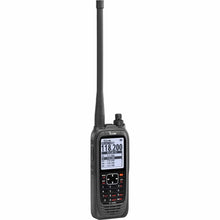
Icom IC-A16B
The IC-A16B is the Bluetooth-equipped version of Icom's compact aviation COM transceiver. At 6 watts with IP67 waterproofing and Bluetooth connectivity for wireless headset pairing, it is the most practical choice for pilots who fly with modern ANR headsets and want seamless audio integration from their backup radio.
The Bluetooth implementation pairs with aviation headsets so that handheld radio audio comes through your headset speakers exactly as panel radio audio does. With a compatible Bluetooth aviation headset, handheld radio audio can route directly through the headset, which is far easier than trying to hear a small speaker in a noisy cockpit.
Check Price →
Icom IC-A25C-S Sport
The IC-A25C-S Sport is Icom's COM-only A25 variant built around maximum versatility. It includes both a Li-ion battery pack and an AA battery tray, meaning you can run it on standard rechargeable power normally and switch to alkaline AAs anywhere in the world if the Li-ion pack is depleted.
At 6 watts with IP57 water resistance, the IC-A25C-S keeps the A25 platform's core performance while adding AA battery flexibility. Compared with the IC-A16B, the tradeoff is simple: choose the IC-A16B if Bluetooth headset pairing matters most, or choose the IC-A25C-S Sport if AA battery backup is the priority.
Check Price →
Icom IC-A25N
The IC-A25N is Icom's most capable handheld, adding VOR navigation reception and GPS to the IC-A25 platform. It provides full COM capability alongside the ability to receive VOR bearings for situational awareness, and GPS-based position and direct-to navigation independent of panel avionics.
For IFR pilots, instrument students, and cross-country flyers who want a fully capable backup navigation and communication tool in one unit, the IC-A25N is the top-end answer in the PilotMall handheld lineup.
Check Price →
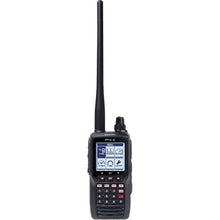
Yaesu FTA-550L
The FTA-550L is Yaesu's Li-ion NAV/COM handheld, covering full VHF communication plus VOR and ILS reception. For pilots who want Yaesu's interface and build quality in a NAV/COM package, the FTA-550L is a strong option to compare. The 5W transmit power is adequate for typical backup use scenarios.
A solid choice for Yaesu-loyal pilots or those who prefer the FTA-series layout and menu structure.
Check Price →Which Aviation Handheld Radio Is Right for You?
Match Your Flying to the Right Radio
Student or VFR Pilot — Emergency Backup
COM-only with good battery life. The IC-A16B with Bluetooth if you fly with a modern headset. The IC-A25C-S Sport if you want AA battery backup capability.
Pilot Who Travels or Flies Remote Routes
IC-A25C-S Sport with the AA battery tray. Being able to source AA batteries more easily helps reduce the dead-battery risk in unfamiliar locations.
IFR Pilot or Instrument Student
IC-A25N for full NAV/COM+GPS capability. The VOR and GPS functions are genuinely useful as backup references when you are in the system.
Pilot with Bluetooth Headset
IC-A16B. The Bluetooth integration with modern aviation headsets makes the backup radio significantly more usable in actual in-flight scenarios where you need it most.
Yaesu Brand Preference
FTA-550L for NAV/COM. Check the full Yaesu range at PilotMall for current COM-only availability if NAV/COM is more than you need.
Flight Instructor or Multi-Aircraft Pilot
COM-only at 6W is the practical workhorse. Prioritize rugged construction, long battery life, and simple operation over navigation features you may not use regularly across different aircraft types.
Side-by-Side Specs: Featured Radios
| Radio | Type | Power | Waterproof | Bluetooth | AA Backup | GPS | |
|---|---|---|---|---|---|---|---|
| Icom IC-A16B | COM | 6W | IP67 | Yes | No | No | Shop |
| Icom IC-A25C-S Sport | COM | 6W | IP57 | No | Yes | No | Shop |
| Icom IC-A25N | NAV/COM | 6W | IP57 | Yes | No | Yes | Shop |
| Yaesu FTA-550L | NAV/COM | 5W | IPX5 | No | No | No | Shop |