




Thrustmaster TPR Pendular Rudder Pedals (PC)
42264
Benefits
Benefits
Shipping & Delivery
Shipping & Delivery
Returns
Returns
The Thrustmaster TPR Pendular Rudder Pedals for PC offer unmatched precision and realism for flight simulation enthusiasts.
These pedals feature revolutionary PENDUL_R technology, providing the smoothest and most realistic pendular movement available today.
Unmatched Precision and Realism
Experience ultra-fine control with the TPR's advanced magnetic contactless sensors, offering over 65,000 positions per axis. This ensures frictionless action that never degrades. The patented pendular movement mimics real aircraft rudder response, eliminating jerky movements found in traditional designs. Whether executing delicate crosswind landings or complex helicopter maneuvers, these pedals respond with surgical precision.
Robust Construction and Customization
Built with a 15.4-pound all-metal frame, these pedals remain rock-solid during intensive use. Five adjustable pedal positions (35° to 75°) and customizable spring resistance accommodate any pilot preference or cockpit configuration. For home cockpit builders, the TPR's four M6 mounting holes ensure seamless integration, while T.A.R.G.E.T. software allows complete profile customization and ecosystem integration with other Thrustmaster HOTAS controllers.
Compatibility and Professional-Grade Performance
Separate left and right toe brakes provide authentic differential braking control, essential for realistic ground operations. Compatible with all PC flight simulation games, from DCS World to Microsoft Flight Simulator, these pedals deliver professional-grade performance, transforming virtual flying from hobby to art form.
Master your virtual cockpit with unmatched accuracy, realism, and enhanced immersion using Thrustmaster's highly adjustable TPR Pendular Rudder Pedals. Elevate your flight simulation – order yours today!
Frequently Asked Questions
Is the Thrustmaster TPR a PC controller, or does it work on game consoles?
This is the PC version of the TPR, built for Windows flight simulation rather than game consoles. It is designed specifically for PC use, so plan on running it with a Windows simulator setup. For console play, check the manufacturer for any separately supported configurations, since this is the PC model.
How does the TPR connect to a computer, and is any extra power needed?
The TPR connects to your PC as a wired controller and is recognized as a standard game device, so the rudder and brake axes are ready to map inside your simulator. Because it draws what it needs through that wired connection, you do not need a separate power adapter or batteries. Install the latest manufacturer drivers, then verify it before mapping axes.
Which flight simulators are the TPR pedals compatible with?
The TPR is compatible with all major PC flight simulation titles, including DCS World and Microsoft Flight Simulator. The pendular rudder and differential brake axes register as standard inputs, so you can map them inside each simulator for rudder control, nosewheel steering, and braking to match how you fly.
Do the TPR pedals have toe brakes for differential braking?
Yes. The TPR includes separate left and right toe brakes that act as two independent differential brakes. This lets you brake one main wheel more than the other for realistic ground steering, taxi turns, and runway control, which supports accurate ground operations and crosswind handling in your simulator.
How precise are the sensors on the TPR pedals?
The TPR uses contactless H.E.A.R.T. HallEffect magnetic sensors delivering over 65,000 positions per axis, paired with the PENDUL_R pendular motion for smooth, frictionless travel that does not degrade over time. That resolution lets you feed in very small, repeatable rudder inputs for delicate work like crosswind landings and other fine control.
How much do the TPR pedals weigh and how large are they?
The TPR is built with a 100 percent all metal frame, weighing about 15.4 pounds and measuring roughly 20.9 inches wide. That mass and footprint give the unit a rock solid, planted feel during intensive use, so the pedals resist shifting under firm rudder and braking inputs while you fly in your simulator.
Will the TPR pedals slide around, or do they need to be clamped down?
The TPR relies on its heavy all metal base, about 15.4 pounds, to stay planted on a desk or floor without clamps for normal use. On slick or carpeted surfaces it can shift under hard rudder or braking, so many builders bolt it down using the four M6 mounting holes for a fully fixed, no movement setup.
Can I adjust the pedal angle and spring resistance, and can the TPR be mounted to a cockpit rig?
Yes. The TPR offers five pedal positions from 35 to 75 degrees plus customizable spring resistance, so you can match the angle and tension to your preference. The all metal frame includes four M6 mounting holes, letting home cockpit builders bolt it securely to a rig, while the heavy 15.4 pound base also keeps it stable on a desk.
What does Thrustmaster T.A.R.G.E.T. software add for the TPR?
Thrustmaster T.A.R.G.E.T. software lets you create detailed control profiles and link the TPR with other Thrustmaster HOTAS controllers, so your whole setup works together. It gives you deeper customization on top of the pedals built in adjustments, which is useful when you want consistent button mapping and profiles across multiple Thrustmaster devices in one simulator.
Are the TPR pedals good for flying helicopters in the simulator?
Yes. The patented PENDUL_R pendular motion and smooth, frictionless travel suit the fine, continuous anti torque pedal work that helicopters demand. The high resolution rudder axis lets you feed in small, precise inputs, while the separate differential brakes stay available for fixed wing taxi and ground handling whenever you switch aircraft.
Does the TPR ship as a single unit, or is light assembly involved?
The TPR centers on its all metal rudder base with the two differential brake pedals fitted on, so the main work is attaching and adjusting the toe brake pedals before you fly. Setup is light rather than a full build, and you can then dial in your preferred angle from the five positions and tune spring resistance to taste.
-
 SaleVendor:Logitech G
Logitech G Saitek Basic Flight Simulation Bundle w/Microsoft Flight Simulator Standard Digital Download (PC)
Regular price $389.99Sale price $389.99 Regular priceUnit price per$519.97 -
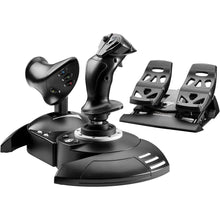 Vendor:Thrustmaster
Thrustmaster T.Flight Full Kit X (Xbox Series X|S, One, PC)
Regular price $199.99Sale price $199.99 Regular priceUnit price per -
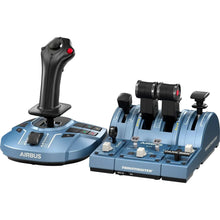 Vendor:Thrustmaster
Thrustmaster TCA Captain Pack X Airbus Edition (Xbox Series X|S, One, PC)
Regular price $299.99Sale price $299.99 Regular priceUnit price per -
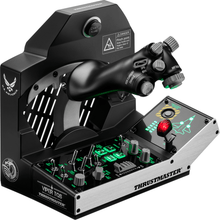 Vendor:Thrustmaster
Thrustmaster Viper TQS Mission Pack: Metal Throttle Quadrant System (PC)
Regular price $499.99Sale price $499.99 Regular priceUnit price per -
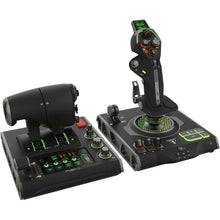 Vendor:Turtle Beach
Turtle Beach VelocityOne Flightdeck Ultimate PC HOTAS Controller (PC)
Regular price $379.99Sale price $379.99 Regular priceUnit price per -
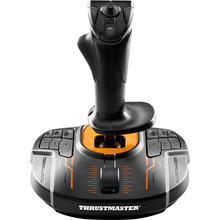 Vendor:Thrustmaster
Thrustmaster T.16000M FCS (PC)
Regular price $79.99Sale price $79.99 Regular priceUnit price per -
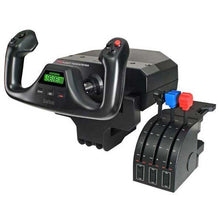 SaleVendor:Logitech G
Logitech G Saitek Pro Saitek Flight Yoke & Throttle Quadrant System (PC)
Regular price $179.99Sale price $179.99 Regular priceUnit price per$229.99 -
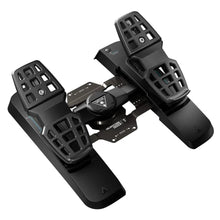 Vendor:Turtle Beach
Turtle Beach VelocityOne Precision Flight Simulator Rudder Pedals (Xbox Series X|S, One, PC)
Regular price $319.99Sale price $319.99 Regular priceUnit price per$299.95 -
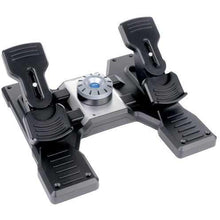 SaleVendor:Logitech G
Logitech G Saitek Pro Saitek Flight Rudder Pedals (PC)
Regular price $179.99Sale price $179.99 Regular priceUnit price per$229.99 -
 Vendor:Thrustmaster
Thrustmaster TCA Quadrant Airbus Edition (PC)
Regular price $129.99Sale price $129.99 Regular priceUnit price per


-
 FREE U.S. Shipping (on $100+)Save on outbound delivery!
 -
 4.8/5 StarsReviewed by 26,000+ Fellow Pilots
 -
 Expert Pilot SupportGear Tested by Real Pilots
 -
SHIPS TODAY (Order by 3 PM ET)Get It Faster!
- Choosing a selection results in a full page refresh.
- Opens in a new window.