


Discover the Best Flight Schools in the United States
Have you been bitten by the aviation bug? Are you wondering about where are the best flight schools in the USA? We got you covered, we'll help you figure out everything from where to find the best flight school, and how to get your private pilot certificate all the way through to becoming an airline pilot.
Ready to begin your flight education journey? Let's get started!


Have you been bitten by the aviation bug? Wondering where the best flight schools in the USA are? We’ve got you covered. In this guide, we’ll walk through how to choose a flight school and how to go from a private pilot certificate all the way to an airline pilot career.
Ready to begin your flight education journey? Let’s get started.

Which Type of Flight School is Best?
There are three common paths you can take to work toward becoming a commercial pilot:
- Part 141 Flight Schools
- Part 61 Flight Schools
- Aviation Colleges
Part 61 and Part 141 flight schools use different training approaches, and depending on your age, lifestyle, schedule, and finances, one may be a better fit than the other.
Part 61 training is typically more flexible and often focuses on preparing students for the practical exam. Part 141 programs are more structured, with an FAA-approved syllabus and set milestones.
Part 61 can be a great fit if you need flexibility or want to pace training around work and budget. Part 141 can help you progress faster, but it usually requires a larger time commitment.
Aviation colleges can be a strong option if you want to combine flight training with a degree program.
To save time and money, choose the type of training that best matches your goals and lifestyle.
Factors to Consider
Before committing to a school, consider these key factors:
- Type of flight training: Define your end goal and the best path to get there. Some pilots earn their Private Pilot Certificate through a Part 61 school first to confirm they truly want to pursue aviation before committing to an expensive program or four-year degree.
- Aircraft fleet and maintenance: Ask about the make/model of training aircraft and how many are in the fleet. Since schools frequently reach 100-hour inspection requirements, planes may be down for maintenance. Larger fleets can mean better availability.
- Instructor qualifications: Learn about instructor experience and teaching style—and whether it fits how you learn best.
- Location: Consider travel, weather, and whether you’ll need housing (or if the school offers it).
- Financial aid: Training can be expensive. Ask about scholarships, loans, and any available financial aid.
(source: https://atpflightschool.com)
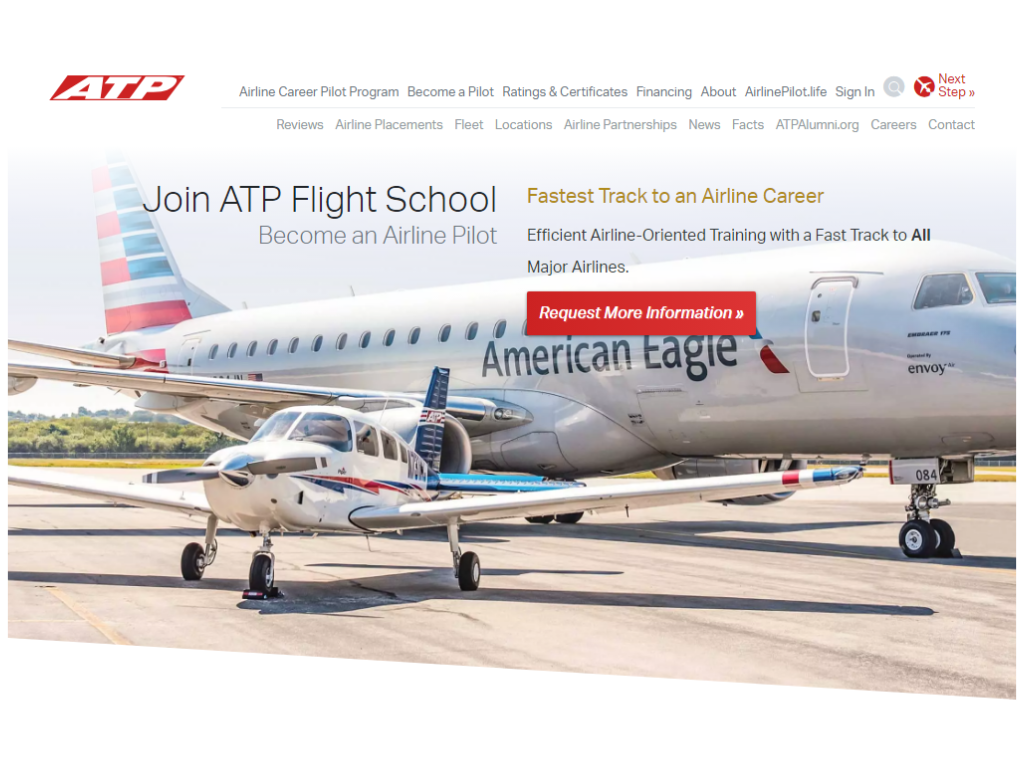
1. ATP School (Part 141)
If your goal is to become a commercial pilot with the airlines, ATP is one option to consider. ATP offers an Airline Career Pilot Program designed to take students from zero experience to airline eligibility.
This is a fast-paced, career-focused program that can be completed in under a year with full-time dedication—helping you enter the workforce sooner.
Keep in mind: major airlines often prefer a degree, but many regional airlines will accept applicants who meet the 1,500-hour requirement.
- Program: Airline Career Pilot Program
- Locations: Multiple locations
- Time: 9 months (about 6 months if you already have a Private Pilot Certificate)
- Cost: Approximately $108,995 (zero time) or $86,995 (with Private Pilot Certificate). Financing available through Sallie Mae.
- Scholarships/aid: Financial aid may be available through FAFSA programs (e.g., Stafford Loans, Pell Grants), depending on eligibility.
- Limitations: This program does not accept pilots who already hold a Commercial Pilot Certificate.
If the professional pilot program isn’t the right fit, you can also train through a Part 61 school up to Commercial Multi-Engine, build hours to 1,500, and then pursue ATP certification through ATP.
(source: https://erau.edu/degrees/aviation)
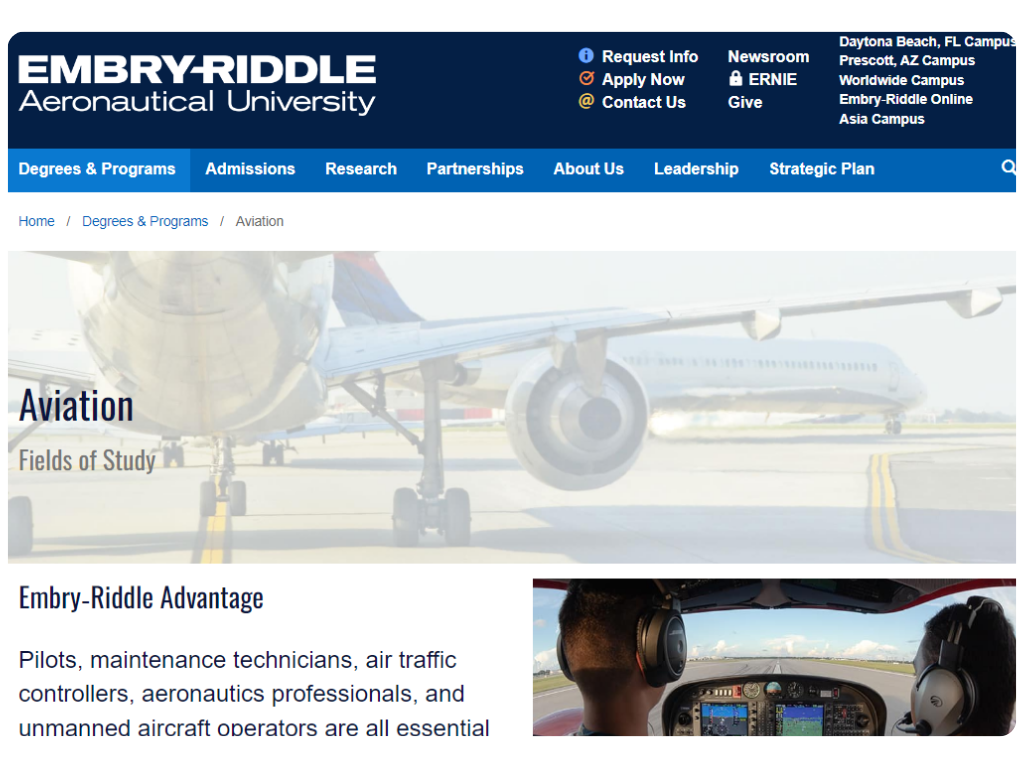
2. Embry-Riddle Aeronautical University
Embry-Riddle is widely recognized as one of the top aviation universities in the country. They offer degree programs in aviation studies, aeronautics, meteorology, engineering, maintenance, airport management, and more.
The program goes beyond Part 141 flight training by covering broader industry knowledge and career paths across aviation.
Embry-Riddle also maintains a large aircraft fleet (including Cessna 172s and Diamond DA42s) and advanced simulation devices. It’s often considered a premium, high-quality aviation education experience.
- Program: Aeronautical Science – Fixed Wing (BS)
- Locations: Daytona Beach, FL and Prescott, AZ
- Time: Four-year degree
- Cost: Estimated ~$29,781 annually (as listed on the site), $485/credit hour, 120 credits required
- Scholarships: View list
- Limitations: Must maintain a minimum GPA

(source: https://wmich.edu)
3. Western Michigan University
Western Michigan University is known for having one of the largest aviation programs in the country, with three undergraduate tracks: Aviation Flight Science, Aviation Management & Operations, and Aviation Technical Operations.
The Aviation Flight Science program combines flight training with coursework in flight theory, airline operations, aviation law, and more.
Students also have access to career pathway programs with airlines such as Delta, SkyWest, and United.
- Program: Aviation Flight Science (BS)
- Location: Kalamazoo, Michigan
- Time: Four-year degree
- Cost: ~$7,247–$9,938.75 per 12–15 credits; 123 credits required
- Scholarships: View list
- Limitations: Students are encouraged to obtain an FAA First Class Medical. An FAA Second Class Medical is required for the first flight course. Minimum GPA requirements apply (2.75 overall; 3.0 College of Aviation).

(source: https://www.purdue.edu)
4. Purdue University
Purdue offers a wide range of programs related to aviation, aeronautics, meteorology, and astronautics.
The Professional Flight Technology degree is a strong fit for students who want structured flight training paired with broader aviation knowledge—including how aircraft are designed and built.
One advantage is that the program may be completed in as little as three years.
- Program: Professional Flight Technology (BS)
- Location: West Lafayette, Indiana
- Time: Three-to-four-year degree
- Cost: Estimated totals: ~$22,812 (residents) or ~$41,614 (non-residents); $347.85/credit; 120 credits required
- Scholarships: View list
- Limitations: Must maintain minimum GPA requirements and be able to pass an FAA First Class Medical
(source: https://www.aetc.af.mil/Flying-Training/)
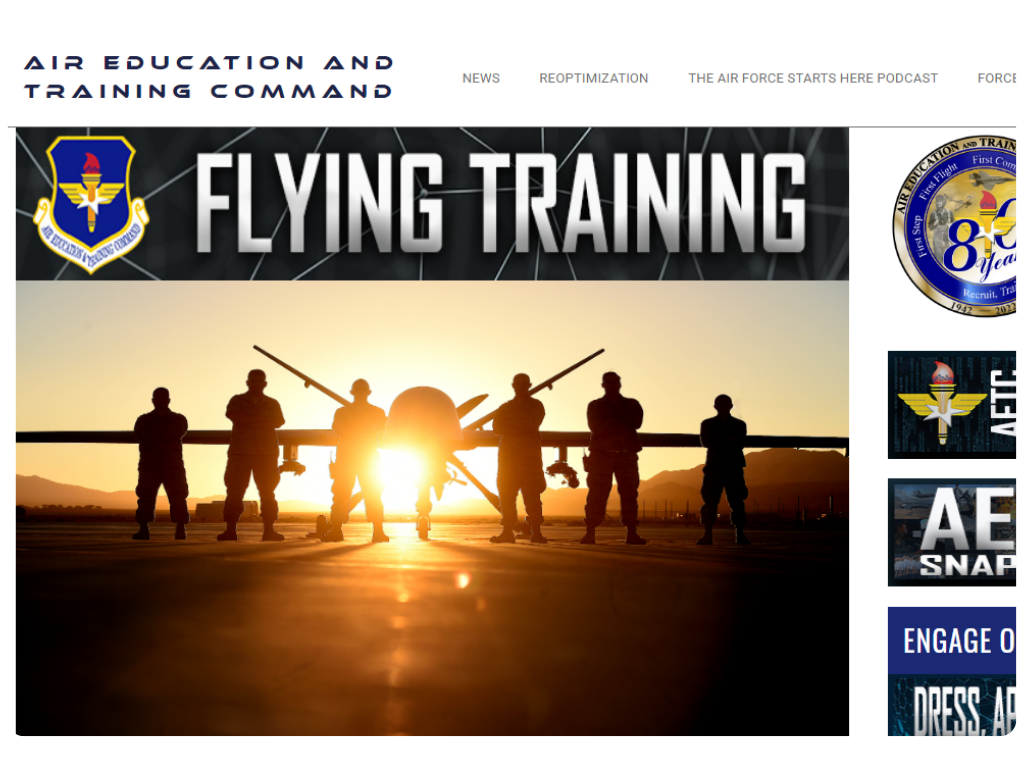
5. United States Military Flight Training
Another pathway is military flight training. Many pilots explore options through the Air National Guard or the Air Force Reserve by speaking with recruiters.
Note: Army recruiters can provide guidance for those interested in helicopter aviation.
The Air Force Reserve option may provide educational assistance without the same full-time commitment as active duty.
- Programs: Air National Guard, Air Force Reserve, Active Duty
- Location: Nationwide
- Time: 5-year minimum
- Cost: Primarily a time commitment, not an out-of-pocket cost
- Limitations: Must be between ages 17–42. Talk with a recruiter about medical/health disqualifiers.
Other Flight Schools
We don’t want to leave out the thousands of flight schools across the country that offer quality training and a passion for aviation.
To find Part 61 flight schools near you, try:
For many recreational pilots, a Part 61 school can be the most flexible and affordable way to earn a Private Pilot Certificate.

-
Do pilots have to go to college?
No. You don’t need a degree to become a professional pilot—your flight hours matter most. That said, a degree can improve opportunities and provide a backup career path.
-
What are the basic requirements to become a pilot?
Typically, you must be at least 17 years old, have a high school diploma (or equivalent), pass a medical exam, and get a student pilot certificate.
-
How long does it take to become a commercial pilot?
Many pilots complete training and build hours in about 1–2 years, but the timeline varies depending on the program and your pace.
-
What is the cost of flight training?
Flight training can be expensive. Many programs range from $50,000 to $100,000 depending on location, school type, and how quickly you progress.
-
What types of pilot licenses are there?
Common types include the Private Pilot License (PPL), Commercial Pilot License (CPL), Airline Transport Pilot (ATP), and the Certified Flight Instructor (CFI) certificate.
-
Do pilots need to pass a medical examination?
Yes. Pilots must pass an FAA medical exam. The class of medical certificate (First, Second, or Third) depends on the type of flying you plan to do.
-
How many flight hours are required to become a commercial pilot?
In the U.S., a Commercial Pilot typically needs at least 250 flight hours. Requirements can vary by country and training pathway.
-
What is the role of a flight simulator in pilot training?
Simulators allow students to practice procedures and emergency scenarios safely, often reducing cost and risk compared to training in an aircraft.
-
Can you become a pilot through the military?
Yes. The military offers strong pilot training programs, and many airline pilots began their careers through military aviation.
-
What subjects are covered in pilot ground school?
Ground school typically includes aerodynamics, navigation, weather, flight planning, regulations, aircraft systems, and safety procedures.
Takeaway
We all learn and grow in different ways, so it’s important to choose a training path that fits your goals and lifestyle.
Before you commit, make sure flying is truly what you want. Take a discovery flight, talk with pilots (including airline transport pilots), and ask about their biggest challenges and proudest accomplishments. Meet with an instructor and get their perspective.
Pursuing a Private Pilot Certificate is often a great first step before committing to a full-time career program, and it can help show future schools that you’re serious about aviation.
Once you’re confident that life in the skies is for you, explore your options and choose the path that feels like the best fit for building a successful aviation career.
Interested in Aviation-Based Careers?
Our guides are designed to help!
- 20 Airline Pilot Interview Questions & Answers (+ Preparation Tips)
- A Day in the Life: What is a Pilot’s Schedule Really Like?
- 7 Most Lucrative Pilot Careers
- How to Become a Certified Flight Instructor (CFI)
- How to Become a Flight Attendant with No Experience (Guide)
- Acquiring an FAA Dispatcher License - Learn What it Takes
- How to Become an Air Traffic Controller [Do You Qualify?]
Did you find this article helpful?
Do you think we missed anything important about the best flight schools in the USA? Let us know in the comments below!