




Aircraft Transponders: Which Type do You Need (And What’s the Difference?)


Transponders have remained a major topic in general aviation since the FAA’s ADS-B Out airspace rule took effect in 2020. Many pilots upgraded around 2019, but if you’re buying a used aircraft or re-outfitting one that hasn’t flown in a while, the same questions still come up: What kind of transponder do I need? Do I need ADS-B? Which transponders are ADS-B Out capable? And which box should you actually buy?
This guide combines the fundamentals of aircraft transponders with the latest 2026-relevant updates, including evolving technical standards and international ADS-B mandates. By the end, you’ll know exactly what equipment you need, why you need it, and which proven hardware gets you compliant based on where and how you fly.
What’s new for 2026? The FAA airspace rules themselves haven’t changed, but newer ADS-B performance standards and international requirements now influence which equipment makes sense for long-term compliance, especially if you plan to fly outside the U.S.
Key Takeaways
- The FAA ADS-B Out mandate is location-based, not aircraft-based: Class A, B, and C airspace, Class E above 10,000 feet MSL, and the Mode C veil around major airports all require it.
- Mode C is the practical legal floor: a Mode A-only transponder keeps you out of nearly all controlled airspace that matters.
- Choose 1090ES over 978 UAT if you will ever fly above FL180 or internationally; Canada requires 1090ES and a 978 UAT-only install will not travel.
- ADS-B In (traffic and weather in the cockpit) is a safety upgrade, not a compliance item, and a portable receiver adds it without a panel install.
- For one-box compliance, a 1090ES Mode S unit like the uAvionix tailBeaconX covers the transponder and ADS-B Out requirements together.
How to Choose the Right Transponder and ADS-B Setup
All the buying decisions come down to three questions: what is already in your panel, where do you actually fly, and do you want traffic and weather in the cockpit. The subsections below walk through each piece, then the hardware section matches you to specific equipment.
What Is a Transponder?
An aircraft transponder is an electronic device that responds to radar interrogation signals by transmitting identifying information about an aircraft. This allows air traffic control to identify aircraft on radar displays and maintain safe separation. It is one of the core pieces of avionics in any panel, and it sits at the heart of every conversation about ADS-B compliance.
What Are the Types of Aircraft Transponders?
There are three primary categories of aircraft transponders: Mode A, Mode C, and Mode S. Each adds additional information and capability. Knowing which one is already in your panel is the first step toward figuring out whether you need to upgrade.
- Mode A: The most basic. Mode A transponders transmit only a four-digit identification code, commonly called a squawk code, assigned by ATC.
- Mode C: Transmits the squawk code plus pressure altitude. ATC uses this altitude data to maintain vertical separation. The FAA requires Mode C or better transponders in certain airspace, including Class A, B, and C, and above 10,000 feet MSL.
- Mode S: The most advanced transponder type. It transmits squawk code, altitude, and aircraft identification, and supports collision-avoidance systems such as TCAS. Many Mode S transponders include ADS-B Out capability using a 1090 MHz extended squitter (1090ES). If you are shopping for a new box today, a 1090ES Mode S unit such as the uAvionix tailBeaconX TSO ADS-B Out transponder covers both your transponder and your ADS-B Out requirement in a single, low-impact install.
Is ADS-B the Same as a Transponder?
No. ADS-B (Automatic Dependent Surveillance–Broadcast) is a broadcast system that continuously transmits GPS-derived position, altitude, velocity, and identification without radar interrogation.
Some Mode S transponders include ADS-B Out, but ADS-B can also be provided by a standalone device paired with an existing transponder, as long as the full system meets FAA requirements.
What Is the Difference Between Mode S and ADS-B?
Mode S transponders respond to interrogation and rely on multilateration to estimate aircraft position. ADS-B Out broadcasts precise GPS position continuously, allowing ATC and nearby aircraft with ADS-B In to see traffic directly.
Do ADS-B Devices Replace Transponders?
An ADS-B Out installation typically meets or exceeds requirements in airspace where a Mode C transponder is required. However, ADS-B Out must be part of an approved installation to replace traditional transponder functions.
Mode C vs Mode S vs ADS-B: A Quick Decision Tree
Use this short walk-through to figure out which category of equipment fits your mission. Match yourself to the closest scenario, then jump to the hardware section below.
- Do you fly only in Class D, Class E below 10,000 ft MSL, or Class G? A working Mode C transponder is generally all the FAA requires. No ADS-B Out mandate applies, though many pilots still add portable ADS-B In for traffic and weather awareness.
- Do you fly in Class A, B, or C, inside the Mode C veil, or above 10,000 ft MSL? You need ADS-B Out in addition to your transponder. The simplest path is a Mode S transponder with built-in 1090ES, or an LED-based ADS-B Out solution paired with your existing transponder.
- Do you ever fly above FL180 or plan to fly internationally? Choose 1090ES, not 978 UAT. A 1090ES Mode S unit is the only future-proof choice for high-altitude and cross-border operations.
- Do you want to see traffic and weather in the cockpit? That is ADS-B In, and it is separate from compliance. A portable ADS-B receiver feeds your tablet without a panel install.
Do You Need to Upgrade? A 6-Point Checklist
Run through these six questions before you spend a dollar. If you answer “no” or “not sure” to any of the first three, an upgrade is likely on your horizon.
- 1. Is your transponder at least Mode C? Mode A only aircraft cannot legally enter most controlled airspace.
- 2. Do you have a compliant ADS-B Out source? Compliance requires a position source that meets the FAA performance standard, not just any GPS.
- 3. Does your equipment match the airspace you actually fly? Match your hardware to the airspace list below, not to your aircraft type.
- 4. Are you buying or re-activating a used aircraft? Verify the existing ADS-B install was completed and logged. Assume nothing from a logbook entry alone.
- 5. Will you cross a border? Canada and other countries require 1090ES, so a 978 UAT-only box will not travel.
- 6. Do you want traffic and weather situational awareness? If yes, add a portable ADS-B In receiver even when your panel is already compliant.
Still not sure where you land? Our GPS & ADS-B Portable Buyers Guide and our step-by-step ADS-B compliance guide walk through the upgrade process in more detail.
What Are the Airspace-Based Requirements?
Equipment requirements depend on where the aircraft operates, not the type of aircraft.
- Class A: Mode C transponder and ADS-B Out required.
- Class B: Mode C transponder and ADS-B Out required within the airspace, above the ceiling, and within the Mode C veil.
- Class C: Mode C transponder and ADS-B Out required within the airspace and above the ceiling within lateral boundaries.
- Class D: No transponder or ADS-B Out requirement. Two-way radio communication required. A reliable handheld backup is still smart here; see our guide to portable aviation radios.
- Class E: No equipment requirement unless above 10,000 feet MSL (excluding below 2,500 feet AGL) or certain offshore areas.
- Class G: No transponder or ADS-B Out requirement below 10,000 feet MSL.
International ADS-B Requirements (2026 Update)
In the U.S., ADS-B Out compliance can be met with either 978 UAT (below FL180) or 1090ES systems.
Canada: Canada has implemented ADS-B Out using 1090ES. As of 2024, ADS-B Out is required in Class A and Class B airspace, with expansion into additional airspace planned no earlier than 2028. A 978 UAT-only installation does not meet Canadian requirements.
If international flying is in your future, a 1090ES-capable Mode S transponder is the most future-proof option. You can browse the full lineup of certified and portable options in our Aviation GPS, ADS-B & Navigation Receivers collection.
Best ADS-B Transponder & Receiver Options
Once you know what you need, here are the proven, in-stock options pilots reach for most. The table below maps each unit to its job; click a model name to jump to the full review.
| Model | Type | Best For |
|---|---|---|
| uAvionix tailBeaconX TSO | 1090ES Mode S transponder + ADS-B Out, WAAS GPS | One-box compliance, high-altitude and international flying |
| uAvionix skyBeacon | 978 UAT ADS-B Out wingtip nav light, WAAS GPS | Budget U.S. compliance below FL180 with an existing Mode C transponder |
| Garmin GDL 50 | Portable dual-band ADS-B In receiver | Traffic and weather for Garmin Pilot users, renters, and club flyers |
| Appareo Stratus 4 | Portable dual-band ADS-B In receiver with touch screen | Tablet pilots who want a self-contained receiver with on-device control |
| Garmin GLO 2 Aviation Bundle | Portable Bluetooth GPS + GLONASS position source | Wi-Fi-only iPads and phones that need a reliable GPS feed |

uAvionix tailBeaconX TSO ADS-B Out Transponder: One Box for Global Compliance
- Type TSO-certified 1090ES Mode S transponder with ADS-B Out
- Position source Integrated WAAS GPS
- Install Replaces the rear position light
An all-in-one 1090ES Mode S transponder with integrated WAAS GPS, designed for global compliance in certified aircraft. This is the most future-proof single-box path for pilots who fly high or cross borders. I like installs that do not tear the panel apart, and this is the cleanest path I know of that still upgrades you all the way to Mode S.
- Transponder, ADS-B Out, and GPS position source in a single certified unit
- 1090ES datalink meets U.S., Canadian, and most international ADS-B mandates
- Tail-mounted install preserves panel space and keeps wiring simple
- Built-in LED rear position light replaces the old bulb it displaces
- The only pick in this guide that solves the transponder requirement and the ADS-B Out requirement at the same time, and it stays legal above FL180 and across borders.
- It needs a compatible control interface, such as the uAvionix AV-30, to set squawk codes, so budget the panel side of the install. If you only fly low-level domestic VFR behind a healthy Mode C transponder, the skyBeacon below is the simpler buy.
Perfect for pilots who fly high or cross borders and want transponder, ADS-B Out, and WAAS GPS handled in one certified unit.
Click for Price →
uAvionix skyBeacon ADS-B Out Wingtip LED Nav Light: The Easiest Path to U.S. Compliance
- Type 978 UAT ADS-B Out with integrated WAAS GPS
- Install Replaces the left wingtip position light
- Works with Your existing Mode C or Mode S transponder
A low-cost, minimally invasive 978 UAT path that replaces a wingtip position light and pairs with your existing Mode C transponder. Ideal for domestic GA flying below FL180.
- Certified ADS-B Out compliance without opening the panel or touching the transponder
- Integrated WAAS GPS meets the FAA position-source performance standard
- Modern LED position light replaces an aging incandescent bulb in the same hole
- Typical installs are measured in hours, not days
- The least expensive compliant path for most legacy GA aircraft, with the least downtime of anything on this list.
- It is 978 UAT only, so it does not work above FL180 and does not satisfy Canada’s 1090ES requirement. If there is any chance you will cross a border, step up to the tailBeaconX instead.
Perfect for U.S. pilots flying below FL180 who want ADS-B Out compliance with the least install pain and cost.
Click for Price →
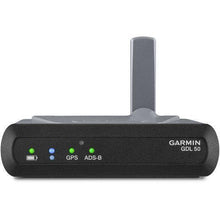
Garmin GDL 50 Portable ADS-B Datalink Receiver: Traffic and Weather Without a Panel Install
- Type Portable dual-band (978 + 1090 MHz) ADS-B In receiver
- Connectivity Bluetooth via Garmin Connext
- Power Rechargeable internal battery
A portable dual-band ADS-B In receiver that streams traffic and weather to your favorite navigation app. I keep a portable ADS-B In receiver in my flight bag for exactly the mission this serves: the traffic picture alone is worth it in a busy practice area.
- Subscription-free FIS-B weather and dual-band traffic on your tablet
- Dual-band reception sees both 978 UAT and 1090ES targets directly
- Moves between aircraft in seconds, ideal for renters and club flyers
- Pairs cleanly with Garmin Pilot and Garmin portable GPS units
- Nothing to install, certify, or log; it rides in the flight bag and works in any aircraft you fly that day.
- It is ADS-B In only, so it does nothing for your ADS-B Out compliance, and it lives best inside the Garmin app ecosystem. Dedicated ForeFlight users should look at the Stratus 4 below instead.
Perfect for Garmin Pilot users, renters, and club pilots who want traffic and weather in whatever they fly.
Click for Price →
Appareo Stratus 4 Portable ADS-B Receiver: Self-Contained ADS-B In with a Touch Screen
- Type Portable dual-band ADS-B In receiver
- Display Built-in color touch screen
- Battery User-replaceable rechargeable battery
A cockpit-ready portable ADS-B In receiver with a color touch screen and replaceable battery. The on-device screen is the differentiator: you can check reception status and settings without digging through menus on your tablet mid-flight.
- Color touch screen shows status and settings right on the device
- Subscription-free ADS-B traffic and weather streamed to your tablet
- Replaceable battery covers long cross-country days: swap instead of recharge
- Dual-band reception picks up both ADS-B datalink frequencies
- The swappable battery and on-device screen make it the most self-sufficient portable receiver here for full-day flying.
- Like every ADS-B In unit, it does not count toward the ADS-B Out mandate. Stratus hardware is most at home with ForeFlight, so confirm compatibility before buying if you run a different app.
Perfect for ForeFlight-first tablet pilots who want a self-contained ADS-B In receiver they can manage from the device itself.
Click for Price →
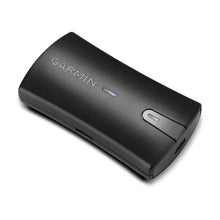
Garmin GLO 2 Aviation Bundle: A Rock-Solid GPS Source for Your Tablet
- Type Portable Bluetooth GPS and GLONASS receiver
- Compatibility iPad, iPhone, and Android devices
A portable Bluetooth GPS and GLONASS receiver that turns your iPad, iPhone, or Android device into a precise moving-map nav source.
- GPS plus GLONASS reception locks position faster and holds it better than a tablet’s internal GPS
- Updates position up to 10 times per second for smooth moving-map tracking
- Aviation bundle adds cockpit power and mounting accessories out of the box
- Small enough to live on the glareshield or in a side pocket
- It does one job, providing a dependable position feed for your EFB, and does it without fuss.
- It is a position source only, with no ADS-B traffic or weather. If you already own an ADS-B In receiver with built-in GPS, you do not need this too; it earns its keep with Wi-Fi-only iPads that have no internal GPS at all.
Perfect for pilots running a Wi-Fi-only iPad who need a reliable GPS position source for their EFB.
Click for Price →Prefer to compare the full range yourself? Browse all aviation GPS & ADS-B receivers, the latest Garmin aviation GPS units, and aviation radios & handheld GPS. For everything else in the cockpit, our pilot supplies collection has you covered.
Frequently Asked Questions
- Do I need ADS-B Out in 2026?
- Only if you fly in ADS-B rule airspace. The requirement is location-based, not aircraft-based: you need ADS-B Out in Class A, B, and C airspace, in Class E above 10,000 feet MSL (excluding below 2,500 feet AGL), within the 30 nautical mile Mode C veil around major airports, and above the ceiling of Class B and C airspace. If you fly only in Class D, Class G, or low-level Class E airspace, the FAA does not require ADS-B Out, though many pilots equip anyway for the traffic visibility it brings. The rule has not changed since it took effect in January 2020, but enforcement and international expansion have both matured.
- Is a Mode C transponder still acceptable in 2026?
- Yes, a Mode C transponder remains legal wherever ADS-B Out is not required. If you fly only in Class D, Class G, or Class E below 10,000 feet MSL and stay outside the Mode C veil, a working Mode C unit satisfies the FAA transponder requirement on its own. The moment your mission includes Class A, B, or C airspace, flight above 10,000 feet MSL, or operations inside the veil, you must add a compliant ADS-B Out source. Many owners keep their existing Mode C transponder and pair it with a separate ADS-B Out device rather than replacing the whole box.
- Should I choose 978 UAT or 1090ES ADS-B Out?
- Choose 1090ES if there is any chance you will fly above FL180 or outside the United States; choose 978 UAT only if you are certain you will stay below FL180 in U.S. airspace. 978 UAT is a U.S.-only datalink, and it is often the cheaper install for typical GA aircraft. 1090ES rides on a Mode S transponder's extended squitter and is the international standard, accepted in Canada and virtually everywhere else that mandates ADS-B. Because the cost gap between the two paths has narrowed, most avionics shops now steer owners toward 1090ES as the future-proof choice unless the aircraft will never leave the local area.
- Does ADS-B In count toward the ADS-B Out mandate?
- No. ADS-B In only receives; it delivers traffic and subscription-free weather to your display, but it does not transmit anything, so it cannot satisfy the ADS-B Out requirement. Compliance is about broadcasting your position to ATC and other aircraft, which only ADS-B Out hardware does. That said, ADS-B In is one of the best safety upgrades you can make, and you do not need a panel install to get it. A portable dual-band receiver such as the Garmin GDL 50 streams traffic and weather to a tablet app in any aircraft you fly, which makes it especially popular with renters and flying-club members.
- Can I fly without a transponder at all?
- Yes, in some airspace. No transponder is required in Class D, Class G, or Class E below 10,000 feet MSL, provided you stay outside the Mode C veil and out of Class B and C airspace. Aircraft certified without an engine-driven electrical system, such as many gliders and vintage taildraggers, also have specific exemptions. Practically, flying transponder-free keeps you well clear of major terminal areas and limits the traffic advisories ATC can give you, because controllers cannot see your altitude. If you fly anywhere near busy airspace, a Mode C transponder is the realistic minimum.
- What does an ADS-B Out upgrade actually involve?
- Three pieces have to work together: a transmitter (either a 1090ES Mode S transponder or a 978 UAT device), a position source that meets the FAA performance standard (a certified WAAS GPS, not a consumer GPS), and an approved installation in a certified aircraft. Modern all-in-one units bundle the GPS with the transmitter, which is why wingtip and tail-light style devices have become so popular: the install is measured in hours rather than days. After installation, fly in radar coverage and request an FAA Public ADS-B Performance Report to confirm the system is transmitting correctly before you rely on it in rule airspace.
- What are the emergency squawk codes?
- There are three: 7500 for hijacking or unlawful interference, 7600 for lost radio communications, and 7700 for a general emergency. Squawking any of these immediately flags your aircraft on ATC displays and gets controllers working your situation, even if you cannot talk to them. Dial codes carefully so you never pass through an emergency code by accident; many pilots change one digit at a time. A common memory aid: seven-five, man with a knife; seven-six, radio needs a fix; seven-seven, falling from heaven.
- What do common transponder calls from ATC mean?
- Four phrases cover most transponder communication. "Squawk ident" means press the IDENT button so your target flashes on the controller's scope; do not press it unless asked. "Identified" confirms ATC sees your aircraft on radar. "Stop squawk" tells you to stop transmitting your assigned code, and "resume squawk" tells you to turn it back on or re-enter the assigned code. If you hear "squawk VFR," set 1200 and continue. None of these calls require any action beyond the transponder itself, so keep flying the airplane first and work the buttons second.
Final Takeaway
Start with where you fly, not what you fly. If your missions stay in Class D, E, and G below 10,000 feet, a healthy Mode C transponder keeps you legal. The moment Class A, B, or C airspace, the Mode C veil, or a border crossing enters the picture, you need compliant ADS-B Out, and 1090ES is the future-proof way to get it. Add portable ADS-B In for the traffic and weather picture, and you have covered both compliance and situational awareness.
About the author: Neil S. Glazer is a commercial pilot with multi-engine and instrument ratings and the founder of PilotMall.com, where he has helped pilots outfit their aircraft and flight bags for over two decades.




3 comments
i am writing you behalf on ALLAIR AVIATION. we need some aircraft .
I see that both here and on Bold Method’s article on airspace Mode C transponders are listed as required in Class G Airspace above 10,000 MSL. Here you list ADSB-Out being required as well. While Bold Method excludes that they also add this doesn’t apply beneath 2,500’ AGL. Seeking clarification on this I have gone to FAA’s site and 14 CFR 91.225 and I can’t seem to find the requirement for ADSB-Out or a Mode C Transponder in any Class G airspace (above or below 10,000 MSL). Would you be able to point me in the right direction here? Is there an AC or another reg I am missing? Thank you!
If my static port is blocked, rendering my barometric altimeter inop, can ATC get an incorect Altitude on their screen? Does ADS-B change this scenario?