



A Nuts-and-Bolts Guide to Transponder Codes (Bonus: Squawk Code PDF)


Today we’re digging into transponder codes and their usages. We will talk about the meanings of standard squawk codes and emergency codes (plus which codes you are not allowed to use), then wrap up with tips and tricks for memorizing the three emergency transponder codes: 7500, 7600, and 7700. We’ve also created a bonus downloadable squawk code PDF you can print, clip to your kneeboard, and keep within reach on every flight.
Key Takeaways
- A squawk code is a four-digit transponder code (0000 to 7777, 4,096 combinations) that lets ATC identify your aircraft on radar.
- Squawk 1200 is the VFR code in the United States and Canada; in controlled airspace, ATC assigns you a discrete code.
- The three emergency codes are 7500 (hijacking), 7600 (lost comms), and 7700 (general emergency). Remember: “Hi Jack, I can’t talk; there’s an emergency.”
- Never squawk 0000 or 7777; both are reserved for military interceptor operations.
- Print the free squawk code PDF so the codes are on your kneeboard when you need them, not in a memory you have to trust under stress.
What Is a Squawk Code?

A transponder code, or squawk code, is a four-digit numerical sequence a pilot enters into their radio transponder. There are 4,096 discrete squawk code possibilities ranging from 0000 to 7777. Each code combination is a unique identifier that allows air traffic controllers to keep track of individual aircraft.
Mode A, Mode C, and Mode S transponders all use transponder codes to send their identification back to ATC. Mode C transponders also send aircraft pressure altitude. Mode S transponders are the most advanced, sending not only a squawk code, identification, and pressure altitude, but also Automatic Dependent Surveillance Broadcast (ADS-B), Traffic Collision Avoidance (TCAS), and enhanced surveillance data. Since January 1, 2020, ADS-B Out has been required in most U.S. controlled airspace, which is why so many legacy Mode C panels have been upgraded over the past few years.
Which Transponder Code Should You Squawk?
If you are flying under visual flight rules in uncontrolled U.S. or Canadian airspace, you will use squawk code 1200. You may also hear this referred to as “squawk VFR.” If you’re in a controlled airspace, the controller will assign you a unique four-digit squawk code.
Pro Tip: Make sure you enter your assigned squawk code correctly. If your entered code doesn’t match the one the controller gave you, they will tell you that you have an invalid transponder code.
How Do You Enter a Transponder Code?

To set your squawk, turn your transponder on and input either the code you’ve been given by ATC or the appropriate generic code for your airspace (ex: 1200 for VFR flights in the United States). If you are in communication with ATC, they may also ask you to press the IDENT button when you set your assigned code.
Pro Tip: If your transponder uses knob dials, be careful when changing your codes so you don’t accidentally temporarily set your squawk code to one of the emergency codes (especially 7500) while scrolling through. Note that this isn’t an issue with button operated digital transponders because the code is not transmitted until you enter the fourth digit.
Which Squawk Codes Should You Never Use?

If you’re a civilian aviation pilot, two of the most important squawk codes to avoid are 0000 and 7777. Both codes are reserved for military interceptor operations. The three emergency squawk codes should also be avoided unless they apply to your situation.
What Are the 3 Emergency Squawk Codes?

In coordination with the International Civil Aviation Organization (ICAO), the FAA has designated three emergency transponder codes that all pilots should memorize (though hopefully you will never have to use them).
What does squawk 7500 mean?
A squawk of 7500 is the transponder code for hijacking. By discretely entering this squawk code, a pilot can let ATC know that the aircraft is no longer under their control. If you set this code, ATC will attempt radio contact to confirm you are squawking 7500. If they don’t hear from you, they will assume your plane is in fact hijacked.
What does squawk 7600 mean?
A squawk of 7600 means lost radio communication. You should use this squawk code if you cannot receive, cannot transmit, or are completely unable to use your radio for either transmitting or receiving. Once you squawk 7600, ATC may ask you to “ident.” If you can receive but not transmit with your malfunctioning radio, pressing the “ident” button when instructed lets ATC know you can hear them but not reply verbally.
Pro Tip: If your radio is completely inoperable, be visually alert as you make your approach to landing. Watch for the light gun signals being used to communicate with you.
What does squawk 7700 mean?
A squawk of 7700 is used for any emergency other than hijacking or lost radio communication. This code can include a broad range of situations like engine failure, fuel emergencies, flight control malfunctions, severe icing, landing gear malfunctions, airframe damage, fire, pressurization failure, onboard medical emergencies, and more.
Squawking 7700 immediately grabs the attention of ATC. If your radio is working, the controller will want you to share important information like your aircraft registration number, your current position, planned destination, nature of the problem, how many souls are on board, what your fuel reserves are, and your intentions.
Remember, as pilot in command, you remain the final authority for aircraft operation throughout the emergency. You are authorized to deviate from CFRs as justifiably needed to safely operate and land the aircraft. ATC will do everything they can to clear traffic out of the way and help you throughout the emergency.
Are Squawk Codes the Same in Every Country?
If you’re flying internationally, you need to know that the use of each squawk code varies by country. Although there are a few ICAO designated codes (more on that in a minute) there is no global standard for every single transponder code assignment. Consult the Aeronautical Information Publication (AIP) for other countries you will be flying in to learn their generic squawk code assignments.
Complete List of ICAO Squawk Codes and Their Meanings

The International Civil Aviation Organization (ICAO) has a list of six transponder codes that have been standardized for global use. They are:
- 1000: Mode A transponder code that is reserved for use in Mode S radar/ADS-B setups where aircraft identification is used to correlate flight plan
- 2000: Uncontrolled IFR transponder code used when entering a secondary surveillance radar (SSR) area from a non-SSR area
- 7000: Standard VFR transponder code to be used when no other code has been assigned
- 7500: Aircraft hijacking
- 7600: Radio failure
- 7700: General emergency
How Do You Remember the Emergency Squawk Codes?
The good news is that while it might be fun to read the full list of transponder codes and their meanings, you don’t need to memorize them all (unless you want to annihilate the competition at your next round of hangar bar aviation trivia).
Start by learning the three emergency codes since they are the most critical. (Just ask the pilots of Korean Air Flight 085). After that, move on to the most common standard local and ICAO codes.
Today’s student pilots can thank the seasoned aviators who came before them for coming up with all sorts of methods to memorize the three all-important emergency squawk codes. We like the Pilot Institute’s 3 easy ways to remember squawk codes. They include the rhyming method, all in one sentence, and acronym.
If you know the frequencies in order (7500, 7600, 7700) the sentence method is easy to use and recall. Just remember: “Hi Jack, I can’t talk; there’s an emergency.”
If you want help remembering both the squawk codes and their meanings, the rhyming method will probably be more useful for you. And whichever method you choose, back it up with our free printable squawk code PDF so the answer is clipped to your kneeboard, not buried in your memory.
Gear Up: Transponder and ADS-B Upgrades Worth a Look
Knowing the codes is half the equation; the box you dial them into is the other half. If you are still flying behind an aging Mode C unit, or you want ADS-B In traffic and weather on your tablet, these are the upgrades we recommend most often at Pilot Mall.

uAvionix tailBeaconX TSO ADS-B Out Transponder: a full Mode S transponder hiding in your tail light
- Mode S Extended Squitter transponder with 2020-compliant ADS-B Out
- Integrated WAAS GPS
- Replaces the rear position light
- TSO certified for certified aircraft
- Combines transponder and ADS-B Out in one unit, so it is the cleanest path off an old Mode A/C box
- 1090 MHz output works for flights into Canada and other international airspace where 978 UAT does not
- Installs at the tail position light, avoiding a major panel teardown
Perfect for: owners replacing a tired Mode C transponder who want Mode S plus ADS-B Out in a single, low-labor install.
Click for Price →
uAvionix skyBeacon ADS-B Out Wingtip Nav Light: ADS-B Out compliance in about an hour of shop time
- 978 MHz UAT ADS-B Out
- Integrated WAAS GPS and LED nav light
- Wingtip installation alongside your existing transponder
- TSO certified
- Keeps your current transponder; the skyBeacon adds the ADS-B Out layer on top of it
- Famously simple installation that replaces the left wingtip nav light
- Ideal for U.S.-based aircraft flying below FL180 where UAT is allowed
Perfect for: owners whose existing transponder is healthy and who just need the fastest legal route to ADS-B Out compliance.
Click for Price →
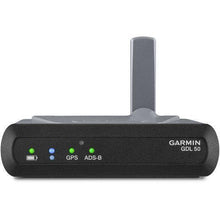
Garmin GDL 50 Portable ADS-B Receiver: subscription-free traffic and weather in any cockpit
- Portable ADS-B In datalink receiver
- Dual-link traffic plus FIS-B weather
- Built-in GPS position source
- Streams wirelessly to Garmin Pilot and compatible Garmin portables
- No installation and no subscription; toss it on the glareshield and fly
- Moves between aircraft, which makes it a favorite for renters and club pilots
- Battery powered for cockpits without spare power ports
Perfect for: Garmin Pilot users who want ADS-B In traffic and weather without touching the panel.
Click for Price →
Appareo Stratus 4 Portable ADS-B Receiver: the latest generation of the best-known portable receiver line
- Dual-band ADS-B In traffic and weather
- Color touch screen for status at a glance
- User-replaceable battery
- Compact, cockpit-ready footprint
- Touch screen shows connection, GPS, and battery status without opening your EFB app
- Replaceable battery means a spare in the flight bag instead of a dead receiver mid-trip
- Pairs with your tablet EFB for traffic, weather, and backup GPS
Perfect for: tablet-EFB pilots who want set-and-forget ADS-B In with the longest track record in the category.
Click for Price →
ASA VFR Kneeboard: the natural home for your printed squawk code PDF
- Durable aluminum construction
- Elastic leg strap
- Clipboard surface for copying clearances and squawk codes
- VFR reference info included
- Clip the squawk code PDF from this article underneath your nav log
- Gives you a hard writing surface for copying assigned codes the moment ATC issues them
- A long-running best seller for student and certificated pilots alike
Perfect for: every pilot who wants the emergency codes physically in the cockpit, not just in their head.
Click for Price →Squawk Code FAQs
- What does squawk 7700 mean?
- Squawk 7700 is the general emergency transponder code. It tells every air traffic control facility within radar range that your aircraft is in distress, whether that means engine failure, fire, severe icing, a fuel emergency, or a medical event on board. Setting 7700 highlights your target on the controller’s scope and gets you priority handling. If your radio still works, follow up with a Mayday or Pan-Pan call and give ATC your position, the nature of the problem, souls on board, fuel remaining, and your intentions.
- What does squawk 7600 mean?
- Squawk 7600 means you have lost radio communication. Use it when you cannot transmit, cannot receive, or both. Once you set 7600, controllers will treat you as NORDO and may ask you to ident if they suspect you can still hear them. Continue squawking 7600, fly your expected clearance or standard lost-comm procedures as appropriate, and watch the tower for light gun signals when you arrive at a controlled field.
- What does squawk 7500 mean?
- Squawk 7500 is the international transponder code for unlawful interference, meaning a hijacking. Entering it discreetly tells ATC that the aircraft is no longer fully under the crew’s control. The controller will attempt to verify that you are intentionally squawking 7500, and if you do not respond, they will assume the hijack is real and security procedures will begin on the ground. Never set this code by accident and never use it for practice.
- What is the difference between squawk 1200 and squawk 7000?
- Squawk 1200 is the VFR transponder code used in the United States and Canada, while 7000 is the standard VFR code used in much of the rest of the world under ICAO conventions. Both serve the same purpose: telling ATC you are operating VFR without an assigned discrete code. Always check the AIP for the country you are flying in, because generic code assignments vary from state to state.
- Do I need a transponder with ADS-B Out to fly?
- You need a transponder with ADS-B Out for most controlled airspace in the United States. Since January 1, 2020, FAR 91.225 has required ADS-B Out in Class A, B, and C airspace, above 10,000 feet MSL, and within the Mode C veil around Class B airports, mirroring the older transponder rule in 91.215. You can still fly without one in much of Class D, E, and G airspace, and aircraft without electrical systems have exceptions. Combined units like the uAvionix tailBeaconX deliver a Mode S transponder and ADS-B Out in a single install.
- What does squawk ident mean?
- Squawk ident is an ATC instruction to press the IDENT button on your transponder. Pressing it makes your radar target highlight on the controller’s display for several seconds, which lets ATC positively pick your aircraft out of nearby traffic. Only press IDENT when instructed. It also matters during lost-communication situations: if you can hear ATC but cannot transmit, pressing IDENT when asked confirms that you are receiving their transmissions.
- What happens if I accidentally squawk an emergency code?
- Correct the code immediately and tell ATC if you are in radio contact. Briefly passing through 7500, 7600, or 7700 while twisting knob dials can trigger alerts at radar facilities, which is why you should change codes deliberately and avoid dialing through the 7500 series. Modern button-entry digital transponders do not transmit until the full four-digit code is entered, so this is mostly a concern with older knob-style units still flying in legacy panels.
- Do squawk codes mean the same thing in every country?
- No, only a handful of squawk codes are standardized worldwide. ICAO designates 7500 for hijacking, 7600 for radio failure, and 7700 for general emergency globally, along with 1000, 2000, and 7000 for specific transponder operations. Everything else varies by country, so the 1200 VFR code you use in the United States does not apply everywhere. Before flying internationally, review the destination country’s AIP for its generic and special-use code assignments.
About the Author
Neil S. Glazer is a commercial pilot with multi-engine and instrument ratings and the founder of PilotMall.com. He has spent more than two decades helping pilots outfit their cockpits, from first-solo students buying a kneeboard to owners working through panel and ADS-B upgrades.