




Plotter fijo ASA CP-1 para navegación VFR
Fixed plotter with six scales for every VFR chart, nautical miles on one side and statute on the other, plus a protractor for reading true course.
Envío el mismo día si ordena antes de las 3 PM ET, de lunes a viernes.
Devoluciones en 30 días para este artículo. Política de devoluciones
106
Beneficios
Beneficios
Envío y entrega
Envío y entrega
Devoluciones
Devoluciones
El plotter fijo ASA CP-1 reúne una regla, un transportador de rumbo y seis escalas de carta en una sola herramienta transparente, para que pueda medir cada tramo de un vuelo de travesía VFR y leer su rumbo verdadero en segundos.
Una herramienta esencial para todo piloto. Fabricado en plástico transparente resistente, con números y escalas fáciles de leer, el CP-1 ha sido verificado y aprobado por el Departamento de Pesas y Medidas.
Seis escalas para cada carta VFR
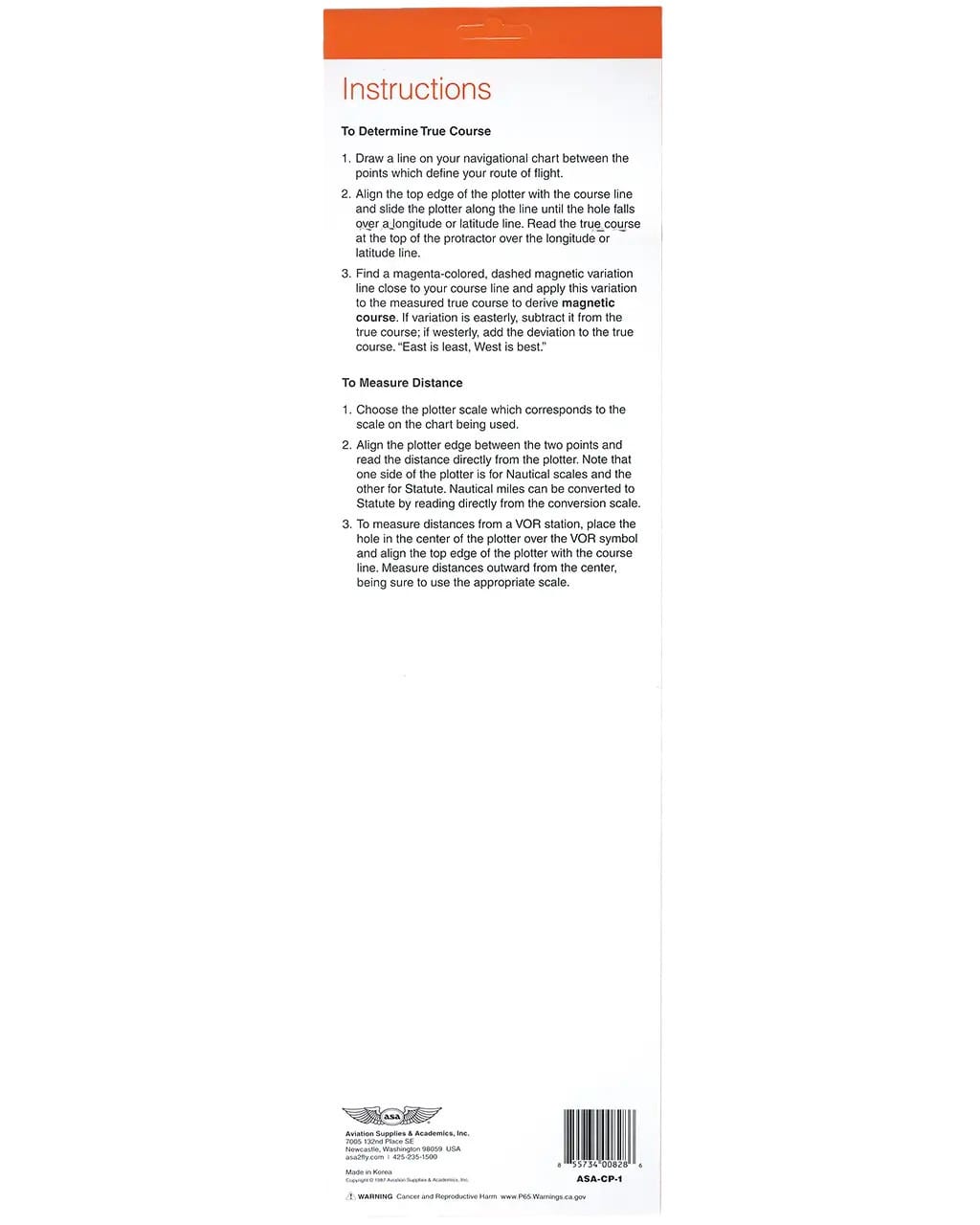
¿Se pregunta qué plotter necesita para planificar vuelos de travesía VFR? Empiece por uno que coincida con sus cartas. El CP-1 incluye escalas seccional (1:500,000), WAC (1:1,000,000) y de área terminal (1:250,000), con millas náuticas en un lado y millas terrestres en el otro. Coloque el borde entre dos puntos de control, use la escala que corresponde a su carta y lea la distancia directamente, sin convertir desde la leyenda de la carta. Una escala de conversión transforma millas náuticas en millas terrestres de un vistazo, y el orificio en el centro del transportador se coloca sobre el símbolo de un VOR para medir distancias hacia afuera desde la estación.
Rumbo verdadero en tres pasos sencillos
Trace su línea de rumbo, alinee el borde superior del plotter con ella y deslícelo a lo largo de la línea hasta que el orificio central quede sobre una línea de longitud o latitud. Lea el rumbo verdadero en la parte superior del transportador. Aplique la variación magnética impresa en su carta para obtener el rumbo magnético: si la variación es este, se resta; si es oeste, se suma. Es la misma habilidad de navegación por estima que usará desde su primer vuelo de travesía hasta su examen práctico, sin baterías que cargar ni nada que actualizar.
Mida, trace y planifique cada tramo con una herramienta sencilla y confiable que nunca necesita carga. ¡Agregue el plotter fijo ASA CP-1 a su bolsa de vuelo hoy!



Frequently Asked Questions
What charts does the ASA Fixed Plotter CP-1 work with?
The CP-1 carries six scales: sectional (1:500,000), WAC (1:1,000,000) and terminal area (1:250,000), each in nautical miles on one side and statute miles on the other. ASA designed the six scales to meet the needs of all VFR aeronautical charts, so one plotter handles every chart in your flight bag.
Does the CP-1 measure in both nautical and statute miles?
Yes. One side of the plotter reads nautical miles and the other side reads statute miles. A conversion scale turns nautical miles into statute miles at a glance, so you can work in whichever unit your aircraft and references use.
How do you find a true course with a fixed plotter?
Draw a line on your chart between the points that define your route. Align the top edge of the plotter with the course line and slide it along the line until the center hole falls over a line of longitude or latitude. Read the true course at the top of the protractor where it crosses that line.
How do you convert true course to magnetic course?
Find the magenta dashed magnetic variation line closest to your course line and apply that variation to the true course you measured. If the variation is easterly, subtract it; if it is westerly, add it. The memory aid is east is least, west is best.
How do you measure distance on a sectional chart with the CP-1?
Choose the plotter scale that matches the chart you are using, such as the sectional scale for a sectional chart. Align the plotter edge between the two points and read the distance directly from the plotter. Measure each leg point to point and add the legs together for your total route distance.
Can you measure distance from a VOR with this plotter?
Yes. Place the hole in the center of the plotter over the VOR symbol on your chart and align the top edge of the plotter with your course line. Measure distances outward from the center, making sure you read the scale that matches your chart.
What is the difference between a fixed plotter and a rotating plotter?
Both measure courses and distances on the same charts. A fixed plotter reads the angle off a printed protractor that you line up with a line of longitude or latitude, while a rotating plotter uses a spinning azimuth wheel. Many pilots like the fixed design for its simplicity, with no moving parts to slip or wear.
What is the ASA Fixed Plotter made of?
It is made of sturdy clear plastic with easy-to-read numbers and scales. The clear body lets you see your course line and the chart features underneath while you measure.
Is the CP-1 accurate?
ASA reports that the plotter has been checked and approved by the Weights and Measures Department. Matching scales are printed for sectional, WAC and terminal area charts, so you read distances directly instead of converting from the chart legend.
Does the plotter need batteries?
No. The CP-1 is a fully manual tool with no batteries or power, so it is always ready for preflight planning and works as a dependable backup to an EFB or GPS.
Is a plotter useful for student pilots and the checkride?
Yes. Plotting a course and measuring distances by hand is a core part of VFR cross-country planning in flight training, and examiners commonly look for that manual dead reckoning skill alongside electronic tools. A simple fixed plotter is an easy, affordable way to build it.
Who makes the ASA Fixed Plotter and what is the part number?
The plotter is made by ASA (Aviation Supplies and Academics) as part of its AirClassics line. The manufacturer part number is ASA-CP-1, and the plotter is made in Korea.
-
 Más vendidoProveedor:ASA
Computadora de vuelo ASA CX-3: Calculadora electrónica definitiva E6-B
E6B electrónico que calcula operaciones de vuelo y combustible, aprobado para el ACS y el único E6B electrónico certificado tanto para los exámenes de conocimientos de la FAA como los canadienses.
Precio habitual $127.99Precio de oferta $127.99 Precio habitualPrecio unitario por$149.95 -
 Más vendidoNuevoProveedor:Runway Selector
Herramienta selectora de pista de aviación y de componente de viento cruzado
Herramienta deslizante que elige la mejor pista y lee el componente de viento cruzado en segundos, una ayuda compacta que reduce la carga de trabajo en cabina durante la planificación previa al vuelo.
Precio habitual $19.95Precio de oferta $19.95 Precio habitualPrecio unitario por -
 Más vendidoProveedor:ASA
Visualizador de patrones de espera IFR de ASA para pilotos
Holding pattern visualizer that shows the correct entry every time, a compact double-sided IFR tool for fast, accurate entry selection under any holding clearance.
Precio habitual $13.49Precio de oferta $13.49 Precio habitualPrecio unitario por$15.95 -
 Proveedor:ASA
Plotter giratorio ASA para navegación de vuelo VFR de precisión
Plotter giratorio con lectura de rumbo directa, una forma rápida y fiable para los pilotos VFR de trazar rumbos verdaderos y distancias en cualquier carta seccional.
Precio habitual $13.49Precio de oferta $13.49 Precio habitualPrecio unitario por$14.95 -
 Proveedor:ASA
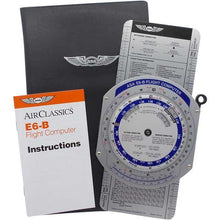
Computadora de vuelo ASA Color E6B con legibilidad mejorada
Color-coded manual E6B with enhanced readability for students, using intuitive color cues to speed up wind correction and flight-planning calculations in training.
Precio habitual $43.99Precio de oferta $43.99 Precio habitualPrecio unitario por$52.95 -
 Proveedor:Jeppesen Sanderson
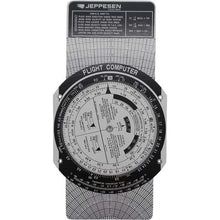
Computadora de vuelo para estudiantes piloto Jeppesen E6B (CSG)
Student E6B with a wind-correction slide for training math, a budget-friendly tool that pairs with official training materials to master flight calculations early.
Precio habitual $17.49Precio de oferta $17.49 Precio habitualPrecio unitario por -
 Proveedor:ASA
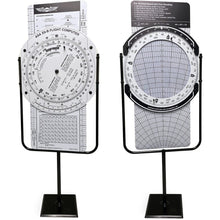
Entrenador de aula ASA E6B: Computadora de vuelo de gran tamaño
E6B de gran tamaño para que los instructores demuestren en un aula, funcionando igual que un E6B de mano para que los estudiantes aprendan juntos cálculos de navegación auténticos.
Precio habitual $2,495.00Precio de oferta $2,495.00 Precio habitualPrecio unitario por$1,995.00 -
 Proveedor:Jeppesen Sanderson
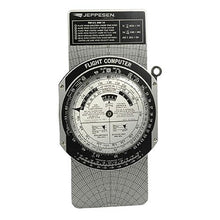
Computadora de vuelo Jeppesen Metal E6-B: Calculadora de piloto duradera (CSG)
E6B metálico duradero con regla de viento para un uso diario prolongado, en el que confían los estudiantes de piloto y los aviadores de travesía para una navegación precisa y sin pantalla.
Precio habitual $44.95Precio de oferta $44.95 Precio habitualPrecio unitario por -
 Proveedor:ASA
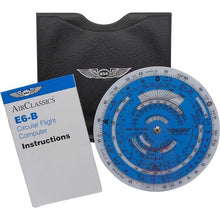
Computadora de vuelo ASA E6B: Calculadora manual de precisión
Manual circular E6B for wind, fuel and time-speed-distance math, with dual-sided functionality that keeps flight planning fast and dependable in the cockpit or classroom.
Precio habitual $28.99Precio de oferta $28.99 Precio habitualPrecio unitario por$34.95 -
 Proveedor:ASA
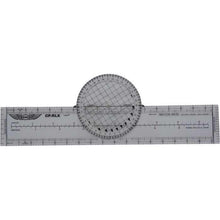
Plotter giratorio ASA Ultimate para una navegación VFR precisa
Rotating plotter with 8 chart scales, one tool for any VFR chart, spanning 13-1/4 inches for full reach across chart formats and backed by a lifetime warranty.
Precio habitual $14.99Precio de oferta $14.99 Precio habitualPrecio unitario por$16.95

