




-
 Proveedor:The Claw
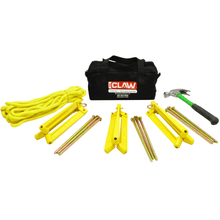
Anclajes de amarre de aeronaves de alta resistencia The Claw
High-strength tie-down anchors that hold a parked aircraft in wind, each anchor rated for 1,200 lbs of holding power for reliable overnight and storm tie-downs.
Precio habitual $134.99Precio de oferta $134.99 Precio habitualPrecio unitario por$169.99
Frequently Asked Questions
¿Cómo se amarra un avión?
Asegure el avión en tres puntos: una cuerda o cincha desde cada anillo de amarre de las alas y uno desde la cola, cada uno hacia un anclaje en el suelo. Coloque los anclajes de modo que las líneas tiren en un ángulo de aproximadamente 45 grados, deje un poco de holgura para el estiramiento de la línea y nunca ate a un puntal de elevación.
¿Cuántos puntos de amarre necesita un avión?
La mayoría de las aeronaves de aviación general monomotor utilizan tres puntos de amarre: ambas alas y la cola. Los aviones bimotores y más grandes a menudo necesitan puntos adicionales, por lo que un solo kit de tres anclajes puede no cubrirlos y se puede agregar un segundo kit para una cobertura completa.
¿Qué es el método de amarre de 45 grados de la FAA?
El método de 45 grados posiciona cada anclaje de tierra de modo que la línea de amarre se encuentre con el ala o el anillo de cola en un ángulo de aproximadamente 45 grados. Esto equilibra la carga hacia abajo y hacia afuera, resistiendo tanto el levantamiento como el movimiento lateral con ráfagas de viento mucho mejor que una línea que baja directamente o tira casi horizontalmente.
¿Los anclajes de tornillo o los kits de anclaje portátiles sujetan mejor con el viento?
Ambos pueden sujetar bien, pero depende de la superficie. Las estacas atornillables destacan en suelos blandos y consistentes a los que se regresa repetidamente, mientras que un kit portátil como The Claw se puede llevar a cualquier lugar y utiliza un diseño de ventaja mecánica que se agarra más fuerte a medida que aumenta la carga del viento, por lo que los pilotos de vuelo libre y de zonas remotas lo prefieren.
¿Funcionará The Claw en césped, tierra y pistas remotas?
Sí. The Claw está diseñado exactamente para esas superficies. Sus picos inoxidables se clavan en la hierba y la tierra con el martillo incluido, sin necesidad de anillos de rampa fijos, por lo que puede anclar de forma segura en pistas no mejoradas y remotas donde no existen anillos de amarre estándar.
¿Cuánta potencia de sujeción necesitan los anclajes de amarre de aeronaves?
La potencia de sujeción debe coincidir con el peso de la aeronave y el viento esperado, y las rampas expuestas y los aviones más pesados exigen más. La distribución de la carga en una configuración de tres puntos es tan importante como cualquier número individual. The Claw proporciona 1,200 libras de potencia de sujeción por anclaje en su kit de tres puntos.
No questions match your search. Try another term or ask our team.
