


The Complete Guide to Aircraft Radios and Communication Etiquette
Clear, reliable communication is one of the most critical aspects of safe flying. Whether you’re a student pilot making your first radio calls or an experienced aviator coordinating with ATC in busy airspace, mastering aircraft radios and proper communication etiquette ensures both safety and professionalism


Clear, reliable communication is one of the most critical aspects of safe flying. Whether you’re a student pilot making your first radio calls or an experienced aviator coordinating with ATC in busy airspace, mastering aircraft radios and proper communication etiquette ensures both safety and professionalism.
Understanding Aircraft Radios
Aircraft radios are two-way communication devices that allow pilots to transmit and receive voice communications. They’re used for air traffic control (ATC), pilot-to-pilot coordination, and monitoring critical information like weather and airport advisories. Modern radios are typically VHF (Very High Frequency), covering the 118.000 to 136.975 MHz aviation band.
FAA Requirements
- Certification & Licensing: No individual license is required for domestic flights, but an FCC license is needed for international flights. Radios in certificated aircraft must also meet FAA Technical Standard Orders (TSO).
- Frequency Use: ATC assigns frequencies at towered airports, while the Common Traffic Advisory Frequency (CTAF) is used for self-announcing at non-towered airports.
-
Emergency Frequency:
121.5 MHzis reserved exclusively for distress and emergency calls.
Radio Communication Etiquette
Effective communication is more than knowing frequencies. It's about being clear, concise, and professional to ensure every message is understood.
Standard Phraseology
- “Say Again” instead of “Repeat”
- “Affirmative/Negative” instead of “Yes/No”
- “Roger” to acknowledge a message has been received
- “Wilco” to confirm you have received and will comply
Best Practices
- Listen before transmitting to avoid interrupting.
- Identify yourself clearly (type + tail number).
- Keep transmissions short and to the point.
- Stay calm under pressure to avoid confusion.
- Think before you speak; know your message first.
Recommended Reading

Say Again, Please: A Pilot’s Guide to Radio Communications
This classic book is a must-have for pilots who want to master radio phraseology and confidence on the mic. Ideal for student pilots and great as a refresher for experienced aviators.
Buy the Book at PilotMallCommon Mistakes to Avoid
- Talking too fast or mumbling
- Using slang instead of standard terms
- Forgetting to identify your aircraft type/tail number
- Accidentally keying the mic (“stuck mic”)
- Interrupting other transmissions
Choosing the Right Handheld Radio
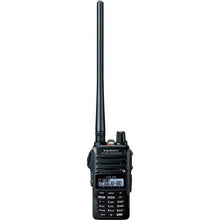
A handheld aviation radio is a must-have piece of equipment for any general aviation pilot. It provides a crucial backup in case of panel radio failure and is an excellent tool for practicing communications outside the cockpit. At PilotMall, we recommend trusted brands Yaesu and Icom, known for their durability and crystal-clear transmissions.
Yaesu FTA-550 AA vs. Icom IC-A25C-S
Two models stand out as the most popular choices for general aviation pilots. Here’s how the Yaesu FTA-550 AA and the Icom IC-A25C-S compare side by side.

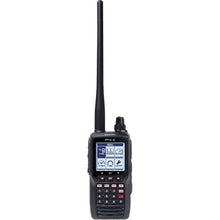
Yaesu FTA-550 AA Nav/Com Transceiver
- Type: NAV/COM (VOR & ILS navigation included)
- Display: 1.7″ dot-matrix LCD with icon-driven menu
- Power: Runs on AA batteries (alkaline) with rechargeable options
- Memory: 200 programmable channels
- Durability: MIL-STD-810F ruggedized build
- Extra: NOAA weather channels

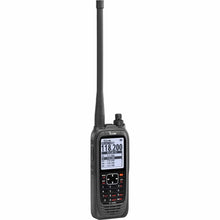
Icom IC-A25C-S Sport COM Only Transceiver
- Type: COM only (no NAV features)
- Display: Large 2.3″ LCD for enhanced readability
- Power: Rechargeable Li-ion battery with ~10.5 hours runtime
- Memory: Up to 300 channels
- Durability: IP57 waterproof protection
- Extra: Slim, lightweight, easy-to-use design
Quick Comparison
| Feature | Yaesu FTA-550 AA | Icom IC-A25C-S |
|---|---|---|
| Best For | Pilots needing NAV + COM backup | Pilots wanting simple COM-only use |
| Navigation | VOR & ILS | None |
| Battery | AA alkaline/rechargeable tray | Rechargeable Li-ion, ~10.5 hrs |
| Display | 1.7″ dot-matrix LCD | 2.3″ standard LCD |
| Memory Channels | 200 | 300 |
| Durability | MIL-STD-810F rugged build | IP57 waterproof |
Which one is right for you?
The choice is simple. If you want a rugged, all-in-one backup that includes VOR and ILS navigation capabilities, the Yaesu FTA-550 AA is the clear winner. If you prioritize a lightweight design, superior audio clarity, and straightforward COM-only functionality for voice, the Icom IC-A25C-S is the perfect choice.
Frequently Asked Questions
Do I need a license to use a handheld aviation radio?
For flights within the U.S., you do not need a personal license to operate a VHF airband radio from inside an aircraft. However, the aircraft itself must have a valid radio station license if it flies internationally or communicates with foreign stations.
Can a handheld radio replace my panel radio?
No, handhelds are intended as a secondary or backup device only. They have lower power and less range than panel-mounted radios and are not TSO-certified for primary use. They are essential for emergencies and ground operations but are not a substitute for your main radio.
What’s the range of a handheld radio?
Range is dependent on altitude ("line of sight") and terrain. From the air, you can typically expect 5–10 miles of range, sometimes more at higher altitudes. On the ground, the range is much shorter, often just 1–3 miles due to obstructions.
Final Thoughts
Effective radio communication is a skill that grows with experience. By combining a solid understanding of FAA standards, practicing proper etiquette with resources like Say Again, Please, and equipping yourself with a reliable handheld radio, you will fly safer and communicate with unshakable confidence. Explore the best from Yaesu, Icom, and other top aviation brands right here at PilotMall.