




Night Flying: The Definitive Guide to Safe, Legal, and Professional Night Flight Operations
Night flying requires more than basic VFR skills. This guide breaks down FAA night rules, human-factors risks, illusions, lighting systems, and the essential procedures every pilot must follow for safe night operations.


Flying is flying, but night flying introduces additional physiological, regulatory, and operational challenges. Darkness removes familiar visual cues, increases pilot workload, and narrows safety margins. With solid planning, structured procedures, and disciplined execution, you can operate at night with the same confidence and precision as daytime flight.
This guide gives you the complete framework for night VFR operations: the FAA's definitions of night, the N.I.G.H.T. preflight protocol, the human-factors science behind night vision and illusions, approach lighting systems, and the cockpit lighting gear, from red-lens flashlights to headlamps, that makes all of it easier.

Key Takeaways
- "Night" has three FAA definitions: sunset to sunrise for aircraft lighting (FAR 91.209), civil twilight to civil twilight for logging night time (FAR 1.1), and 1 hour after sunset to 1 hour before sunrise for passenger-carrying currency (FAR 61.57(b)). Landings in the gap between them do not all count the same way.
- Run the N.I.G.H.T. preflight protocol before every night flight: NOTAMs, Illusions, Ground lighting, Human factors, and Terrain and traffic.
- Your eyes are the weak link after dark. Full dark adaptation takes roughly 30 minutes, one blast of white light can erase it, and red or dimmable lighting preserves it.
- Plan night fuel like a professional: diversions are more likely after dark, so many pilots carry double the FAA minimum reserve and cruise higher for glide range and obstacle clearance.
- Lighting is safety equipment at night. Carry at least two flashlights plus a hands-free light (headlamp, cap light, or finger light), all with fresh batteries, and stage them where you can reach them in the dark.
What Counts as Night? The FAA's Three Definitions
The FAA defines "night" three different ways depending on what you are doing: turning lights on, logging time, or carrying passengers. Knowing which clock applies is the foundation of legal night flying.
Night for Aircraft Lighting: FAR 91.209
From sunset to sunrise, the aircraft must operate with:
- Position lights (navigation lights)
- Anti-collision lights
You may turn off strobes temporarily when their use would compromise safety, such as in clouds, fog, or when they would blind other pilots on the ground or on approach.
Night for Logging Flight Time: FAR 1.1
For logging night flight time, FAR 1.1 defines night as the period between the end of evening civil twilight and the beginning of morning civil twilight, as published in the Air Almanac. Civil twilight typically ends 20 to 35 minutes after sunset in the continental United States, so this window opens after the lighting requirement but before the currency window.
Night for Passenger Currency: FAR 61.57(b)
To carry passengers at night, you must have completed 3 takeoffs and 3 landings to a full stop within the past 90 days, performed between 1 hour after sunset and 1 hour before sunrise, in the same category and class of aircraft. Touch-and-goes do not count; every landing must be to a full stop.
The Grey Zone Hazard
Landings performed between sunset and 1 hour after sunset do not count for night currency, even though aircraft lighting is already required and you may be logging night time after civil twilight ends. Pilots who misunderstand this can inadvertently violate FAR 61.57 when carrying passengers later in the same evening. When in doubt, check the official twilight tables for your airport and log the actual clock times.
The N.I.G.H.T. Preflight Protocol
Use this five-letter protocol as a structured pre-departure review for every night flight.
| Letter | Meaning | Purpose |
|---|---|---|
| N | NOTAMs | Detect runway or taxiway closures and lighting outages |
| I | Illusions | Prepare for visual and vestibular illusions |
| G | Ground Lighting | Verify PCL frequency and VGSI status |
| H | Human Factors | Assess fatigue and personal minimums |
| T | Terrain and Traffic | Study obstacles, routing, and the lighting environment |
N: NOTAMs
Lighting outages, closed taxiways, closed runways, and unlit obstacles are extremely hazardous at night. Always review NOTAMs for your departure, enroute, and destination airports, with special attention to local NOTAMs that may not appear in a quick briefing overview.
I: Illusions
Visual and vestibular illusions are more likely to occur at night. Common ones include the black-hole effect on final, false horizons from sloping terrain or cloud decks, and autokinesis when staring at a single light source. Knowing they exist before you see them is half the defense; the other half is trusting your instruments over your inner ear.

G: Ground Lighting
Confirm how airport lighting is controlled before you depart. At non-towered airports, this usually means Pilot Controlled Lighting (PCL) activated with microphone click sequences on the CTAF frequency. Verify that PAPI or VASI systems are available and operational at your destination and alternates.
H: Human Factors
Night flying increases pilot workload and makes fatigue more dangerous. Be honest about your rest, stress level, and recent experience. Set personal weather and visibility minimums that are more conservative than the regulations.
T: Terrain and Traffic
Study the route carefully for obstacles, unlit terrain, towers, and rising ground. At night, many of these hazards are nearly invisible until you are uncomfortably close.

Preflight Preparation and Aircraft Readiness
Fly a Slower, Brighter Walkaround

Darkness makes it easier to miss small issues such as fluid leaks, loose fasteners, bird nests in openings, or underinflated tires. Use a methodical walkaround and take extra time with the flashlight on fuel caps, vents, leading edges, and landing gear. The white beam comes out for the inspection; the red light waits for the cockpit.
Manage Fatigue Like a System

Plan your duty day so you are not launching on a night flight when you are already exhausted. Your circadian rhythm is actively working against you after dark. Hydration, nutrition, and rest become part of your safety equipment when flying at night.
Log It Right: Night Time and Currency
Night currency for carrying passengers is based on specific time windows, not simply when it looks dark outside. Use your logbook or electronic log to clearly mark which landings qualify under FAR 61.57(b) and which time counts as night under FAR 1.1.
Fuel Planning: Double the Reserve

At night, diversions are more likely due to weather, lighting issues, or comfort level, and fewer FBOs are open to sell you fuel. Many pilots choose to double the FAA minimum fuel reserve for night VFR so they can comfortably reach an alternate with better lighting and services.
Test Every Cockpit Light Before Dark

Test all panel lighting, flood lighting, and instrument backlighting before departure, ideally while there is still enough daylight to fix a problem. Adjust brightness so you can read everything clearly without washing out your night vision.
Choose a Higher Cruise Altitude

Selecting a higher cruise altitude gives you more time and distance to find a suitable landing area in the event of an emergency. It also keeps you farther from unlit towers and rising terrain.
Respect Night Weather and Icing

Icing can be more dangerous at night because it is harder to detect in its early stages and there is no sunlight to aid melting. Study freezing levels, cloud tops, and recent pilot reports before any night flight where icing may be a factor.
The Night Flying Gear Checklist
At night, lighting is not an accessory; it is required safety equipment, and the panel lights alone are not enough. Build a personal lighting kit from the pilot flashlights collection, stage it before engine start, and check it the way you check fuel. For a deeper dive on choosing panel-friendly lights, see our guide to cockpit lights for flying at night.

Before every night flight, confirm you have:
- A primary dual-color flashlight: a strong white beam for the walkaround and a red or NVIS-friendly mode for the cockpit
- A backup flashlight stowed within arm's reach of your seat, not buried in the baggage compartment
- A hands-free light: headlamp, LED cap, or finger light, so you can fly the airplane while you illuminate switches and charts
- Fresh spare batteries, or a full charge on rechargeable lights, verified before you leave the house
- Panel, flood, and instrument lighting tested and dimmed to working levels before dark
- Charts, kneeboard, and checklists organized so you are not hunting through a dark cabin at altitude
Hands-free options deserve special mention. Headlamps, powercaps, and finger-mounted LED lights let you illuminate switches, circuit breakers, or charts without sacrificing control of the aircraft.

Our specific picks for each slot on this checklist are in the gear section below.
Ground Procedures and Lighting Discipline
Airport ramps and taxiways can be visually confusing at night. Good lighting discipline improves safety for everyone.
- Turn the beacon on before engine start to signal that the aircraft will be moving or that the engine is running.
- Keep strobes off while on the ramp or taxiways, and turn them on only when you are entering the runway for takeoff.
- Turn landing lights off if they will shine directly into the cockpit of another aircraft that is landing, taking off, or holding short.
- In clouds or heavy precipitation, consider turning strobes off to avoid disorienting reflections.

Human Factors: Fatigue, Night Vision, and Illusions
Night flying increases susceptibility to several human-factors risks.
- Fatigue: Your circadian rhythm naturally pushes you toward sleep at night, degrading reaction time and judgment.
- Night vision loss: The rod cells that handle low-light vision take roughly 30 minutes to fully adapt to darkness, and a single exposure to bright white light can erase that adaptation in seconds. This is why red-lens flashlights and dimmable cockpit lighting matter.
- Spatial disorientation: With fewer visual references, the inner ear can easily trick you into believing the aircraft is banking or climbing when it is not.
Training, self-awareness, and a willingness to say "no" to marginal conditions are the key defenses.
In-Flight Considerations for Night VFR
- Fly higher cruise altitudes when practical to increase glide range and obstacle clearance.
- Minimize head-down time with charts and devices. Use cockpit organization and checklists to stay ahead of the airplane.
- Monitor fuel levels more frequently and compare expected versus actual burn.
- If weather is deteriorating, divert early. Things rarely get better at night.
- If you start to see strobes reflecting off moisture as "sparkles," treat it as a warning sign of precipitation, fog, or icing.
How Do You Stay on Glide Path at Night? VASI and PAPI
Visual Glide Slope Indicator (VGSI) systems help you maintain a safe descent profile and obstacle clearance on final, which is especially critical at night when the black-hole illusion tempts you to descend early.
PAPI
- Four lights in a single row beside the touchdown zone: 2 white and 2 red indicate the correct glide path.
- More white indicates that you are high.
- More red indicates that you are low.
VASI
VASI systems use 2-bar or 3-bar configurations to indicate whether you are on, above, or below the proper glide path. Remember "red over white, you're alright." They are effective, but often less precise than PAPI and may require closer study of the specific pattern used at the airport you are visiting. On 3-bar installations, the upper glide path serves high-cockpit aircraft, so light singles should fly the lower two bars.
Common Night Accident Chains and How to Break Them
Night accidents often involve the same repeating themes.
- VFR into IMC after the pilot continues flight into worsening conditions.
- Fuel exhaustion or fuel starvation after inadequate planning or monitoring.
- Spatial disorientation during climb, cruise, or approach in low visibility or featureless terrain.
The best mitigation is conservative decision making, stronger personal minimums than the legal minimum, and a willingness to delay, divert, or cancel when conditions are not clearly in your favor.
Gear Up: Our Night Flying Lighting Picks
These are the lights we recommend most often for the checklist above: a primary dual-color flashlight, a premium upgrade, a rechargeable multi-color option, and hands-free solutions for your head, your hat, and your finger. All are stocked at PilotMall.com in the pilot flashlights collection.

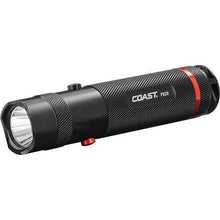
Coast PX20 Dual-Color Flashlight: The Preflight-to-Cockpit Workhorse
Output: 315-lumen white beam plus dedicated red mode. Runtime: up to 50 hours.
- One-touch switching between white for the walkaround and red for the cockpit, with no lens filters to fumble
- 315 lumens is real inspection light for fuel caps, leading edges, and landing gear
- Compact enough to live permanently in a flight bag side pocket
Perfect for: the first flashlight every night pilot should own, and the one to standardize on as your primary.
Click for Price →
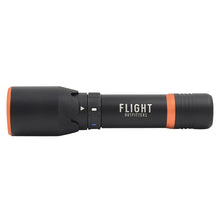
Flight Outfitters Charter Ops Flashlight: Four Colors and USB-C Charging
Modes: white, red, green, and blue. Charging: USB-C rechargeable. Length: 6.25 inches.
- Dial system switches colors instantly, so you never cycle through blinding white to reach red
- Zoomable head goes from wide flood for the walkaround to a focused beam for detail work
- Blue mode boosts contrast for chart reading; built-in emergency signal mode for the worst night
Perfect for: pilots who want one rechargeable light to cover every color and every job in the cockpit.
Click for Price →
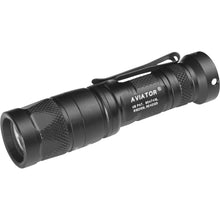
Surefire Aviator Dual-Output Flashlight: The Buy-Once Premium Pick
Output: 250-lumen white plus low-intensity night-vision-preserving LED in one sealed head. Body: Mil-Spec hard-anodized aluminum.
- Lockable selector gives instant access to either output without filters or mode cycling
- Total Internal Reflection lens delivers a cleaner, tighter beam than reflector lights
- Shrouded tailcap switch, O-ring seals, and a stainless clip built for decades of service
Perfect for: professional pilots who fly at night for a living and want a flashlight that outlasts the airplane.
Click for Price →
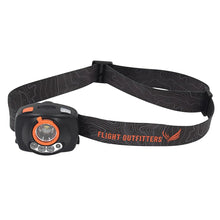
Flight Outfitters Horizon Headlamp: Independent Red and White Buttons
Output: 80-lumen focusable white flood plus four red LEDs. Controls: a dedicated button for each color, with high and low settings.
- Separate red and white buttons mean you never destroy your dark adaptation hunting for the right mode
- Pivoting light head aims at the panel, the chart, or the engine compartment
- Comfort band stays put through maneuvers and works over a ball cap
Perfect for: preflight inspections and cockpit work without ever giving up a hand.
Click for Price →
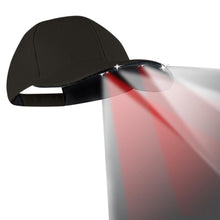
Powercap Navigator LED Hat: Hands-Free Light That Fits Under a Headset
LEDs: six total, with independent red and white systems on separate switches and battery packs. Runtime: up to 68 hours.
- Red LEDs under the brim light charts and checklists without touching your night vision
- Brim-mounted white LEDs throw useful light out to 22 meters for ground operations
- Button-free cotton cap design wears comfortably under an aviation headset all flight
Perfect for: pilots who want cockpit lighting they can put on with their hat and then forget about.
Click for Price →
FliteLite Pro NVIS Green Finger Light: F-22 Heritage on Your Finger
Type: NVIS green LED finger light on a Velcro One-Wrap mount. Power: silver-oxide batteries with a low-battery indicator.
- Night-vision-compatible green LED puts glare-free light exactly where your hand already is
- Adjustable brightness remembers your last setting; 10-minute auto-off protects the batteries
- Drop-proof, weather-resistant, and wearable with or without gloves
Perfect for: radios, circuit breakers, and chart work, with the same light the military straps on for night missions.
Click for Price →
DEX FingerLight Rechargeable LED Finger Light: The Light That Follows Your Finger
Type: rechargeable LED finger light on an adjustable Griptonite Ring. Runtime: up to 2.5 hours per charge. Rating: IPX7 waterproof.
- Moves the light from your forehead to your fingertip, so the beam lands exactly where you point
- Soft, shadow-free output for chart and checklist work at arm's length, with a beam that reaches 36 feet for hangar and walkaround tasks
- Low-profile, impact-resistant build that disappears into a flight bag or emergency kit
Perfect for: pilots who want a rechargeable, waterproof finger light that puts the beam wherever they point.
Click for Price →Frequently Asked Questions
- Is it safe to fly at night?
- Yes, night flying is safe when you train for it, plan conservatively, and respect your personal limits. The accident rate is higher at night than during the day, but the causes repeat themselves: fuel exhaustion, VFR into IMC, and spatial disorientation. Every one of them is preventable with disciplined planning. Stay current, carry generous fuel reserves, set personal weather minimums above the legal ones, and be willing to cancel or divert when conditions deteriorate.
- What does the FAA consider night?
- It depends on the purpose. For aircraft lighting under FAR 91.209, night runs from sunset to sunrise. For logging night flight time under FAR 1.1, night is the period between the end of evening civil twilight and the beginning of morning civil twilight. For passenger-carrying currency under FAR 61.57(b), night is 1 hour after sunset to 1 hour before sunrise. Three definitions, three different clocks, so check the time windows before you log anything or load passengers.
- What are the FAA night currency rules?
- To carry passengers at night, FAR 61.57(b) requires three takeoffs and three landings to a full stop within the preceding 90 days, performed between 1 hour after sunset and 1 hour before sunrise, in the same category and class of aircraft. Touch-and-goes do not count at night; every landing must be to a full stop. If you are out of currency, fly the three takeoffs and landings solo or with an instructor before loading passengers.
- Do you need an instrument rating to fly at night?
- No, the United States allows night VFR with a private pilot certificate, provided you meet the night equipment requirements and the VFR weather minimums for your airspace. That said, night VFR over dark terrain can feel a lot like instrument flying: the horizon disappears and the gauges become primary. Some countries, including Canada, require a separate night rating, and many US instructors recommend instrument training before serious night cross-country flying. Treat the instrument rating as cheap insurance for night work.
- Why do pilots use red lights in the cockpit at night?
- Red light preserves your dark adaptation. The rod cells that handle night vision take roughly 30 minutes to fully adapt to darkness and are largely insensitive to longer red wavelengths, so a dim red light lets you read a checklist without resetting that adaptation. The tradeoff is that red light washes out red print and markings on charts, so most pilots also carry a dimmable white source and use the lowest brightness that still lets them read.
- How much fuel reserve should you carry for night VFR?
- The legal minimum under FAR 91.151 is enough fuel to reach your first point of intended landing plus 45 minutes at normal cruise. At night, treat that as a bare floor. Diversions are more likely after dark because of lighting outages, fog formation, and closed services, and finding fuel late at night is much harder than in the afternoon. Many experienced night pilots plan to land with at least double the legal reserve in the tanks.
- What is the black hole illusion?
- The black hole illusion occurs on approach to a lighted runway over dark, featureless terrain such as water or farmland, with no lights between you and the threshold. Without visual cues below, your brain perceives the aircraft as higher than it actually is, and the natural correction is to descend below the proper glidepath, sometimes far enough to strike terrain short of the runway. The defense is to trust the PAPI or VASI, cross-check altitude against distance, and fly a normal stabilized descent rather than duck under.
- Is night flying hard?
- Night flying is not necessarily harder than day flying, but it is different, and it is less forgiving of casual preparation. Aircraft control feels the same, the air is often smoother, and traffic is easier to spot against a dark sky. What changes is the margin: weather is harder to see, illusions are more convincing, and emergency options shrink. Pilots who plan thoroughly, manage their lighting, and stay disciplined find night flying to be some of the most rewarding time in their logbook.
About the Author
Neil S. Glazer is a commercial pilot with multi-engine and instrument ratings and the founder of PilotMall.com. He has spent decades flying general aviation aircraft and helping fellow pilots find gear that works as hard as they do, and he writes these guides the way he flight plans: thoroughly, and with zero patience for fluff.


1 comment
very helpful! thanks!!