



How To Fill Out A Pilot Logbook (Tips & Best Practices)
Logging each flight correctly and consistently makes the difference between a polished, professional record and a cluttered mess that can raise eyebrows when you're aiming for the next step in your aviation journey.
Let’s dive into some practical tips for keeping your logbook pristine and organized.


Filling out a pilot logbook is the foundation of your flying career. This little book holds all your flight experience and can open doors to certifications, ratings, and even your next job.
Logging each flight correctly and consistently makes the difference between a polished, professional record and a cluttered mess that can raise eyebrows when you're aiming for the next step in your aviation journey.
Let’s dive into some practical tips for keeping your logbook pristine and organized.
SUMMARY
- When you’re flying with other pilots, log your Pilot in Command (PIC) time correctly.
- Make sure cross-country flights meet the 50 nautical mile rule for certifications.
- Night hours for logging night takeoff and landing experience start one hour after sunset and end 1 hour before sunrise - dark skies alone don’t count.
- Log simulated instrument flights separately for your instrument rating.

What Goes Into Your Pilot Logbook?
Your logbook tracks everything, from your first solo to the more advanced instrument training.
When you log a flight you’ll need to capture specific details that meet the regulatory requirements.
This information should include:
- Date and aircraft type
- Departure and arrival locations
- Total time spent flying (either using Hobbs meter readings or manual tracking)
- If it was a day or night flight
- Designation of solo, dual, or second-in-command (SIC) time
- Pilot in Command (PIC) time
- Any remarks about the flight (type of training, weather conditions, or lessons learned)
Be sure to record this information with as much accuracy as possible. It'll help you avoid confusion down the road when it comes to renewals, certifications, or job applications.

Logging Pilot In Command (PIC) Time
As a pilot you will mostly want to log pilot in command (PIC) time. But logging PIC time can get a bit confusing when more than one pilot is aboard (acting as a safety pilot). Only the person acting as PIC—the one responsible for the aircraft and flight safety—can log this time.
If you’re flying solo, all your flight time counts as PIC solo flight time. On dual flights, you can only log it if you're the sole manipulator of the controls and acting as PIC.
What’s less common but equally important is logging PIC under supervision (PICUS). This applies when you’re technically not PIC but are carrying out all PIC duties under a flight instructor’s guidance.
As a student pilot, make sure that all of your flights are verified by a flight instructor in your remarks section.
How to Fill Out Your Logbook
When its time to fill out your logbook for a dual flight as a student pilot with a flight instructor, you'll want to focus on logging the time as dual instruction.
Record the flight date, aircraft type, route, and duration, and mark it as a dual flight since you were not the sole manipulator of the controls.
In the remarks section, note the instructor's role and the type of training performed, like flight and ground training or practicing maneuvers.

How To Log Cross Country Flight Time
A cross-country flight does not mean logging time where you traveled from one city to another. The Federal Aviation Administration (FAA) requires that the flight includes a landing at a point at least 50 nautical miles away from the original departure point to count as cross-country time.
This time is required for various licenses and ratings, so it’s important to know the definition of cross-country and log it properly.
When logging cross-country flights, make sure to note the route and exact distance flown. Your total time in the air will show how much cross-country flight time you’re accumulating.

Night Flight Logging Made Simple
Logging night flight time is another area where mistakes can creep in. The FAA defines night in the Code of Federal Regulations Title 14, Section 1.1 as the time between the end of evening civil twilight and the beginning of morning civil twilight, as published in the Air Almanac, converted to local time.
Please realize this definition varies for Recent Flight Experience: Pilot in Command. 61.57(b)(1): Except as provided in paragraph (e) of this section, no person may act as pilot in command of an aircraft carrying persons during the period beginning 1 hour after sunset and ending 1 hour before sunrise, unless within the preceding 90 days that person has made at least three takeoffs and three landings to a full stop during the period beginning 1 hour after sunset and ending 1 hour before sunrise...
So even if it’s dark outside when you’re flying, it might not officially count as night time if it falls outside that window.
Double-check your flight times against civil twilight calculations to make sure you’re recording this time correctly.
You can review out article on tips for flying at night to help you stay prepared.

Logging Simulated Instrument Flight Time
When logging simulated instrument flight time, you’ll either be flying under the hood or foggles (in actual flight) or using a simulator. Both count, but you need to log them separately.
Make sure to clearly mark when a flight involves simulated instrument time, as this will matter when you're working toward your instrument rating or a renewal.
Best Practices for Student Pilots Logging Flight Time
As a student pilot, most of your entries will be dual or solo flights.
Every solo flight is logged as PIC time, while dual flights are logged as instruction time.
When logging flights as a student, look carefully and pay close attention to if you’re flying cross-country, at night, or under instrument conditions. These differences matter because they affect the hours needed for specific ratings, like your private pilot or commercial pilot license.

Keep Your Logbook Professional
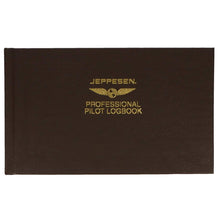
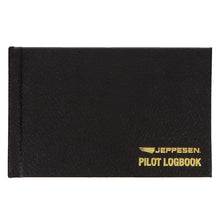
The simplest way to keep your logbook professional is to log each flight immediately, and legibly, and use consistent abbreviations.
If you're using a paper logbook or a digital format, make sure the information is easy to read. Messy handwriting, incorrect times, or missing details can cause future problems when you’re applying for licenses or piloting jobs.
Using the same pen throughout a paper logbook also makes it look cleaner.
If you’re using a digital logbook, make sure to back it up regularly, either to the cloud or an external drive, so you don’t lose your valuable flight history.
A great idea is to use both a paper logbook and an electronic logbook as well, and maintain both simultaneously.

Frequently Asked Questions
- Do I need to carry my logbook on every flight?
- No, unless you are a student pilot on a solo cross-country flight. However, it's good practice to keep it accessible for recording flights promptly after landing.
- Can I use a digital logbook instead of a paper one?
- Yes, the FAA accepts digital logbooks as long as they provide a reliable record and can be signed (electronically or printed for signature) for endorsements and checkrides.
- What happens if I lose my logbook?
- Losing a logbook is serious. You can reconstruct time from aircraft maintenance logs, rental receipts, or previous 8710 forms (FAA airman applications), but having a digital backup or photos of your pages is the best safeguard.
- How do I fix a mistake in a paper logbook?
- Draw a single line through the incorrect entry so it is still readable, write the correct information next to it, and initial the correction. Avoid using white-out as it can look like tampering.
Takeaway
Filling out your pilot logbook immediately after your flight time is a habit that pays off in the long run.
Each entry that your write is a reflection of your growth as a pilot. The more accurate and professional your logbook is, the easier it’ll be when you're aiming for that next big step in your aviation career.
Getting into the rhythm of logging your PIC time, cross-country flights, or night hours makes your experience that much more valuable.
Safe Flying!
Interested in Articles for Student Pilots?
Our guides are designed to help!
- Top 10 Flight Training Tools You Can’t Afford to Be Without
- What is a Pilot in Command (PIC)?
- Visual vs Contact Approach: Key Insights for Pilots
- How To Fly A Traffic Pattern At A Non-towered Airport
- GUMPS Check: Checklist that Every Pilot Needs (Crucial)
Did you find this article helpful?
Do you think we missed an important interview question? Let us know in the comments below!


1 comment
While making each entry in pen gives credibility to the record, I recommend writing your totals at the bottom of the page in pencil. It’s the easiest way to clean up errors.
Also, cross country could mean different things for different ratings. For Sport Pilot it’s 25nm, all your other initial ratings, it will be > 50nm with a landing, but ATP is > 50nm but doesn’t require a landing at the destination. It can be out > 50nm and back. Part 135 cross country is a takeoff at one airport with a landing at another airport, no distance specified.
Finally, night is not an hour after sunset. Night is defined as after Evening Civil Twilight until Morning Civil Twilight. On Average about 30 minutes after sunset to before sunrise. If you want to only log an hour after sunset to an hour before sunrise to make keeping track to your landing currency easier, you can, but you’re leaving a lot of night hours on the table.