












Night Flying: The Definitive Guide to Safe, Legal, and Professional Night Flight Operations
Night flying requires more than basic VFR skills. This guide breaks down FAA night rules, human-factors risks, illusions, lighting systems, and the essential procedures every pilot must follow for safe night operations.


Flying is flying, but night flying introduces additional physiological, regulatory, and operational challenges. Darkness removes familiar visual cues, increases pilot workload, and narrows safety margins. With enhanced planning, structured procedures, and disciplined execution, pilots can operate at night with the same confidence and precision as daytime flight. This definitive guide provides a complete, professional framework for night VFR operations, integrating FAA regulations, human-factors science, accident data, and best practices for modern cockpits.

Table of Contents
- Introduction: Why Night Flying Demands a Different Skillset
- Regulatory Foundation: Understanding FAA Definitions of "Night"
- The N.I.G.H.T. Preflight Protocol
- Preflight Preparation and Aircraft Readiness
- Ground Procedures and Lighting Discipline
- The Human Factors Challenge: Fatigue, Night Vision, and Illusions
- In-Flight Operational Considerations
- Approach and Landing Mastery: VGSI Systems (VASI, PAPI)
- Advanced Risk Mitigation and Common Accident Chains
- Frequently Asked Questions
- Conclusion: The Mindset of a Safe Night Pilot
1. Introduction: Why Night Flying Requires Elevated Discipline
Night flying is not simply daytime flying with reduced light. It is an entirely different operational environment shaped by three dominant factors.
- Physiology: The human eye is poorly suited for darkness. Depth perception and peripheral awareness degrade significantly.
- Regulation: FAA definitions of "night" differ depending on purpose such as lighting, logging, or currency.
- Operational Risk: Fewer external cues, reduced visibility of weather, and greater reliance on instruments increase pilot workload.
This guide transforms the original "22 Tips" format into a structured, comprehensive safety manual while preserving every existing image from the original article.
2. Regulatory Foundation: The Two Definitions of "Night"
2.1 Night for Aircraft Lighting: FAR 91.209
Required from: Sunset to Sunrise
During this entire period, the aircraft must use:
- Position lights
- Anti-collision lights
Pilots may temporarily turn off strobes only when their use would compromise safety, such as in clouds, fog, or when they can blind other pilots on the ground or on approach.
2.2 Night for Currency: FAR 61.57(b)
Passenger-carrying night currency requires:
1 hour after sunset to 1 hour before sunrise.
Pilots must complete 3 takeoffs and 3 full-stop landings within the past 90 days during this specific time window to carry passengers at night.
2.3 The "Grey Zone" Hazard
Landings performed between sunset and 1 hour after sunset do not count for night currency, even though aircraft lighting is required. Pilots who misunderstand this can inadvertently violate FAR 61.57 when carrying passengers later in the same evening.
3. The N.I.G.H.T. Preflight Safety Protocol
| Letter | Meaning | Purpose |
|---|---|---|
| N | NOTAMs | Detect runway or taxiway closures and lighting outages |
| I | Illusions | Prepare for visual and vestibular illusions |
| G | Ground Lighting | Verify PCL frequency and VGSI status |
| H | Human Factors | Assess fatigue and personal minimums |
| T | Terrain and Traffic | Study obstacles, routing, and lighting environment |
3.1 N: NOTAMs
Lighting outages, closed taxiways, closed runways, and unlit obstacles are extremely hazardous at night. Always review NOTAMs for your departure, enroute, and destination airports, with special attention to Local NOTAMs that may not appear in a simple overview.
3.2 I: Illusions
Visual and vestibular illusions are more likely to occur at night. Common ones include the black-hole effect on final, false horizons from sloping terrain or clouds, and autokinesis when staring at a single light source.

3.3 G: Ground Lighting
Confirm how airport lighting is controlled before you depart. At non-towered airports, this usually includes Pilot Controlled Lighting (PCL) with microphone click sequences on the CTAF frequency. Verify that PAPI or VASI systems are available and operational at your destination and alternates.
3.4 H: Human Factors
Night flying increases pilot workload and makes fatigue more dangerous. Be honest about your rest, stress level, and recent experience. Set personal weather and visibility minimums that are more conservative than the regulations.
3.5 T: Terrain and Traffic
Study the route carefully for obstacles, unlit terrain, towers, and rising ground. At night, many of these hazards are nearly invisible until you are uncomfortably close.

4. Preflight Preparation and Aircraft Readiness
4.1 Full Preflight Inspection

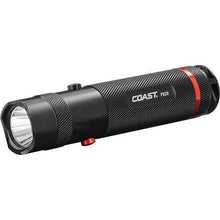
Darkness makes it easier to miss small issues such as fluid leaks, loose fasteners, bird nests in openings, or underinflated tires. Use a methodical walkaround and take extra time with the flashlight to look at fuel caps, vents, leading edges, and landing gear.
4.2 Flashlights and Backup Lighting

Carry multiple flashlights with fresh batteries and keep them in different reachable locations in the cockpit. Red or dimmable lights help preserve night vision while still allowing you to read charts and checklists.
4.3 Portable Hands-Free Lights

Hands-free options such as headlamps, powercaps, or finger-mounted LED lights are especially useful at night. They let you illuminate switches, circuit breakers, or charts without sacrificing control of the aircraft.
4.4 Fatigue Management

Plan your duty day so you are not launching on a night flight when you are already exhausted. Hydration, nutrition, and rest become part of your safety equipment when flying at night.
4.5 Logging Night Time and Currency
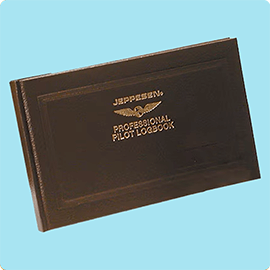
Remember that night currency for carrying passengers is based on specific time windows, not simply when it looks dark outside. Use your logbook or electronic log to clearly mark which landings qualify for FAR 61.57(b).
4.6 Fuel Planning at Night

At night, diversions are more likely due to weather, lighting issues, or comfort level. Many pilots choose to double the FAA minimum fuel reserve for night VFR to ensure they have more than enough fuel to go to an alternate with better lighting and services.
4.7 Cockpit Lighting and Instrument Readability

Test all panel lighting, flood lighting, and instrument backlighting before departure. Adjust brightness so that you can read everything clearly without washing out your night vision.
4.8 Cruise Altitude and Terrain Awareness

Selecting a higher cruise altitude gives you more time and distance to find a suitable landing area in the event of an emergency. It also keeps you farther from unlit towers and rising terrain.
4.9 Weather and Icing Awareness

Icing can be more dangerous at night because it is harder to detect in its early stages and there is no sunlight to aid melting. Study freezing levels, cloud tops, and recent pilot reports before any night flight where icing may be a factor.
5. Ground Procedures and Lighting Discipline
Airport ramps and taxiways can be visually confusing at night. Good lighting discipline improves safety for everyone.
- Turn the beacon on before engine start to signal that the aircraft will be moving or that the engine is running.
- Keep strobes off while on the ramp or taxiways, and turn them on only when you are entering the runway for takeoff.
- Turn landing lights off if they will shine directly into the cockpit of another aircraft that is landing, taking off, or holding short.
- In clouds or heavy precipitation, consider turning strobes off to avoid disorienting reflections.

6. Human Factors: Fatigue, Vision, and Illusions
Night flying increases susceptibility to several human factor risks.
- Fatigue: Your circadian rhythm naturally pushes you toward sleep at night.
- Night vision loss: Bright light exposure can temporarily erase your dark adaptation.
- Spatial disorientation: With fewer visual references, the inner ear can easily trick you into believing the aircraft is banking or climbing when it is not.
Training, self-awareness, and a willingness to say "no" to marginal conditions are key defenses.
7. In-Flight Operational Considerations
- Fly higher cruise altitudes when practical to increase glide range and obstacle clearance.
- Minimize head-down time with charts and devices. Use cockpit organization and checklists to stay ahead of the airplane.
- Monitor fuel levels more frequently and compare expected versus actual burn.
- If weather is deteriorating, divert early. Things rarely get better at night.
- If you start to see strobes reflecting off moisture as "sparkles," consider that a warning sign of precipitation, fog, or icing.
8. Approach and Landing Mastery: VGSI Systems
Visual Glide Slope Indicator (VGSI) systems help you maintain a safe descent profile and obstacle clearance on final, which is especially critical at night.
PAPI
- 2 white and 2 red lights indicate the correct glide path.
- More white indicates that you are high.
- More red indicates that you are low.
VASI
VASI systems use 2-bar or 3-bar configurations to indicate whether you are on, above, or below the proper glide path. They are effective, but often less precise than PAPI and may require closer study of the specific pattern used at the airport you are visiting.
9. Advanced Risk Mitigation and Common Accident Chains
Night accidents often involve the same repeating themes.
- VFR into IMC after the pilot continues flight into worsening conditions.
- Fuel exhaustion or fuel starvation after inadequate planning or monitoring.
- Spatial disorientation during climb, cruise, or approach in low visibility or featureless terrain.
The best mitigation is conservative decision making, stronger personal minimums than the legal minimum, and a willingness to delay, divert, or cancel when conditions are not clearly in your favor.
10. Frequently Asked Questions
Is it safe to fly at night?
Yes, it is safe to fly at night when pilots receive proper training, plan carefully, and respect their personal limits. The same basic procedures apply, but the environment is less forgiving of shortcuts.
What is considered night?
For lighting, night is from sunset to sunrise. For currency under FAR 61.57(b), night is from 1 hour after sunset to 1 hour before sunrise.
What are FAA night currency rules?
A pilot must complete three takeoffs and three landings to a full stop within the last 90 days, during the defined night currency period, to carry passengers at night.
Is night flying hard?
Night flying is not necessarily harder, but it is different. It requires adjustment, practice, and a disciplined approach to planning and decision making.
11. Conclusion: The Mindset of a Safe Night Pilot
Night flying requires:
- Regulatory precision
- Meticulous planning
- Fuel and lighting discipline
- Heightened human-factors awareness
With structured procedures and professional judgment, night flying becomes a safe, enjoyable, and rewarding skillset that expands your flexibility as a pilot.



1 comment
very helpful! thanks!!